oigVoting is beautiful, be beautiful ~ vote.©

Showing posts with label hacking. Show all posts
Showing posts with label hacking. Show all posts
Saturday, December 9, 2017

Thursday, December 7, 2017
Day 47.4. John Wilkes Phone Booth - Simple Daily Bag Drop Interrupted By DHS Hack Flight?
DOJ failed to interview FBI informant before it filed charges in Russian nuclear bribery case
While he was Maryland’s chief federal prosecutor, Deputy Attorney General Rod Rosenstein’s office failed to interview the undercover informant in the FBI’s Russian nuclear bribery case before it filed criminal charges in the case in 2014, officials told The Hill.
And the prosecutors did not let a grand jury hear from the paid informant before it handed up an indictment portraying him as a “victim” of the Russian corruption scheme or fully review his extensive trove of documents until months later, the officials confirmed.
The decisions backfired after prosecutors conducted more extensive debriefings of William Campbell in 2015, learning much more about the extent of his undercover activities and the transactions he engaged in while under the FBI’s direction, the officials said.
The debriefings forced prosecutors to recast their entire criminal case against former Russian uranium industry executive Vadim Mikerinn — removing the informant as a star witness and main victim for the prosecution, the officials added.
Justice Department officials began briefing Congress last week, divulging missteps in a case that nonetheless proved the Russian state-owned Rosatom was engaged in criminal activity through its top American executive beginning in 2009, well before the Obama administration made a series of favorable decisions benefitting Moscow’s nuclear giant.
Multiple House and Senate committees already are investigating whether the FBI alerted President Obama or his top aides to the Russian criminal activity and plan to interview the undercover informant soon.
The new revelations, however, could tip some scrutiny toward federal prosecutors’ own conduct in the case, a sensitive topic since Rosenstein is now Justice’s No. 2 official and the supervisor of the special counsel investigation into Russian election tampering.
Harvard law professor Alan Dershowitz said it was troubling that prosecutors would ever bring a case without talking first to a person they portrayed in court as a victim, especially when that person was an FBI informant available to them.
“I’ve never heard of such a case unless the victim is dead. I’ve never heard of prosecutors making a major case and not talking to the victim before you made it, especially when he was available to them through the FBI,” Dershowitz said.
“It is negligence, and I’m sure there will be internal issues with the Justice Department and U.S. attorney for making such an obvious mistake,” he said.
Officials told The Hill that prosecutors working for Rosenstein first interviewed Campbell, the informant, after they had already filed a sealed criminal complaint against Mikerin in July 2014.
Campbell got one debriefing after the criminal charges were filed, but was never brought before the grand jury that indicted the Russian figure in November 2014 even though the informer was portrayed as “Victim One” in that indictment, the officials confirmed
When prosecutors finally interviewed Campbell more extensively in early 2015 and reviewed all of the records he had gathered for the FBI, they learned new information about the sequence of transactions he conducted while under the FBI’s supervision, as well as the extensive nature of his counterintelligence work for the U.S. government that went far beyond the Mikerin case and dated to at least 2006, the officials said.
“Based on what was learned, we decided to change the theory of the case. … A plea deal became our goal so we wouldn’t have to litigate or make an issue of some of the stuff he had done for [counterintelligence] purposes,” a source directly familiar with the case said.
Campbell’s lawyer, Victoria Toensing, confirmed the Justice officials’ account. “The first time Mr. Campbell was interviewed by the U.S. Attorney’s office was after the criminal complaint was filed, and he was never brought before the grand jury before the indictment,” she told The Hill.
Justice officials said they knew when they first brought the case that Campbell had been part of a controlled, FBI-authorized bribery scheme, meaning he had permission to make payments to the Russians as kickbacks to further the investigation.
They declined to say why, with that knowledge, they initially portrayed Campbell in the indictment as a “victim” of an extortion scheme that began in November 2009 when the FBI had authorized him to make regular kickback payments of $50,000 in order to keep his consulting work for the Russians.
They said, however, they decided to pivot the case from extortion to money laundering after the more extensive 2015 debriefings revealed other transactions that pre-dated the extortion charges.
One source familiar with the case said extortion felt like a weaker charge when Campbell was acting with the FBI’s blessing and that the evidence of money laundering that Campbell documented through secret accounts in Latvia and Cyprus was irrefutable.
Campbell, who now has leukemia, also suffered an earlier bout with cancer in the middle of the case when a lesion was detected on his brain. He survived, all the while working undercover, but he developed some memory issues after treatment, sources said.
To compensate, he developed a system of extensive note taking and documentation with his FBI handlers through email to ensure facts were captured before his memory became hazy. A lot of those notes did not get reviewed by prosecutors until 2015, well after charges were filed, the sources said.
The documentation shows Campbell’s work had exposed wide-ranging details about Russia’s nuclear activities across the globe, including efforts to corner the global uranium market, assist Iranian nuclear ambitions and to criminally compromise a U.S. trucking firm that transported Russia’s nuclear fuel, they said.
Officials said the investigation and Campbell’s work from 2006 to 2013 fell under the FBI’s counterintelligence arm and Justice’s national security division, and officials originally did not intend for it to become a criminal case.
Justice officials originally hoped they simply could use the threat of criminal prosecution to “flip” Mikerin as a cooperating asset, but their confrontation with him at an office building in 2014 failed to persuade him to cooperate, sources said.
Prosecutors in the U.S. attorney’s office in Maryland then assembled charges and an indictment, using mostly information from the FBI’s counterintelligence files and interviews of Campbell done by an Energy Department investigative agent, officials said
Mikerin was an icon in the Russian nuclear industry, a top executive of the state-controlled Rosatom firm and its Tenex subsidiary and the man Moscow sent to Washington in 2010 to oversee Russian President Vladimir Putin’s plan to grow uranium sales inside the United States under the Obama administration.
The November 2014 indictment, bearing Rosenstein’s name, charged Mikerin with felony conspiracy to interfere with interstate commerce through extortion.
Court documents alleged Mikerin was part of a larger racketeering scheme that also involved bribery, kickbacks and money laundering and that he demanded $50,000 in regular kickbacks from Campbell starting in November 2009 in order for Campbell to keep his consulting work for the Russians.
The court documents portrayed Campbell alternatively as “Victim One” or “Confidential Witness 1” who came forward to report Mikerin’s wrongdoing and cooperate with the FBI.
In fact, Campbell had been under the FBI’s control informing on the Russian nuclear industry since 2006, had signed a formal nondisclosure agreement with the FBI in 2008 and eventually was rewarded in 2016 with a $51,000 check for his extensive counterintelligence work.
Mikerin eventually pleaded guilty to a money laundering conspiracy charge and was sentenced in December 2015 to 48 months in prison.
A month later, the FBI paid Campbell compensation of more than $51,000, a transaction prosecutors did not learn about until The Hill published a copy of the check last month, officials said.
Congress is now investigating the entire Russian nuclear bribery case after The Hill disclosed Campbell’s work, with multiple committees demanding to know whether the FBI told the Obama administration about Mikerin’s criminality before the administration made favorable decisions that rewarded Rosatom with billions of dollars in new American nuclear fuel contracts.
Justice officials began briefing congressional officials this week, starting with the Senate Judiciary Committee. After the briefings end, congressional investigators plan to interview Campbell.
After Campbell’s name and work surfaced, anonymous allegations surfaced in stories by Yahoo and Reuters suggesting the Justice Department had grave reservations about Campbell’s credibility, in part because he had three misdemeanor alcohol arrests.
But officials told The Hill those leaks were not authorized by the Justice Department and did not reflect accurately the official thinking of the department.
For instance, they said prosecutors had no concerns about Campbell’s three misdemeanor alcohol arrests and that the FBI held the informant in enough esteem to pay him the check after the case ended. And after prosecutors completed three debriefings with Campbell, they approved the payment in 2015 of the last of his expenses as an undercover.
Prosecutors’ concerns primarily dealt with the sequence of events and transactions surrounding Campbell’s undercover work during the counterintelligence part of the probe before criminal prosecutors got involved, officials said.
Wednesday, December 6, 2017
Tuesday, June 27, 2017
CONYERS & GOODLATTE Renew Call For Surveillance Data And Information On Methodology
Washington, D.C. – House Judiciary Ranking Member John Conyers, Jr. (D-Mich.) and Committee Chairman Bob Goodlatte (R-Va.) today sent a letter to Director of National Intelligence Dan Coats to renew their call for the number of U.S. persons included in Section 702 collections. The members also called for statistics on the methodologies used in developing the project as well as information on the resources that would need to be diverted in order to complete the project.
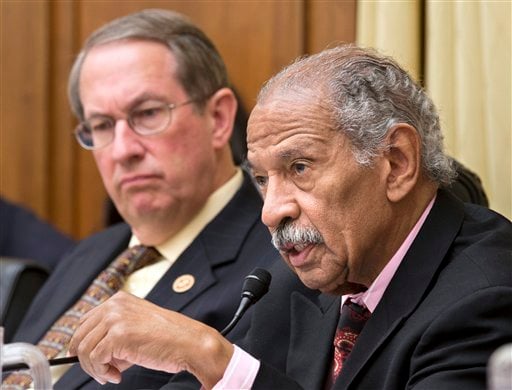 On April 7, 2017, Ranking Member Conyers and Chairman Goodlatte wrote to Director Coats to request a public estimate of the number of communications involving U.S. persons incidentally swept up under FISA Section 702. On June 7, 2017, in testimony before the Senate, Director Coats stated that the production of that estimate would be “infeasible.”
FISA Section 702, which targets the communications of non-U.S. persons outside of the United States in order to protect national security, reportedly contributes to more than a quarter of all National Security Agency surveillance and has been used on multiple occasions to detect and prevent horrific terrorist plots against our country. Although Congress designed this authority to target non-U.S. persons located outside of the United States, it is clear that Section 702 surveillance programs can and do incidentally collect information about U.S. persons when U.S. persons communicate with the foreign targets of Section 702 surveillance.
Voting is beautiful, be beautiful ~ vote.©
Friday, April 7, 2017
CONYERS & GOODLATTE Seek Answers On Americans Swept Up Under Foreign Intelligence Programs
Washington, D.C. – House Judiciary Committee Ranking Member John Conyers (D-Mich.) and Chairman Bob Goodlatte (R-Va.) today requested that the Office of the Director of National Intelligence provide a public estimate of the number of communications involving U.S. persons incidentally swept up under FISA Section 702.FISA Section 702, which targets the communications of non-U.S. persons outside of the United States in order to protect national security, reportedly contributes to more than a quarter of all National Security Agency surveillance and has been used on multiple occasions to detect and prevent horrific terrorist plots against our country. Although Congress designed this authority to target non-U.S. persons located outside of the United States, it is clear that Section 702 surveillance programs can and do incidentally collect information about U.S. persons when U.S. persons communicate with the foreign targets of Section 702 surveillance.
In their letter to Director of National Intelligence Dan Coats, Goodlatte and Conyers state it is crucial that members of the House Judiciary Committee understand the impact of Section 702 on U.S. persons as the Committee proceeds with the debate regarding the reauthorization of this surveillance authority. They request that Director Coats provide a public estimate of the number of communications involving U.S. persons subject to Section 702 surveillance as soon as possible in order to inform public debate on the law.
Friday, March 31, 2017
CONYERS, JEFFRIES & LIEU To AG Sessions: "Are You Recused From Russia Matters Or Are You Going After The Alleged Russia Leaks?"
Members Call for Sessions to Clarify his Involvement with Investigation
Washington, D.C. – Yesterday, U.S. Attorney General Jeff Sessions indicated that the Department of Justice will pursue criminal charges to curb the number of alleged leaks of classified information from within the government. The statement raises questions about the scope of the Attorney General’s recusal from matters related to the presidential campaigns, and whether that recusal continues to apply to investigation of the many contacts between the Trump campaign and Putin’s Russia.
Earlier this week, the House Committee on the Judiciary considered H. Res. 184, a resolution of inquiry introduced by Rep. Hakeem Jeffries (D-NY) and Rep. Ted Lieu (D-CA), that would have directed the Department of Justice to turn over information related to the Attorney General’s misleading testimony and the pattern of connections between President Trump’s advisers and the Russian government. That resolution was defeated on a party line vote.
 |
| Dean of the U.S. House of Representatives John Conyers, Jr. |
Today, Ranking Member John Conyers, Jr. (D-MI), joined by Reps. Jeffries and Lieu, wrote to the Attorney General, below, to ask for clarification on his comments. The members also released the following statement:
“Given the Attorney General’s troubling record on his own contacts with the Russian government, and given the Trump Administration’s apparent attempt to obstruct the work of the House Permanent Select Committee on Intelligence by coopting its Chairman, it seems entirely inappropriate for him to comment on any aspect of these alleged leaks of classified information. It is critical that Attorney General Sessions clarify the precise scope of his recusal. We look forward to his prompt response to our letter.”
Voting is beautiful, be beautiful ~ vote.©
Wednesday, March 29, 2017
CONYERS Statement For Judiciary Markup Of H.R. 184, "Trump-Russia Resolution"
Conyers statement starts @ 31:10
|
| Dean of the U.S. House of Representatives John Conyers, Jr. |
It is the responsibility of this Committee to conduct oversight of the Office of the Attorney General, and to ensure the independence and integrity of the Department of Justice.
Despite protests that this resolution is somehow not yet ripe, H. Res. 184 (below) is the proper next step in exercising those responsibilities.
Since the Attorney General took office, my colleagues and I have written to the Department at least six times.
We have asked for information about conflicts of interest, the Russia investigation, and reports of inappropriate contact between the White House and the FBI. To date, we have received no response.
We have also written to you, Mr. Chairman, on two occasions, about related matters. We have received no response there, either.
At our February markup of the Nadler resolution, both Chairman Goodlatte and Mr. Issa spoke at length about a letter they planned to send the Attorney General. It was described as the “proper” way to conduct oversight. We were promised an opportunity to join.
But no letter to the Attorney General was ever sent. Instead, the Majority wrote to the FBI, asking for a member briefing that still has not taken place. We did not learn of the letter until we read about it in the press.
Our responsibility to this Committee requires more of us, Mr. Chairman. H. Res. 184 is an opportunity to correct course and do our jobs.
The resolution is also a chance to answer questions about the Attorney General’s false statements before the Senate.
H. Res. 184 asks for information about the Attorney General’s meetings with Russian officials, his testimony before the Senate Judiciary Committee, and his later “clarification” of that testimony.
This information is critical to understanding why Attorney General Sessions twice gave false testimony, and whether his attempt to correct that false testimony is adequate.
I find it hard to believe that Attorney General Sessions—at the time, a sitting senator, and an active member of the Trump campaign—was unaware of reports about the campaign’s connections to the Russian government until he was asked about it in the committee room.
I find it equally hard to understand why Attorney General Sessions, in “correcting” his testimony, disclosed two meetings with the Russian ambassador—but not to a third that is clearly documented in the public record.
Again, it is this Committee’s responsibility to ask these questions. We cannot and should not turn a blind eye to false testimony and an obviously incomplete record.
H. Res. 184 is the right vehicle to begin that inquiry here in our Committee.
Finally, this resolution helps us address a larger problem—one that seems to sweep in more people in the President’s orbit every day.
Why have so many of these men—each of them a part of the Trump campaign—met with the Russian government?
And, perhaps more importantly, why have so many of these men attempted to hide those meetings from the public?
To a character, it seems, they have only come clean when the media has exposed their deception.
I am deeply disturbed by this pattern, and what it might mean for our country.
In my time on this Committee, Mr. Chairman, I have come to understand that certain values transcend party.
These include: faith in democracy, love of country, and respect for the republican form of government guaranteed to us by our Constitution.
These values are under attack—not just here, but around the world—by a regime that believes only that might makes right.
We know that the government of Russia undermined our election. We know that they want to undermine the elections of our allies.
And, given what we know, it is incumbent on us to do something about it.
Here is our chance to begin that work in earnest.
I thank Mr. Jeffries and Mr. Lieu for introducing this resolution.
I urge my colleagues to support H. Res. 184, and I yield back.
Voting is beautiful, be beautiful ~ vote.©
Tuesday, December 20, 2016
House Dems: Russia hacking probe needs political 'safeguards'
Lawmakers say Trump’s dismissal of Russian hacking and his business investments could ‘threaten the impartiality’ of an investigation.
|
| Dean of the U.S. House of Representatives John Conyers, Jr. |
Top Democrats on the House Judiciary Committee are demanding intelligence officials put “safeguards” in place to ensure any investigation into Russian hacking is free of political influence ahead of President-elect Donald Trump’s inauguration.
The lawmakers say Trump’s repeated dismissal of the Russian hacking along with his possible business investments in the county could “threaten the impartiality” of an investigation while he’s president.
The letter, sent to Attorney General Loretta Lynch and FBI Director James Comey, also calls on federal investigators to make public additional details about Russian attempts to undermine the election, including whether there is a criminal investigation and if so, when it started.
“We strongly and urgently request that safeguards be put in place — prior to the completion of the presidential transition — to ensure that any criminal investigation into these matters is conducted in an independent manner and free of improper partisan influence,” House Judiciary Committee ranking member John Conyers (D-Mich.) wrote Wednesday.
Rep. Sheila Jackson Lee (D-Texas), top Democrat on the committee’s crime panel, also signed onto the letter, obtained by POLITICO.
“To the extent that this investigation extends to any U.S. persons — including any associate of President Elect Donald Trump — we ask that you confirm this as well,” they added.
Conyers and Jackson Lee also cite Trump’s potential conflicts of interest surrounding his business holdings, including possible financial ties to Russia, as the need for an independent investigation.
The Judiciary Democrats say any probe into Russian cyber warfare should be treated with just as much importance as the controversial investigation into Hillary Clinton’s private email server.
“These and other incidents concerning investigatory actions — or lack thereof — in the run up to the recent election have deeply shaken the reputation for fairness previously enjoyed by federal law enforcement and reinforce the need to appropriately handle any pending criminal investigation,” they write, citing Comey’s decision to publicly re-open the FBI’s investigation into Clinton’s email practices days before the election.
Conyers and Jackson Lee also echo calls for an “independent and bipartisan commission” to fully investigate Russia’s actions in the run-up toNov. 8. The letter comes after growing demands from key senators for GOP leaders to establish a select congressional committee to dig into the issue.
President Barack Obama and other top intelligence officials have said Russia was behind the election hacking that led to the release of thousands of Democratic documents, including Clinton campaign chairman John Podesta’s emails and personal information for lawmakers and staffers, and resulted in the resignation of Democratic National Committee Chairwoman Debbie Wasserman Schultz just hours before the Democratic convention.
But the president-elect and some Republicans have dismissed allegations of Russia’s role in the document dumps and the country's attempts to sway voters in Trump’s favor ahead of Election Day.
“If Russia, or some other entity, was hacking, why did the White House wait so long to act? Why did they only complain after Hillary lost?” Trump tweeted last week. He’s also called the claims “ridiculous” and “just another excuse.” Director of National Intelligence James Clapper announced onOct. 7, more than a month before the election, that U.S. intelligence agencies agreed that Russia had conducted the hacking operations in an attempt to meddle in the election.
House Intelligence Committee Chairman Devin Nunes (R-Calif.) has publicly sparred with top intelligence officials, saying they have refused to brief him and other members of the panel on the issue in recent weeks. Nunes last week announced plans for committee members to visit the intelligence agencies in January to learn more about the Russian investigation.
So far, top Republicans, including Senate Majority Leader Mitch McConnell (R-Ky.), have rejected requests for a separate probe, saying the committees with jurisdiction over cybersecurity can handle the investigation.
The Senate and House Intelligence Committees are taking the lead on investigating the issue but several other committees, including House Judiciary, have some jurisdiction.
Key lawmakers, including incoming Democratic leader Chuck Schumer (D-N.Y.) and Sens. John McCain (R-Ariz.), Lindsey Graham (R-S.C.) and Jack Reed (D-R.I.), have argued that a select panel is needed to head off problems from too many committees being involved.
McConnell again ruled out the idea of a special committee during an interview with a Kentucky PBS outlet Tuesday.
"It's a serious issue, but it doesn't require a select committee," McConnell said. "We already have a committee set up to do this."
Voting is beautiful, be beautiful ~ vote.©
CONYERS & JACKSON LEE Of House Judiciary Call For Safeguards From DOJ & FBI On Russian Hacking Investigation
Conyers and Jackson Lee: Make Russian Hacking Investigation Your Top Priority & Release Investigative Docs to the Committee
|
| Dean of the U.S. House of Representatives John Conyers, Jr. |
Washington, DC – House Judiciary Committee Ranking Member John Conyers, Jr. (D-MI) and House Judiciary Crime Subcommittee Ranking Member Sheila Jackson Lee (D-TX) sent a letter today to the U.S. Department of Justice (DOJ) and the Federal Bureau of Investigation (FBI) calling for safeguards to be put in place to ensure the investigation into Russian hacking is made a top priority and is completed in a thorough and bipartisan manner throughout the Presidential transition. Conyers and Jackson Lee also called for DOJ and the FBI to be transparent in their investigation of Russian hacking, by releasing copies of all relevant investigative materials regarding the investigation to the House Judiciary Committee, in the same way it did during its investigation of Secretary Clinton’s private email server.
Voting is beautiful, be beautiful ~ vote.©
Friday, December 16, 2016
BIPARTISAN HOUSE COALITION PRESSES CLAPPER FOR INFORMATION ON PHONE & EMAIL SURVEILLANCE

Washington, DC – Today, a bipartisan group of ten members of the U.S. House Judiciary Committee—including Ranking Member John Conyers, Jr. (D-MI), and former Chairman Jim Sensenbrenner (R-WI), wrote to the Director of National Intelligence James Clapper to memorialize the Director’s commitment to provide a detailed look at how the government’s phone and email surveillance affects United States citizens. The intelligence community has promised to provide a public estimate of that impact “early enough to inform the debate” on surveillance reform in the next Congress, with a target date of January 2017.
The letter was signed by Representatives John Conyers, Jr. (D-MI), F. James Sensenbrenner (R-WI), Jerrold Nadler (D-NY), Darrell E. Issa (R-CA), Zoe Lofgren (D-CA), Ted Poe (R-TX), Henry C. “Hank” Johnson, Jr. (D-GA), Jason Chaffetz (R-UT), Ted Deutch (D-FL), Suzan K. DelBene (D-WA) and David N. Cicilline (D-RI).
Voting is beautiful, be beautiful ~ vote.©
Tuesday, December 13, 2016
CONYERS, HOYER, ENGEL, THOMPSON, CUMMINGS, SMITH, & SCHIFF JOINT STATEMENT CALLING FOR A COMPREHENSIVE INVESTIGATION OF RUSSIAN INTERFERENCE IN THE 2016 ELECTION
 |
| Ranking Member, John Conyers, Jr. |
Washington, DC – Today, House Judiciary Committee Ranking Member John Conyers, Jr. (D-MI) joined Democratic Whip Steny H. Hoyer (D-MD), House Foreign Affairs Committee Ranking Member Eliot Engel (D-NY), House Homeland Security Committee Ranking Member Bennie G. Thompson (D-MS), House Oversight Committee Ranking Member Elijah Cummings (D-MD), House Armed Services Committee Ranking Member Adam Smith (D-WA), and House Intelligence Committee Ranking Member Adam Schiff (D-CA) released the following joint statement in response to news reports about intelligence assessments of Russian interference in the 2016 election, and comments by the House Republican leadership downplaying the need for a thorough investigation:
“All Americans should be deeply concerned by the reports that Russian agencies have interfered with a U.S. election. As Speaker Ryan noted, ‘any foreign intervention in our elections is entirely unacceptable.’
“The first duty of the United States government is to safeguard the American people and the integrity of our free society from attacks by foreign adversaries. Cyberattacks on our political institutions are direct threats to their integrity and are just as menacing as attacks on our economic, physical, and military infrastructure.
“Given the gravity of these unprecedented attacks by a foreign state, we need a congressional investigation that is truly bipartisan, that is comprehensive, that will not be restricted by jurisdictional lines, and that will give the American people a complete and full accounting of what happened consistent with safeguarding our national security.”
Voting is beautiful, be beautiful ~ vote.©
Thursday, November 17, 2016
Bipartisan, bicameral bill would delay changes to government hacking powers
Proposed Amendments to Rule 41 of the Federal Rules of Criminal Procedure would expand the government’s ability to search Americans’ computers and other digital devices
WASHINGTON – U.S. Senators Chris Coons (D-Del.), Steve Daines (R-Mont.), Mike Lee (R-Utah), Ron Wyden (D-Ore.), and Al Franken (D-Minn.), together with Reps. John Conyers, Jr. (D-Mich.) and Ted Poe (R-Texas), introduced legislation to provide Congress the time necessary to seriously consider and debate the proposed changes to Rule 41 that would expand the government's ability to search computers and other digital devices. The Review the Rule Actwould delay the proposed changes to Federal Rule of Criminal Procedure 41 from going into force until July 1, 2017. Without congressional action, the proposed changes will go into effect on December 1, 2016.
Federal Rule of Criminal Procedure 41 governs the procedures and parameters for issuing search warrants. Under current law, a federal judge may issue a warrant to search property located within a specific judicial district. At the urging of the Department of Justice, the Supreme Court ultimately approved two sweeping amendments to Rule 41:
1. A judge may issue a warrant to remotely search, copy, and seize information from a device that does not have a known location (and may not be in the district) because the location has been concealed through technological means; and
2. A single judge may issue a warrant to remotely search and copy information from suspected devices across five or more districts.
|
| Dean of the U.S. House of Representatives John Conyers, Jr. |
“I remain deeply concerned about the intended and unintended consequences of the expanded authorities contemplated in the proposed changes to Rule 41,” said John Conyers, Jr. (D-MI), House Judiciary Committee Ranking Member. “The bill we offer today will delay implementation until Congress has had a meaningful opportunity to examine the proposal in detail. Until we have adequately addressed the privacy concerns raised by my colleagues, this rule change should not take effect.”
“The proposed changes are serious, and present significant privacy concerns that warrant careful consideration and debate,” said Senator Coons, a member of the Senate Judiciary Committee. “Our bicameral, bipartisan legislation will give Congress time to do our job and carefully consider and evaluate the merits of these proposed changes to the government’s ability to search personal computers and other digital devices. It is essential that these rules strike a careful balance: giving law enforcement the tools it needs to keep us safe, while also protecting Americans’ constitutional rights to privacy and freedom from unreasonable searches.”
“We cannot give the federal government a blank check to infringe on Americans’ civil liberties,” said Senator Daines.“Congress needs the appropriate time to investigate the implications of this rule on Americans’ Fourth Amendment rights.”
“A single prosecutor should not have the power to hack into the phone or computer of virtually anyone in the United States,” said Senator Lee, a member of the Senate Judiciary Committee. “Yes, federal law enforcement does need new tools to stop and prosecute botnets, but the proposed Rule 41 rule change goes too far. The sensible thing to do is delay the implementation of this rule and allow Congress to investigate further."
“This rule change would give the government unprecedented power to hack into Americans’ personal devices,”Senator Wyden said. “This was an alarming proposition before the election. Today, Congress needs to think long and hard about whether to hand this power to James Comey and the administration of someone who openly said he wants the power to hack his political opponents the same way Russia does.”
“Government does not have the authority to unilaterally legalize widespread abusive hacking,” said Rep. Poe. “It is Congress’ responsibility to safeguard the constitutional rights of the people they represent from a power hungry Executive Branch. A delay in the proposed changes to Rule 41 is necessary to ensure that the newly elected Congress, and Administration, have the ability to carefully evaluate this rule change before it goes into effect to ensure that it is constitutional and in the best interests of the American people. Rushing to put the changes in place in the middle of the lame duck session is irresponsible. Too much is at stake to not get this right.”
Voting is beautiful, be beautiful ~ vote.©
Thursday, October 27, 2016
Bipartisan Coalition Presses DOJ About Government Hacking
The United States Congress


Lawmakers Seek Answers About How Government Would Use New Hacking Authority, One Month Before Rule 41 Amendments Would Take Effect
Washington, D.C. –A bipartisan coalition of Senate and House lawmakers today asked Attorney General Loretta Lynch to provide Congress with more information about a proposed expansion of government hacking and surveillance powers.
Sen. Ron Wyden, D-Ore., Judiciary Committee member Sen. Mike Lee, R-Utah, and Ranking Member Patrick Leahy, D-Vt., with House Judiciary Committee Ranking Member Rep. John Conyers, Jr., D-Mich., and senior Judiciary Committee member Rep. Ted Poe, R-Texas, led a bipartisan group of 23 lawmakers asking for more information about the proposal, formally known as amendments to Rule 41 of the Federal Rules of Criminal Procedure. Unless Congress acts, these new amendments are scheduled to go into effect on December 1.
“We are concerned about the full scope of the new authority that would be provided to the Department of Justice,” the lawmakers wrote. “We believe that Congress -- and the American public -- must better understand the Department’s need for the proposed amendments, how the Department intends to use its proposed new powers, and the potential consequences to our digital security before these rules go into effect.”
The lawmakers ask DOJ a number of questions about how Rule 41 will be used, including:
- How the government intends to prevent forum shopping by prosecutors seeking court approval to hack into Americans' devices;
- How the government will prevent collateral damage to innocent Americans' devices and electronic data when it remotely search devices such as smartphones or medical devices;
- Whether the government intends to use this new authority to search and “clean” Americans' computers ;
- How the government will maintain a chain of custody when searching or removing evidence from a device;
- How the government will notify Americans who are the subjects of remote government searches.
The letter was also signed by: Sen. Tammy Baldwin, D-Wisc., Sen. Chris Coons, D-Del., Sen. Steve Daines, R-Mont., Sen. Al Franken, D-Minn., Sen. Mazie Hirono, D-Hawaii, Sen. Jon Tester, D-Mont, Sen. Elizabeth Warren, D-Mass., Sen. Martin Heinrich, D-N.M. and Rep. Justin Amash, R-Mich., Jason Chaffetz, R-Utah., Rep. Judy Chu, D-Calif., Rep. Steve Cohen, D-Tenn., Rep. Suzan DelBene, D-Wash., Rep. Louie Gohmert, R-Texas, Rep. Hank Johnson, D-Ga., Rep. Ted Lieu, D-Calif., Rep. Zoe Lofgren, D-Calif., and Rep. Jerrold Nadler, D-N.Y.
Voting is beautiful, be beautiful ~ vote.©
Subscribe to:
Posts (Atom)