Showing posts with label Jeff Sessions. Show all posts

Sunday, November 11, 2018

CONYERS Voting Rights Report Removed From Library Of Congress: Preserving Democracy: What Went Wrong in Ohio - Status Report of the House Judiciary Committee Democratic Staff - 2004

Well, it seems that this federal document has been removed from the Library of Congress.

https://www.loc.gov/item/2009284117/

About this Item

Title
What went wrong in Ohio : the Conyers report on the 2004 presidential election /
Summary
Report of an investigation into irregularities reported in the 2004 Presidential election in Ohio, compiled by the Democratic staff of the House Judiciary Committee.
Contributor Names
United States. Congress. House. Committee on the Judiciary.
Created / Published
Chicago : Academy Chicago Publishers, c2005.
Subject Headings
-  Contested elections--Ohio
-  Minorities--Suffrage--Ohio
-  Presidents--United States--Election--2004
-  Elections--Ohio--Management
Notes
-  Includes bibliographical references (p. 117-142).
Medium
xii, 142 p. ; 22 cm.
Call Number/Physical Location
JK526 2004 .U55 2005
Digital Id
http://www.house.gov/judiciary%5Fdemocrats/ohiostatusrept1505.pdf
Library of Congress Control Number
2009284117
Description
Report of an investigation into irregularities reported in the 2004 Presidential election in Ohio, compiled by the Democratic staff of the House Judiciary Committee.
LCCN Permalink
https://lccn.loc.gov/2009284117
Additional Metadata Formats
MARCXML Record
MODS Record
Dublin Core Record

But, have no fear, I found it, below, and it was not found in any U.S. governmental archive.

Now, why would someone allow such a prescient, historic report on voting irregularities be removed from the National Archives?

Perhaps, it was to seize the assets of the civil rights legacy.

But, hey, what do I know?

I know the U.S. Department of Justice should look into this.

Congress can not obviate is there is no precedent.

For your generalizable pleasure, we can now statistically reconstruct these investigations using databases, for external validity in the courts, of course.

Executive Summary

Representative John Conyers, Jr., the Ranking Democrat on the House Judiciary Committee, asked
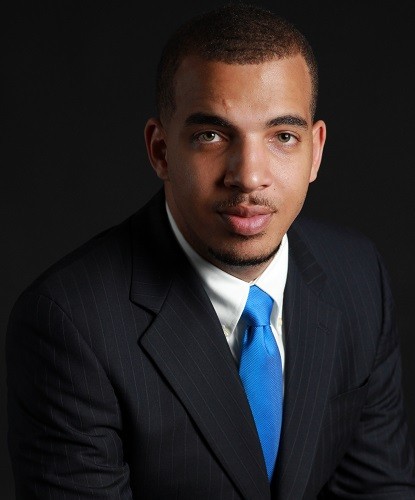
This is the first time this photo has
been published.
the Democratic staff to conduct an investigation into irregularities reported in the Ohio presidential election and to prepare a Status Report concerning the same prior to the Joint Meeting of Congress scheduled for January 6, 2005, to receive and consider the votes of the electoral college for president. The following Report includes a brief chronology of the events; summarizes the relevant background law; provides detailed findings (including factual findings and legal analysis); and describes various recommendations for acting on this Report going forward.

We have found numerous, serious election irregularities in the Ohio presidential election, which resulted in a significant disenfranchisement of voters. Cumulatively, these irregularities, which affected hundreds of thousand of votes and voters in Ohio, raise grave doubts regarding whether it can be said the Ohio electors selected on December 13, 2004, were chosen in a manner that conforms to Ohio law, let alone federal requirements and constitutional standards.

This report, therefore, makes three recommendations: (1) consistent with the requirements of the United States Constitution concerning the counting of electoral votes by Congress and Federal law implementing these requirements, there are ample grounds for challenging the electors from the State of Ohio; (2) Congress should engage in further hearings into the widespread irregularities reported in Ohio; we believe the problems are serious enough to warrant the appointment of a joint select Committee of the House and Senate to investigate and report back to the Members; and (3) Congress needs to enact election reform to restore our people’s trust in our democracy. These changes should include putting in place more specific federal protections for federal elections, particularly in the areas of audit capability for electronic voting machines and casting and counting of provisional ballots, as well as other needed changes to federal and state election laws.
Voting is beautiful, be beautiful ~ vote.©

Friday, June 1, 2018

CONYERS Retired, Resigned Or Is It A Federal Investigation?: Michael Gilmore Wants A Special Election


He is going to do the dramatic Hollywood style ceremonial "filing of the complaint" on the courthouse steps.

I am excited to see the video and what he is going to do with it for his campaign, because you know he is going to use the federal litigation for his campaign.

Well, the days of the political drama have been, oh, let us just say, have been placed under the lens of the cyber community, so all eyes shall be watching this case, in real time.

To begin, let us exam the reason why Michael is filing this lawsuit.

On second thought, that would be a waste of time so I am just going to identify his motivation to file the lawsuit in the title of the article, below.

He is filing to launch his campaign, and not for the greater good of society.

I say this because a congressional seat does not belong to a man nor is it an American title of nobility; it belongs to all people of the 13th Congressional District of Michigan, not just a targeted population of Detroit.

Can one use federal resources, in this case, the federal court, for a political campaign, particularly if the suit of law is for the seat you are attempting to sway to public to win?

This is a questionable way to kick off a political campaign.

This is also the part that where I defenestrate my reservations and remain consistent.

There is a formal process for a Member of Congress to resign and it is my belief that process was executed in a fraudulent manner.

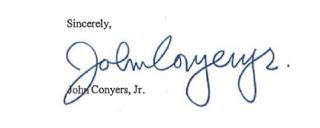
The following is copy of the Congressional Letter of "retirement" of John Conyers, Jr. which was found published with media outlets.


That does not look like his signature to me and I should know.

How could he sign a letter dated December 5, 2017 and enter it into public record when it was reported that he was hospitalized, medically incapacitated, November 30, 2017 in Detroit?

Hmmmmm....

According to media reports, Conyers' "retirement" was lobbied by a non-governmental, unlicensed attorney, and other Members of Congress, despite the fact that Arnold Reed was retained to represent Mr. Conyers.

Hmmmmm....

Date of signature: December 5, 2017

Date of signature: July 7, 2007


Date of signature: November 18, 2017

Date of signature: December 16, 2016


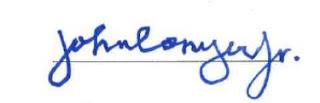
Only one of these signatures from United States Congressional Letters, is the real signature of John Conyers, Jr.

Can you guess which one is his?


Mother Superior Augustine would have had a heart attack if she bared witness to the reading of this letter with just about every sentence commencing with first person pronoun, "I", giving me every indication that the Gentlelady Jackson Lee was in rather a pressurized bind by a few unsavory characters.

See, I know what Nancy Pelosi did last summer, and the summer before that, and so on, with Bitch Boy, which is another reason why I speculate the legality of the process, because Nancy has been terribly mean to my Sweetie for quite some time.

I challenge the veracity of Mr. Conyers' voting record and policy positions because people have been forging his signature on congressional letters, for a long time, which is why I did this.

Original signature of John Conyers, Jr.
I was quite shocked when I found out how much individuals were getting for his forged signatures on congressional letters.

Quintessentially, if there are relevent questions raised surrounding the legitimacy of the "retiring" of Mr. Conyers, perhaps, this is the real reason why there will be no special election, as there are multiple, ongoing federal investigations.

Maybe Michael could attempt to validate his racist theories in discovery, or he could just do a basic internet search.

It is just a jurisdictional issue that would immediately halt any state "retirement" process.

But, hey, what do I know?

Candidate says he'll sue Gov. Snyder to move up election for Conyers' seat

A candidate for the U.S. House seat vacated by former U.S. Rep John Conyers filed a lawsuit against Gov. Rick Snyder demanding that the election be moved up to an earlier date.

On Dec. 8, Gov. Snyder had announced that Conyers' congressional seat would remain empty until the regularly scheduled November election, leaving it vacant for nearly a year. What's more, political observers have pointed out that since the post will be listed twice — once in the August primary and again in the November general election ballots — the office could be held by two different people before January is out.

In short, the move would leave Detroiters without effective representation for 11 months — and perhaps even longer.

Michael Gilmore announced today that he intends to sue Gov. Snyder to move up the election for Conyer's vacant U.S. House seat. - PHOTO COURTESY MICHAEL GILMORE FOR U.S. HOUSE
Michael Gilmore
As the Associated Press noted earlier this month judging by a review of roughly 100 vacancies and successors listed on the House website for the last 20 years, it is unusual for a congressional district to stay vacant for so long. Eleven months would be the longest time a House seat stayed empty during that period.

Gov. Snyder had said his decision would both save money and give candidates ample time to campaign. But given his role in establishing Emergency Management in Michigan, this situation calls another lawsuit to mind — namely one filed by the Detroit Branch of the NAACP against Gov. Snyder that Emergency Management has violated the voting rights of the state's African Americans, effectively stripping representation away from residents in majority-minority cities and school districts. By some estimates, more than half of the state's blacks had their representatives overruled by Snyder-appointed viceroys.

None of this is lost on candidate Michael Gilmore, who has announced his intention to sue the governor over the scheduling of this election:

"Gov. Snyder continues to treat residents of urban areas across the state as second-class citizens and is violating a laundry list of constitutional laws in doing so," Gilmore said in a statement released today. "By holding this congressional seat vacant for 11 months, he is denying minority residents of the 13th Congressional District the right to vote and the right to be represented in Congress. This is yet another attempt to further silence the voice of minorities in the state and disregard their views. From putting emergency managers only in minority school districts and city halls to signing off on the Flint water crisis for fiscal benefit, Gov. Snyder has historically cited cost-saving measures as his reason for denying civil and human rights to urban areas. Here, he is once again attempting to balance the state's budget on the backs of Black people, in the name of 'cost savings.'"
Gilmore says he will discuss his lawsuit against Gov. Snyder at 10 a.m. Tuesday, Jan. 2, 2018, at the Fort Street entrance of the Theodore Levin United States Courthouse, Detroit.


One man hoping to win an empty congressional seat is suing the governor for waiting until November to fill the seat. Most residents have a representative in Congress until the next election.

However, because Congressman John Conyers resigned in 2017, and Gov. Rick Snyder set an election to fill his seat starting in November, residents of the 13th congressional district will not have a representative in Congress for 11 months in 2018.

"Governor Snyder continues to treat residents of urban areas across the street as second class citizens," Michael Gilmore said. Governor Snyder has historically cited cost saving measures as his reason for denying civil rights and human rights to urban areas," he said.

The governor does believe setting the date for the special election in August and November on the same dates as the regular general election will save local taxpayers up to $2 million.

"Divide $2 million by the 658,000 residents, that totals roughly $3 per person," he said.
Gilmore calls this systemic discrimination in the 13th congressional district, which he says is composed of over 62 percent minority residents.

"He is once again attempting to balance the state's budgets on the backs of black people in the name of cost savings," he said.

Gilmore is also a candidate for this seat. Might his lawsuit be self-serving?

"I don't believe this is self-serving, in fact I'm actually quite ashamed that I'm the only one talking about it," he said. "Donald Trump has already begun to illuminate important social programs that we need in this area, and no one else is talking about it?"

Gilmore says that typically vacancies are filled within a few months and he has asked the federal court to make a quick ruling hopefully by the end of February. There's been no formal response from the governor's office. 


Stay tuned.

Voting is beautiful, be beautiful ~ vote.©

Monday, December 11, 2017

NADLER AND CUMMINGS TO JUSTICE DEPARTMENT: “YOUR FAILURE TO TREAT US AS AN EQUAL PARTICIPANT IN THIS INVESTIGATION IS UNACCEPTABLE”


Washington, D.C.—Today, Rep. Jerrold Nadler, the Ranking Member of the House Committee on the Judiciary, and Rep. Elijah E. Cummings, the Ranking Member of the House Committee on Oversight and Government Reform, sent a letter, below, to Attorney General Jeff Sessions and Deputy Attorney General Rod Rosenstein expressing concerns about the Department of Justice’s failure to provide documents to Democrats as part of the joint investigation initiated by Chairmen Bob Goodlatte and Trey Gowdy into last year’s review by the Federal Bureau of Investigation (FBI) into Secretary of State Hillary Clinton’s emails.

“We write concerning the Justice Department’s longstanding commitment to equal treatment of the Minority and Majority in Congress with respect to document production in connection with committee investigations.  We are disappointed that the Department has not honored this tradition with respect to the joint investigation initiated by Chairman Goodlatte and Chairman Gowdy on October 24, 2017. 

“As you know, on November 3, 2017, Chairman Goodlatte and Chairman Gowdy wrote to you to request certain documents related to the FBI’s handling of its investigation into former Secretary of State Hillary Clinton’s use of a private email server.   On December 6, 2017, Chairman Goodlatte wrote an additional letter to the Department referencing this investigation and requesting information involving a reported FISA warrant involving Carter Page and relating to Russian interference in the 2016 election.  In between, the Department of Justice appears to have engaged in extensive correspondence with our Majorities, produced 1,100 pages of documents to our committees, and promised to provide 1.2 million additional records to the committees by January 15, 2018
.   

“Unfortunately, we did not learn of your interactions with the Majority until after Chairman Goodlatte mentioned his efforts at last week’s Judiciary Committee hearing with FBI Director Christopher Wray.  Your failure to treat us as an equal participant in this investigation, to simultaneously provide us with copies of that correspondence, or to produce these documents to our offices directly, is unacceptable and inconsistent with House rules,” the Members wrote.

The Ranking Members requested copies of all correspondence with the Majority related to the investigation, as well as any Republican requests for documents related to the investigation. The Ranking Members also requested copies of all documents and communications related to allegations that FBI Agents in the New York office may have leaked information regarding the investigation prior to the November, 2016 presidential election.
Voting is beautiful, be beautiful ~ vote.©

Wednesday, November 15, 2017

CONYERS: Why Nixon Should Have Been Impeached - 1974

Dean of the U.S. House
of Representatives
John Conyers, Jr.
RICHARD NIXON, like the President before him, was in a real sense a casualty of the Vietnam War, a war which I am ashamed to say was never declared. Since the hearings of the House Judiciary Committee began on May 9th, 1974, we have had a professional staff of some 89 men and women gather in great detail over 42 volumes of information that was considered throughout some 57 sessions. My analysis of the evidence clearly reveals an Administration so trapped by its own war policy and a desire to remain in office that it entered into an almost unending series of plans for spying, burglary and wiretapping, inside this country and against its own citizens, and without precedent in American history.

Let us turn back to 1969 when the war was still going on and the President authorized the bombing of infiltration routes that passed through two independent and sovereign nations, Cambodia and Laos. On May 9, 1969, shortly after the bombing began, William Beecher, the Pentagon correspondent for the New York Times, published a story disclosing that "American B-52 bombers in recent weeks have raided several Viet Cong and North Vietnamese supply dumps in Cambodia for the first time." That story triggered the beginning wiretaps and shortly thereafter, the Administration embarked upon a program of illegal surveillance involving both members of the press and of the Government.

And so this secret war in Cambodia, which seemed at first incidental as I studied the record before us, has emerged as the starting point which enables me to understand the tremendous amount of surveillance and spying and burglary that has characterized the evidence and this Administration, and led to eventual impeachment proceedings.

THE JUDICIARY Committee undertook its impeachment inquiry with a clear recognition of the gravity of its responsibility to the Congress and the Constitution. Our task was unique in modern history and complicated by the sheer weight of the evidence to be evaluated. But the process of impeachment is not, and was never intended to be, familiar, convenient, or comfortable. It was framed with the intention that it be used only as a last constitutional resort against the danger of executive tyranny. The Congress should not lightly interpose its judgment between the President and the people who elect him, but we cannot avoid our duty to protect the people from "a long train of Abuses and Usurpations."

The articles of impeachment recommended by the Judiciary Committee, although narrowly drawn, are fully consistent with our constitutional responsibility. There is clear and convincing proof that Richard Nixon violated his oath of office and committed high crimes and misdemeanors which jeopardized the liberties of the people. In calling him to account, we also re-establish the proper parameters of presidential conduct. It is essential, therefore, that the record of our inquiry be complete so that no future president may infer that we have implicitly sanctioned what we have not explicitly condemned.

President Nixon's determination to extend the Vietnam War throughout Indochina led him to conclude that the infiltration of men and supplies through Cambodia and Laos had to be interdicted. This could have been done by bombing North Vietnam, but at the cost of destroying the fragile Paris Peace talks, then in progress. His only recourse, given his assumptions, was to bomb the supply routes in Cambodia which led into South Vietnam At the same time, he apparently realized that public disclosure of such bombing would create a firestorm of Congressional and public protest.
The logic of the White House becomes clear: Vietnamization required the bombing of Cambodia, which in turn required secrecy at all costs. The pressures of concealment led in turn to a spirit of distrust within the administration which spread as the President and his aides became increasingly enmeshed in the snare of lies and half-truths they had themselves created. Having decided that the People and the Congress could not be trusted with the truth, Mr. Nixon's distrust was soon extended to his own foreign policy advisors and assistants.

The authorization and concealment of the Cambodian bombing, and the means he employed to prevent its disclosure, illustrated in the very first months of his administration that the President was prepared to do anything he considered necessary to achieve his objectives. To defend both the bombing and the subsequent wiretapping, he invoked the concept of national security, a convenient rationalization to be used whenever the occasion demanded an explanation for some concealed governmental conduct. The imperial presidency of Richard Nixon came to rely on this claim as a cloak for clandestine activity, and as an excuse for consciously and repeatedly deceiving the Congress and the people.

NIXON TURNED on his critics with a vengeance, apparently not appreciating that others could strenuously disagree with him without being either subversive or revolutionary. He took full advantage of the FBI's willingness to invade people's private lives without legal justification and without regard for their civil liberties. This willingness was documented during Congressional Black Caucus hearings on governmental lawlessness in June, 1972, which revealed that the files of the FBI and the Secret Service are laden with unverified information, often inaccurate and slanderous, on thousands of citizens, particularly blacks, who have had the temerity to speak out against racism, injustice, or the Indochina war. This surveillance of government critics by the FBI began, of course, before Mr. Nixon took office, but his administration gave renewed approval to some of the ugliest abuses of governmental power.

Obsessed by the notion that the disruptive activities of the blacks and students who criticized him were receiving foreign support, he repeatedly demanded that the FBI and CIA conduct extensive investigations to verify this potential conspiracy. But, even with additional authority conferred on these agencies, their reports continually indicated that his fears were unfounded. The inability of the FBI and CIA to substantiate the President's conviction that many of his critics were engaged in subversion or international conspiracy led him to increasingly question their operational efficiency.
Hence, the President's approval of the Huston plan in July, 1970, represented nothing more than an extension of an already demonstrated willingness to harass and spy on his political opponents. Even if the Huston plan itself was subsequently tabled, its spirit lived on in the White House and soon took tangible form with attempts to use the Internal Revenue Service for discriminatory personal and political purposes, and with the activities of the Plumbers unit.

The Plumbers put the essence of the Huston plan into practice and provided the President with his own secret intelligence force to investigate his critics and discredit them by any means possible, without even the most elementary regard for individual privacy or public morality.

With the assistance of the President's closest advisors, the Plumbers violated the charter of the Central Intelligence Agency by seeking CIA assistance to impugn the integrity of Senator Edward Kennedy, and to assess the administration's potential vulnerability from ITT's Dita Beard, whose confidential memo implied that a bribe had been offered to settle the ITT antitrust case.

They sought to discredit the Democratic party by falsifying State Department cables to implicate President Kennedy in the assassination of South Vietnamese President Diem. They broke into the Los Angeles office of Dr. Fielding in an attempt to gain medical information that would defame Daniel Ellsberg and, through him, the critics of the President's war policies.

In these ways, and perhaps in other ways still undisclosed, they violated every canon of morality and legality which stood between them and their goal of discrediting and undermining the President's "enemies".

THESE ACTIVITIES demonstrate that the break-in and bugging of the Democratic National Committee, and the subsequent cover-up specified in Article I, were not inexplicable aberrations from a standing presidential policy of strict adherence to the law. Instead, in proper perspective, the Watergate break-in emerges as only one incident in a continuous course of conduct which had its origins in the first months following President Nixon's inauguration.

The subsequent concealment was intended not merely to protect the White House from its complicity in the Watergate incident itself, but to avoid disclosure of the entire train of illegal and abusive conduct that characterized the Nixon presidency:

-Obstruction of justice;
-Perjury and subornation of perjury;
-Offers of executive clemency;
-Attempts to influence a federal judge;
-Destruction of evidence;
-Disclosure of secret grand jury proceedings;
-Withholding information of criminal activity;
-Impoundment of Congressional appropriations;
-Willful tax evasion;
-Possible bribery in connection with the ITT antitrust and milk price support decisions;
-And interference with the lawful activities of the CIA, FBI, IRS, Special Prosecutor, House Banking and Currency Committee, Senate Select Committee on Presidential Campaign Activities, and finally, the House Judiciary Committee.

In these ways, the President sought to avert disclosure of a seamless web of illegality and impropriety.

That cover-up continued to the end, in that the President attempted to deceive the Congress and the American people by concealing and misrepresenting his knowledge and participation in these activities, and even while resigning, refusing to admit his complicity. Additionally, he withheld necessary information from the Special Prosecutors and fired Special Prosecutor Cox for his efforts to fully discharge his responsibilities. He refused to comply with the legal and proper subpoenas of the Judiciary Committee, as charged in Article III. He mutilated and destroyed evidence in his possession or caused that to happen, and did very nearly everything in his power to impede, delay, and obstruct the proper course of justice.

In my judgment, this course of presidential conduct, outlined above and specified in Articles I, II, and III, provides irrefutable evidence that Richard Nixon was not fit to enjoy the trust and authority which reposes in the Presidency of the United States.

But of at least equal importance is the uncontroverted evidence that Mr. Nixon authorized an illegal war against the sovereign nation of Cambodia, and sought to protect himself from criticism and possible repudiation by engaging in deliberate policies of concealment, deception, and misrepresentation.

On July 30, 1974, I proposed the following article of impeachment:

In his conduct of the office of President of the United States, Richard M. Nixon, in violation of his constitutional oath faithfully to execute the office of President of the United States and, to the best of his ability, preserve, protect, and defend the Constitution of the United States, and in disregard of his constitutional duty to take care that the laws be faithfully executed, on and subsequent to March 16, 1969, authorized, ordered and ratified the concealment from the Congress of the facts and the submission to the Congress of false and misleading statements concerning the existence, scope and nature of American bombing operations in Cambodia in derogation of the power of the Congress to declare war, to make appropriations, and to raise and support armies, and by such conduct warrants impeachment and trial and removal from office.

Although this article was not recommended by the Committee, it is fully supported by the facts and the Constitution.

The President of the United States must exercise only those powers which are legally and constitutionally his to exercise, and, by his actions, he must demonstrate due respect for the democratic rights of the people and the constitutional responsibilities of the Congress. The manner in which the Cambodian bombing was initiated, conducted, and reported clearly exceeded the constitutional powers of the presidency, and presented indisputable evidence of impeachable conduct.
President Nixon unilaterally initiated and authorized a campaign of bombing against the neutral nation of Cambodia. For the next four years, he continually deceived the Congress and the American people as to when the bombing began and how far it extended. In so doing, he exceeded his constitutional power as commander-in-chief. He usurped the power of the Congress to declare war, and he expended monies for a purpose not authorized or approved by the Congress. In so doing, he also denied the people of the United States their right to be fully informed about the actions and policies of their elected officials.

It is important to note that the facts pertinent to the Cambodian bombing are not in question. On 11 February 1969, General Creighton Abrams, Commander of the United States Military Assistance Command Vietnam, recommended and requested authorization to conduct bombing strikes in Cambodia. Between 12 February and 17 March 1969, this request was considered by the President in meetings of the National Security Council. On 17 March 1969, President Nixon authorized the bombing of Cambodia.

The bombing began on 18 March 1969 and continued unabated until 15 August 1973. From 18 March 1969 to 1 May 1970, when the United States initiated ground combat operations in Cambodia, 3,695 B-52 sorties were conducted, during which a total of105,837 tons of bombs were dropped on Cambodia. From the beginning to the end of the bombing campaign in August, 1973,more than 150,000 sorties dropped in excess of 500,000 tons of bombs in Cambodia.

The bombing operations took the form of three different operations, code named "Menu Operation", "Patio", and "Freedom Deal". Under the procedure instituted for reporting "Menu Operation" bombing missions, the regular, operational reports prepared after each mission indicated that the strikes had taken place in South Vietnam rather than in Cambodia. Most "Patio" bombing missions were not reported at all; forty-eight "special" "Patio" strikes were reported as having occurred in Laos, rather than Cambodia. The "Freedom Deal" tactical air strikes began on 30 June 1970, the date on which the last contingent of American ground forces was withdrawn from Cambodia. These strikes were reported as having taken place in Cambodia, but in many cases, the targets of "Freedom Deal" strikes were not those which were authorized and reported.

SIMILARLY, THERE is no dispute that the President made a decision to keep the bombing secret. When President Nixon approved the first bombing strikes in Cambodia, he directed General Earle Wheeler, Chairman of the Joint Chiefs of Staff, to inform General Abrams that the bombing operations were not to be discussed with any unauthorized person, even though this meant circumventing the normal chain of command which would otherwise have included the Secretary of the Army, the Vice Chief of Staff for the Air Force, and the Commander of the Seventh Air Force.
The President's policy of concealment, deception, and misrepresentation was consistently reflected in his own public statements and in the Congressional testimony of his military and civilian subordinates.

In a nationally televised address on 14 May 1969, two months after the bombing in Cambodia began, the President stated, "1 have tried to present the facts about Vietnam with complete honesty, and I shall continue to do so in my reports to the American people."

At a news conference on 8 December 1969, the President asserted that the people of the United States were entitled to know everything they could with regard to any involvement of the United States abroad.

At another news conference on 21 March 1970, President Nixon declared that the United States would continue to "respect Cambodia's neutrality."

On 30 April 1970, when the President announced the American invasion of Cambodia, he reviewed previous American policy toward Cambodia in the following terms:

American policy since then has been to scrupulously respect the neutrality of the Cambodian people. We have maintained a skeleton diplomatic mission of fewer than 15in Cambodia's capitol, and that only since last August. For the previous 4 years, from1965 to 1969, we did not have any diplomatic mission whatever in Cambodia. And for the past 5 years, we have provided no military assistance whatever and no economic assistance to Cambodia. For 5 years, neither the United States nor South Vietnam has moved against these enemy sanctuaries because we did not wish to violate the territory of a neutral nation. Even after the Vietnamese Communists began to expand these sanctuaries 4 weeks ago, we counseled patience to our South Vietnamese allies and imposed restraints on our own commanders.

On 30 June 1970, the President released a report entitled "The Cambodian Operation" which stated in part:

For five years. North Vietnam has used Cambodian territory as a sanctuary from which to attack allied forces in South Vietnam. For five years, American and allied forces - to preserve the concept of Cambodian neutrality and to confine the conflict in Southeast Asia - refrained from moving against these sanctuaries.

The evidence is unmistakeable, therefore, that President Nixon personally and directly lied to the American people by repeatedly concealing the fact that the United States had begun to bomb Cambodia in March, 1969.

THE PRESIDENT'S public assurances were complemented by the erroneous and misleading statements made to the Congress by his civilian and military subordinates. Such statements were made by the Chief of Staff of the Air Force, the Secretary of State, the Secretary of the Army, the Secretary of Defense, and the Secretary of the Air Force in testimony before the Senate Committee on Armed Services, the Senate Committee on Foreign Relations, the Senate Committee on Appropriations, and the House Committee on Appropriations.

For example, on 27 April 1970, Secretary of State Rogers testified before the Senate Foreign Relations Committee, declaring that, "Cambodia is one country where we can say with complete assurance that our hands are clean and our hearts are pure . . . Our best policy is to be as quiet as possible, to avoid any action which appears to violate the neutrality of Cambodia."

For example, on 16 April 1970, Secretary of the Army Resor testified before the Senate Appropriations Committee that there had been no "U.S. military aid and no Army support for Cambodia" since January, 1964.

For example, on 31 March 1971, Secretary of the Air Force Seamans was requested by the Senate Armed Services Committee to submit a report on American bombing missions in Indochina. Seamans subsequently submitted a classified report which indicated that no bombing strikes had been conducted in Cambodia prior to 1 May 1970, even though bombing strikes had actually begun in March, 1969.

It was not until 16 July 1973 that Secretary of Defense Schlesinger was forced to confirm earlier disclosures to the Senate Armed Services Committee that the United States had bombed Cambodia, a sovereign and neutral nation, before May, 1970.

Richard Nixon authorized the bombing of Cambodia. In a series of subsequent public statements, he deliberately and intentionally lied to the American people. And in their testimony before duly authorized committees of the Congress, his civilian and military subordinates failed to testify fully and accurately. Whether his subordinates deceived the Congress intentionally or unintentionally, the fact remains that the President must have known that they testified inaccurately, and he made no attempt to correct the record.

BY HIS SECRET bombing of Cambodia, President Nixon unquestionably exceeded his powers as commander-in-chief, for not even the most tortured interpretation of Article II, Section 2 could support a war begun and pursued in secrecy. He also violated Sections 7 and 8 of Article I, which give to the Congress the authority to make appropriations and declare war. For the "power of the purse" to have any meaning, the Congress must know how the money it appropriates is spent.
By conducting a war without the knowledge of the Congress, President Nixon further eroded whatever remains of the constitutional power of the Congress to decide when and where the United States shall be at war. We cannot sanction such a policy of deliberate deception, intended to nullify the constitutional powers of the Congress to legislate for the people we represent.

By the same policies of secrecy and deception, Richard Nixon also violated a principal tenet of democratic government: that the President, like every other elected official, is accountable to the people.

For how can the people hold their President to account if he deliberately and consistently lies to them? The people cannot judge if they do not know, and President Nixon did everything within his power to keep them in ignorance. In all good conscience, we must condemn his deception regarding Cambodia with the same fervor and outrage we condemn his deception regarding Watergate.
The difficult question is not whether the secret bombing of Cambodia constitutes impeachable conduct. That is too obvious to require further argument.

Instead, the question we must ponder is, why the Congress has not called Mr. Nixon to judgment for the bombing of Cambodia? The painful answer is that condemning the Cambodian bombing would also have required us to indict previous administrations and to admit that the Congress has failed to fully meet its own constitutional obligations.

WHETHER INTENTIONALLY or not, the Congress has participated in the degeneration of its power to declare war. Although a War Powers Act was passed recently, over the veto of President Nixon, no legislation is self-executing. Whatever its limitations and faults, this legislation, and the constitutional provisions on which it is based, will only have meaning to the extent that the Congress invests them with meaning. Instead of merely ratifying the decisions and recommendations of the executive branch, the Congress must demonstrate that it is once again prepared to play an active and constructive role in the formulation of foreign policy - in the creation of policies which will direct this nation toward war or peace.

If this is truly to be a representative government, then the people's representatives in Congress must no longer allow any one person to decide unilaterally when, where, and why Americans shall die violent deaths or kill others. The Congress may not be subject to impeachment, but it is subject to emasculation.

We must directly confront the fact that the secret bombing of Cambodia is only the most recent and egregious illustration of the disintegration of the war power of Congress, and that the Congress has participated in this process, wittingly or unwittingly.

If, during the impeachment proceeding, we have failed to learn this lesson, then we deserve the obloquy, not the gratitude, of the people of the United States. If we do not now fully dedicate ourselves to regaining every bit of constitutional ground we have surrendered, then - to paraphrase one of the President's men - we shall have lost our constitutional and moral compass.

IT HAS FREQUENTLY been argued during the past weeks that the Committee's inquiry and the President's subsequent resignation demonstrate that "the system works." But such satisfaction or complacency is misguided. We must recognize that we were presented with a seemingly endless series of public revelations and presidential actions which did more to undermine Mr. Nixon's position than any independent investigation undertaken by this Committee or its staff.

The Congressional inquiry has been the beneficiary of literally years of work by investigative reporters, the Special Prosecutor's office, and the Senate Select Committee on Presidential Campaign Activities. And most importantly, the President himself documented his words and actions through his secret taping system, without which our inquiry might never have even been begun. The President himself did more than anyone or anything to insure his removal from office.

If the system has worked, it has worked by accident and good fortune. It would be gratifying to conclude that the House, charged with the sole power of impeachment, exercised vigilance and acted on its own initiative. However, we would be deluding ourselves if we did not admit that this inquiry was forced on us by an accumulation of disclosures which, finally and after unnecessary delays, could no longer be ignored.

Perhaps, ironically, and certainly unintentionally, we have ourselves jeopardized the future of the impeachment process. Before this inquiry, the prospect of impeaching a president was disquieting because it had not been attempted in more than a century. Now with our inquiry as a precedent, future Congresses may recoil from ever again exercising this power. They may read the history of our work and conclude that impeachment can never again succeed unless another President demonstrates the same, almost uncanny ability to impeach himself.

If this is our legacy, our future colleagues may well conclude that ours has been a pyrrhic victory, and that impeachment will never again justify the agony we have endured. It is imperative, therefore, that we speak to them clearly: impeachment is difficult and it is painful, but the courage to do what must be done is the price of remaining free.

Voting is beautiful, be beautiful ~ vote.©

U.S. Senate Judiciary Committee Examines Special Counsel Under Watergate

During the Nixon administration, the Ethics in Governance Act of 1978 was created to establish the U.S. Office of Government Ethics and Special Counsel appointment procedure during Watergate investigation.


Conference report filed in House (10/11/1978)

(Conference report filed in House, H. Rept. 95-1756)


Ethics in Government Act - 

=Title I: Legislative Personnel Financial Disclosure Requirements=

- Requires each Member of Congress, each Congressional officer and employee who is compensated at a rate equal to or more than the pay rate for grade GS-16, and any candidate for the office of Member to file an annual financial disclosure report (hereinafter referred to as "report") containing specified information including: (1) sources amounts of income, gifts, and reimbursements; (2) the identity and approximate value of property held and liabilities owed; (3) transactions in property, commodities, and securities; and (4) certain financial interests of a spouse or dependent.

Provides that such report be filed with the Clerk of the House of Representatives or the Secretary of the Senate, for the employee's respective House. Directs the Clerk and the Secretary to: (1) send a copy of each report of a Member or candiate to the appropriate State officer of their State; (2) submit each report for review by either the Committee of Official Conduct of the House or the Select Committee on Ethics of the Senate; and (3) make such reports generally available to the public.

Prohibits the use of information from such reports for commercial, credit, or solicitation purposes, or for any unlawful purpose.

Authorizes the Attorney General to bring civil actions in any appropriate district court against individuals who knowingly and willfully falsify or fail to file or report specified information required under this Act.

Authorizes such courts to assess against such individuals civil penalties not to exceed $5,000.

Requires the Comptroller General to report to Congress on the effectiveness of the implementation of this Title and the feasibility of conducting random audits of such reports.

=Title II: Executive Personnel Financial Disclosure Requirements=

- Requires the President, Vice President, each presidential or vice- presidential candidate, each military officer rated at 0-7 or higher, each presidential appointee whose Senate confirmation is pending, and each employee of the Executive branch who is compensated at a pay rate equal to or greater than that for grade GS-16 to file such report as described in Title I of this Act which shall include additional information regarding positions held with business entities, and agreements with respect to future employment and continuation of payments by former employers.

Excludes political campaign funds, including campaign receipts and expenditures, from such reports.
Authorizes the Attorney General to bring civil actions and district courts to assess civil penalties similar to those in Title I against individuals for failure to file or falsifying reports. Requires the head of each agency, each Secretary concerned, and the Director of the Office of Government Ethics to refer to the Attorney General the name of any individual they have reasonable cause to believe has willfully failed to file a report or willfully falsified or failed to file required information. Authorizes the President, the Vice President, the Secretary concerned, and the head of each agency or the Civil Service Commission to take appropriate personnel or other action in accordance with applicable law or regulation against any individual failing to report information required to be reported.

Requires that such reports be made generally available to the public, with specified exceptions for certain individuals involved in intelligence activities.

Prohibits the use of information from such reports as described in Title I. Authorizes the Attorney General to bring civil actions against persons who obtain or use such reports for such prohibited purposes. Authorizes courts in which such actions are brought to assess against such persons penalties not to exceed $5,000 in any one case. Stipulates that such remedy shall be in addition to any other remedy available under statutory or common law.

Requires that reports be reviewed within 60 days of filing. Establishes procedures to notify individuals of their noncompliance and to assist them in complying with the requirements of this Act.
Permits the President to require officers and employees in the executive branch not covered by this title to submit confidential reports.

Permits the Director of the Office of Government Ethics to require by rule disclosure of gifts received by dependent children of reporting individuals if such information does not exceed that required of spouses.

Requires that the Comptroller General have access to executive personnel financial disclosure reports in order to carry out statutory responsibilities.

=Title III: Judicial Personnel Financial Disclosure Requirements=

- Requires the Chief Justice and the Associate Justices of the Supreme Court, each Federal court judge, judges of the courts of the District of Columbia, any presidential nominee for judicial office whose Senate confirmation is pending, and each judicial employee who is compensated at a pay rate equal to or greater than that for grade GS-16 to file such report as described in Title II.

Directs the Judicial Conference of the United States to establish a Judicial Ethics Committee to: (1) receive such reports of judicial personnel; (2) monitor compliance with this Title; (3) provide for the availability of such reports to the public; (4) develop the method of determining the value of assets required to be disclosed under this Title; and (5) review such reports to ascertain possible violations of conflict of interest laws.

Authorizes the Attorney General to bring civil actions and the courts to assess civil penalties similar to those in Title I and II against individuals failing to file or falsifying reports. Requires the Committee to refer the names of such individuals to the Attorney General.

Prohibits the use of information from such reports as described in Title I. Authorizes the Attorney General to bring civil actions against persons who obtain or use such reports for such prohibited purposes. Authorizes courts in which such actions are brought to assess against such persons penalties not to exceed $5,000 in any one case. Stipulates that such remedy shall be in addition to any other remedy available under statutory or common law.

=Title IV: Office of Government Ethics=

- Establishes in the Office of Personnel Management the Office of Government Ethics, with a Director to be appointed by the President, by and with the advice and consent of the Senate.
Requires the Director to provide overall direction of executive branch policies related to preventing specified conflicts of interest on the part of officers and employees of any executive agency. Stipulates certain responsibilities of the Director.

Requires the Director to consult, when appropriate, with affected executive agencies and the Attorney General in the development of policies, rules, regulations, procedures, and forms.

Requires the Director to develop and recommend and the Office of Personnel Management to promulgate a regulation establishing a method for readily determining, without the necessity for expert appraisal, the fair market value of assets required to be disclosed by this Act.

Directs each executive agency to: (1) make its services, personnel, and facilities available to the Director to the greatest practicable extent for the performance of functions under this Act; and (2) except when prohibited by law, furnish to the Director all necessary information and records in its possession.

Requires the Commission to issue its rules and regulations pertaining to financial disclosure, conflict of interest, and ethics in the Executive branch in accordance with the Administrative Procedure Act. Allows any person to seek judicial review of any such rule or regulation.

Authorizes the appropriation to carry out this Title of $2,000,000 for each of five fiscal years beginning with fiscal year 1979.

=Title V: Post-Employment Conflict of Interest=

- Extends from one to two years the period of prohibition on appearances before an agency by former Federal employees or officials or commissioned officers in the uniformed services at specified salary levels on matters that were under such persons responsibilities. Includes within such prohibition informal as well as formal contacts. Prohibits formal and informal contacts with such agencies by former employees on other matters for a period of one year after the end of such employment.
Exempts from the prohibition on contact with their former agency: (1) scientific personnel, if their communication is solely to furnish scientific and technical information; and (2) persons in specified positions designated by the Director of the Office of Government Ethics.

=Title VI: Amendments to Title 28, United States Code=

- Requires the Attorney General to investigate all specific allegations of Federal criminal law violations other than petty offenses, by specified individuals, including: (1) the President, Vice President, individuals at specified salary levels in the Executive Office of the President and the Department of Justice, any Assistant Attorney General, the Director and Deputy Director of Central Intelligence, and the Commissioner of the Internal Revenue Service; (2) all such specified individuals who held office during the incumbency of the President or during the period the last preceding President held office, if such preceding President was of the same political party as the incumbent President; and (3) any officer of the principal national campaign committee seeking the election or reelection of the President.

Requires the Attorney General to decide within 90 days whether the matter warrants further investigation or prosecution and if so, directs him to apply to the division of the U.S. Courts of Appeals responsible for the appointment of a special prosecutor.

Enumerates the authority and duties of a special prosecutor. Gives a special prosecutor all the investigative and prosecutorial functions and powers of the Department except those which specifically require the Attorney General's personal action.

Authorizes the special prosecutor to make public or send to Congress any statements or reports on his activities as special prosecutor he deems appropriate. Requires the special prosecutor to report to the division of the court at the conclusion of such special prosecutor duties.

Permits the special prosecutor to advise the House of Representatives of any substantial and credible information which may constitute grounds for impeachment of the President, Vice President, or a justice or judge of the United States.

Provides a procedure whereby specified Members of Congress can request that a special prosecutor may only be removed from office by impeachment and conviction, or by the Attorney General for extraordinary improperieties, physical disability, mental incapacity, or any other condition that substantially impairs performance. Permits the division of the court to terminate an office of special prosecutor at any time on the grounds that the investigations and prosecutions of such prosecutor have been completed.

Requires the Department of Justice to suspend all investigations and proceedings regarding any matter which is in the prosecutorial jurisdiction of a special prosecutor or which has been accepted by a special prosecutor under this Title, except to the extent required by this Title or insofar as such special prosecutor agrees in writing that such investigations or proceedings may be continued.

Allows the Attorney General or the Solicitor General to make a presentation as amicus curiae to any court as to issues of law raised by any case or proceeding or appeal in which a special prosecutor participates.

Terminates the provisions of this Act which pertain to a special prosecutor five years after the date on which this Act takes effect.

Authorizes to be appropriated such sums as may be necessary to be held by the Department as a contingent fund for the use of any special prosecutor appointed pursuant to this Act.

Requires the Chief Justice of the United States to assign three judges or justices for two-year periods to a division of the court to be the court for the appointment of special prosecutors. Requires the Chief Justice to assign three circuit court judges or justices, one of whom shall be a judge of the U.S. Court of Appeals for the District of Columbia, to such division of the court.

Requires the Attorney General to promulgate rules requiring any officer or employee of the Department, including a United States Attorney, to disqualify himself from participation in a particular investigation or prosecution if such participation may result in a personal, financial, or political conflict of interests or the appearance of such conflict.

Requires the Attorney General to report annually to Congress on the activities and operations of the Public Integrity Section and related investigations and prosecutions by any other units of the Department of Justice.

=Title VII: Senate Legal Counsel=

- Establishes an Office of Senate Legal Counsel.

Sets forth procedures for the appointment of a Senate Legal Counsel and a Deputy Senate Legal Counsel.

Makes the Office directly accountable to the Joint Leadership Group established under this Act.
Directs the Office to defend the Senate, a Member, officer, or employee of the Senate, or any agency or committee of the Senate if so authorized by a two-thirds vote of the Joint Leadership Group or by the adoption of a resolution by the Senate. Directs the Office to bring a civil action to enforce a Senate or committee or subcommittee subpoena only when directed to do so by the adoption of a resolution by the Senate. Directs the Office to intervene or appear as amicus curiae in the name of the Senate or of an officer, committee or subcommittee (or chair thereof) of the Senate. Directs the Office to serve as the duly authorized representative, in obtaining an order granting immunity under the Organized Crime Control Act, of: (1) the Senate, by an affirmative vote of a majority of Members present; or (2) a Senate committee or subcommittee, by an affirmative vote of two-thirds of the Members of the full committee.

Provides that the expenses of the Office shall be paid from the contingent fund of the Senate.

Voting is beautiful, be beautiful ~ vote.©

CONYERS: Sessions Testimony Leaves Concerns About Independence & Integrity Of DOJ


At DOJ Oversight Hearing, Sessions Refuses to Answer Questions & “Cannot Recall” Russia Details

Attorney General Refuses to Push Back on Pressure from White House; Stands by Weak Civil Rights Record; Hedges on Special Counsel for Clinton; Admits to Taking No Action to Protect U.S. Elections

Washington, D.C. – Today, U.S. Department of Justice Attorney General Jeff Sessions testified before the House Judiciary Committee for the first time during its annual oversight hearing. Every Attorney General before Attorney General Sessions has testified before the House Judiciary Committee during their first six months of taking office.


Ranking Member John Conyers, Jr. (D-MI) issued the following statement after the hearing:

“The Attorney General’s testimony today leaves me with grave concerns about the independence and integrity of the Department of Justice.  Attorney General Sessions paid lip service to the rule of law—but hedged his bets on the appointment of a special counsel to investigate President Trump’s political enemies.  I take little comfort in his testimony suggesting that the Department does not yet have a factual basis to pursue these charges.  The Department of Justice shouldn’t act this way to begin with.

“The Attorney General could not give us a straight answer on any of President Trump’s attacks on the Department or attempts to distract from the Russia investigation.  He stood by his record on voter ID laws and other measures designed to discriminate against minorities.  He freely admitted that he has done nothing to protect America’s next elections from foreign influence.  He also offered no clarification whatsoever on his shifting Russia testimony, except to say that he ‘did not lie’ and ‘cannot recall’ any key details.”

AG Sessions Responded “I Do Not Recall” to Dozens of Questions

Throughout the hearing, Attorney General (AG) Sessions avoided taking responsibility for his own statements, claiming a foggy memory about most aspects of contacts involving the Russian government. AG Sessions said “I did not lie” but refused to correct the record on his previous Senate testimony when asked by Rep. Sheila Jackson Lee (D-TX).  AG Sessions acknowledged that he was not sure what he told Papadopoulos regarding a possible Russia meeting. 

When pressed about Carter Page and his travels to Russia, Sessions replied, “No, I didn’t tell him not to go to Russia.  I didn’t recall [Page] saying that.  Am I supposed to stop him from taking the trip?”  AG Sessions also did not recall any discussions about changing the GOP platform regarding the Ukraine with Michael Flynn.

Attorney General Sessions Offered Little Clarity About a Second Special Counsel

Sessions could not explain why his involvement in a review of matters related to Hillary Clinton, James Comey, and Loretta Lynch for possible referral to a new special counsel does not violate the terms of his recusal. 

At his Senate confirmation hearing, he said:

“The proper thing for me to do would be to recuse myself from any questions . . . that involve Secretary Clinton and that were raised during the campaign.”

When Rep. Jim Jordan (R-OH) questioned Sessions today regarding the appointment of a second special counsel, Sessions responded that he believes that the Department has not yet established a factual basis that meets the standards of the appointments of a special counsel.  Rep. Jordan said it “looks like” wrongdoing took place.  AG Sessions responded: “‘Looks like’ is not enough basis to appoint a special counsel.” 

Sessions Refused to Answer Questions about Political Interference

Sessions refused to answer questions about whether President Trump could seek to fire Special Counsel Mueller. When asked about Steven Miller’s work on a letter describing the President’s motive for firing former FBI Director Comey, AG Sessions refused to answer—but also declined to invoke executive privilege.  Chairman Goodlatte refused Democratic efforts to compel an answer from the Attorney General.

Attorney General Sessions also would not answer questions regarding whether any one from the White House had contacted or attempted to influence DOJ regarding the AT&T/Time Warner merger, or efforts by Rupert Murdoch to purchase CNN. Before the hearing, Ranking Member Conyers and U.S. House Judiciary Antitrust Subcommittee Ranking Member David N. Cicilline (D-RI) pressed Chairman Goodlatte for a hearing on growing evidence of the Trump administration allowing politics to impact their review of mergers in the telecommunications and media industries. View the letter, below.

Attorney General Stands by Weak Civil Rights Record & Owns Election Security Failures

FBI Labeling of Black Activists 

When questioned by several Members, Attorney General Sessions said he had not seen the Black Identity Extremists memo released in August by the FBI and was unable to identify any current group that he would characterize as a “Black Identity Extremist.” The AG also was unable to identify any senior African-American staff in his office.

In October 2017, Congressional Black Caucus Chairman Cedric L. Richmond and Ranking Members John Conyers, Jr. (Judiciary), Bennie G. Thompson (Homeland Security), and Elijah E. Cummings (Oversight) sent a letter to  FBI Director Christopher Wray, requesting to meet about the origins of the assessment and how it will be used, and expressed concern about the assessment given the FBI’s “troubling history” of targeting black citizens, including Martin Luther King, Jr., and other civil rights leaders. View the letter here.

Supporting Voter Suppression
AG Sessions said that he will continue to defend voter ID laws that have been found to intentionally discriminate against minorities.  Session said that he believes he can “properly” enforce the laws without explaining how he plans to do so.

Lack of Action to Protect Future American Elections
AG Sessions acknowledged that the Department of Justice has not taken steps to secure future elections, and admitted our Nation is not where it needs to be to defend against foreign interference.

Voting is beautiful, be beautiful ~ vote.©

Tuesday, November 14, 2017

CONYERS: Statement On Oversight Of The U.S. Department Of Justice Hearing With Attorney General Jeff Sessions


Dean of the U.S. House
of Representatives
John Conyers, Jr.
Thank you, Mr. Chairman.

In the ordinary course of business, any one of a dozen topics related to the Department of Justice would be worthy of its own hearing.

And, to be clear, I would rather spend our time today discussing the upkeep of the criminal justice system, the enforcement of civil rights, and the work we must all do to ensure access to the ballot box.

Instead, we must spend our time debating the troubles of a wayward Administration: how the Attorney General conducts himself before Congress, how President Trump undermines the integrity of the justice system, and how the Department continues to ignore the oversight requests of this Committee.

Although this is the Attorney General’s first appearance before the House, he has already made three visits to our colleagues in the Senate.

At his confirmation hearing, he testified that he “did not have communications with the Russians.” 

Last month, he testified that “a continuing exchange of information between Trump’s surrogates and intermediaries for the Russian government . . . did not happen, at least to my knowledge, and not with me.”

We know now, of course, that neither of those statements is true.

Shortly after the Attorney General made the first comment, the Washington Post reported that he met with the Russian Ambassador at least twice during the campaign.

In the past month, we have also learned that the Attorney General must have been very much aware of a continuing exchange of information between the Trump campaign and the Russian government. 

In charging documents unsealed last month, George Papadopoulos—a foreign policy advisor to the Trump campaign—admits to extensive communications with Russian contacts.

At a March 31, 2016 meeting of the campaign’s National Security Advisory Committee—attended by candidate Trump, and chaired by Senator Sessions—Mr. Papadopoulos stated, “in sum and substance, that he had connections that could help arrange a meeting between then-candidate Trump and President Putin.”

It does not matter, as has been reported, that the Attorney General remembers this meeting after the fact—remembers it so vividly, in fact, that two unnamed sources say the Senator “shut George down.”

Under oath, knowing in advance that he would be asked about this subject, the Attorney General gave answers that were, at best, incomplete.

I hope the Attorney General can provide some clarification on this problem in his remarks today. I also hope that he can assure us that the Department is weathering near-daily attacks on its independence by President Trump—and that no office of the Department is being used to pressure the President’s political enemies.

In recent months, President Trump has attacked the “beleaguered” Attorney General, and criticized his “VERY weak position on Hillary Clinton crimes.”

The President has talked openly about firing the leadership of the Department—including the Attorney General, the Deputy Attorney General, the former Acting Director of the FBI, and Special Counsel Robert Mueller.

He did fire former FBI Director Comey—in his own words, “because of that Russia thing with Trump and Russia”—as well as acting Attorney General Sally Yates and all 46 sitting U.S. Attorneys.

Last year, he denigrated a federal judge because of his “Mexican heritage.”

Judge Curiel was born in Indiana, by the way.

Last month, in a radio interview, President Trump said he was “very unhappy” with the Justice Department. 

Hours later, he proclaimed the military justice system “a complete and total disgrace.”

But the one that sticks with me is the President’s July interview with the New York Times.

In that interview, he begins by, once again, attacking the Attorney General’s credibility. “Sessions never should have recused himself,” the President complains.

Then the conversation takes a sinister turn: “When Nixon came along . . . out of courtesy, the FBI started reporting to the Department of Justice.

But the FBI person really reports directly to the president of the United States.”

He goes on: “I could have ended [the Flynn investigation] just by saying—they say it can’t be obstruction because you can say, ‘It’s ended. It’s over. Period.’”

As is often the case, the President requires some correction.

The Director of the FBI reports directly to the Attorney General, and has since the founding of the Bureau.

It can be obstruction of justice, if the President orders an investigation closed with a corrupt motive.

But what strikes me about these comments is the President’s view that the criminal justice system serves him—and not the public.

President Trump seems to believe that, on a whim, he can bring pressure to bear on his enemies, dismiss charges against his allies, and insulate himself and his family from any consequence. I cannot overemphasize the danger this perspective poses to our republic.

I have served on this Committee long enough to remember another President who shared this view. I was, myself, on Richard Nixon’s enemies list.

And although we worked to hold that Administration accountable, our work is not complete.

We must all remember our common responsibility to prevent that kind of abuse from happening again. I will look to the Attorney General’s partnership in this effort—but I have begun to worry about his resolve.

Last night, in a letter sent by the Department to Chairman Goodlatte—without so much as a copy to the Ranking Member, by the way—the Assistant Attorney General seems to leave the door open to appointing a new special counsel to cater to the President’s political needs.

The fact that this letter was sent to the Majority, without the customary and appropriate notice to me, indicates that the charge given to Department officials to evaluate these issues has political motivations.

Now, in his own words, the Attorney General is recused “from any questions involving . . . investigations that involve Secretary Clinton.”

Further, we cannot refer an investigation to a second special counsel if we lack the evidence to predicate a criminal investigation in the first place.

Virtually every Clinton-related matter that President Trump complains about has been well-litigated, carefully examined, and completely debunked.

Still, to quote former Attorney General Michael Mukasey, “putting political opponents in jail for offenses committed in a political setting . . . is something that we don’t do here.”

The threat alone resembles, in his words, “a banana republic.”

Finally, there is the matter of routine oversight between hearings.

In the recent history of this Committee, new attorneys general usually come to see us within two or three months of taking office.

No attorney general in recent memory has taken more than six months before making an appearance here.

Attorney General Sessions has broken that norm—he has had more than ten months to settle in—making our communications with the Department between hearings that much more important.

To date, my colleagues and I have sent more than forty letters to the Trump Administration asking for information necessary to carry out our oversight responsibilities.

We have sent more than a dozen of these letters directly to the Attorney General. To date, we have not received a single substantive response.

We can disagree on matters of policy, Mr. Attorney General—but you cannot keep us in the dark forever.

When we make a reasonable oversight request, we expect you to reply in a prompt and responsive manner. I hope you can explain why your Department has chosen to ignore these letters.

More importantly, I hope that you will be more forthcoming with your answers—both in your testimony today and in the weeks to come.

I look forward to your testimony, and I yield back the balance of my time.


Voting is beautiful, be beautiful ~ vote.©