Showing posts with label surveillance. Show all posts

Saturday, July 20, 2019

CONYERS: FBI Broke the Law and General Counsel’s Office, Headed by Valerie Caproni, Sanctioned It and Must Face Consequences


MARCH 20, 2007

Dean of the U.S. House
of Representatives
John Conyers, Jr.

(Washington) April 14, 2010 - House Judiciary Committee Chair John Conyers, Jr. (D-Mich.) issued the following statement after the Judiciary Subcommittee Hearing on the Report by the Office of Inspector General (IG) of the Department of Justice on the FBI’s Use of Exigent Letters and Other Informal Requests for Telephone Records.

"Today’s hearing showed that the FBI broke the law on telephone records privacy and the General Counsel’s Office, headed by Valerie Caproni, sanctioned it and must face consequences," said Conyers. "I call upon FBI Director Mueller to take immediate action to punish those who violated the rules, including firing them from the agency. This must include the FBI Office of General Counsel, headed by Valerie Caproni, which the IG testified today had ‘approved [the] continued use’ of exigent letters and ‘provided legal advice that was inconsistent with’ federal law.

https://www.c-span.org/video/?186015-2/personal-information-privacy

https://www.c-span.org/video/?197219-1/fbi-national-security-letters

https://www.c-span.org/video/?286761-2/security-privacy-technology

Image result for Valerie Caproni
Valerie Caproni
"Between 2003 and 2006, the FBI improperly obtained personal telephone record information from U.S. telephone companies for more than 5,500 phone numbers, including private details protected by federal law. The IG found that, during this period, much of this information was obtained through the use of so-called ‘exigent letters’, which do not exist in the Patriot Act and have no statutory basis whatsoever. In some cases agents sent letters with information known to be false.

"The FBI must fulfill its obligations to protect the rights as well as the security of all Americans. I share the concerns of my colleague, the former Republican chairman of the Committee James Sensenbrenner (R-Wis.), who today said,

‘I’m extremely disappointed that every time Congress has tried to plug potential civil rights and civil liberties violations in our counterterrorism activities, the FBI seems to have figured out a way to get around it.’

Voting is beautiful, be beautiful ~ vote.©

Friday, December 8, 2017

Day 48.6. Jordan Highlight of the Day


Voting is beautiful, be beautiful ~ vote.©

Day 48.4. Five EB5s, Four FISA Warrants, Three Wiretaps


Judge presiding over Michael Flynn criminal case is recused

(Reuters) - The U.S. District Court for the District of Columbia judge presiding over the criminal case for President Donald Trump’s former National Security Adviser Michael Flynn has been recused from handling the case, a court spokeswoman said on Thursday.

According to a court filing, U.S. District Court Judge Rudolph Contreras, who presided over a Dec. 1 hearing where Flynn pleaded guilty to lying to the Federal Bureau of Investigation about his contacts with Russia, will no longer handle the case.

Court spokeswoman Lisa Klem did not say why Contreras was recused, and added that the case was randomly reassigned.

Reuters could not immediately learn the reason for the recusal, or reach Contreras.
An attorney for Flynn declined to comment.

Now, Flynn’s sentencing will be overseen by U.S. District Court Judge Emmet Sullivan. Sullivan was appointed by former Democratic President Bill Clinton.

Flynn was the first member of Trump’s administration to plead guilty to a crime uncovered by Special Counsel Robert Mueller’s wide-ranging probe into Russian attempts to influence the 2016 U.S. presidential election and potential collusion by Trump aides. Russia has denied meddling in the election and Trump has dismissed any suggestion of collusion.

Flynn has agreed to cooperate with Mueller’s ongoing investigation.

A sentencing date has not yet been set, but the parties are due to return to court on February 1 for a status report hearing.

Contreras was appointed to the bench in 2012 by former Democratic President Barack Obama.
He was also appointed to the Foreign Intelligence Surveillance Court in May 2016 for a term lasting through 2023.

That court issues warrants that allow Justice Department officials to wiretap individuals, a process that has been thrown into the spotlight amid the investigation into alleged Russian interference in the U.S. election.

The most recent controversy related to FISA warrants involves Peter Strzok, a senior FBI agent who was removed from the Russia investigation for exchanging text messages with a colleague that expressed anti-Trump views.

At a hearing on Thursday at the House Judiciary Committee, Republican lawmaker Jim Jordan pressed FBI Director Christopher Wray on whether a former British spy’s dossier of allegations of Russian financial and personal links to Trump’s campaign and associates was used by Strzok to obtain a FISA warrant to surveil Trump’s transition team.


Judge Sullivan previously served on the Superior Court of the District of Columbia and the District of Columbia Court of Appeals under appointments by Republican Presidents Ronald Reagan and George H.W. Bush, respectively.

Voting is beautiful, be beautiful ~ vote.©

Day 48.3 Evasion, Evasion,Evasion Wray Lays an Goose Egg


Voting is beautiful, be beautiful ~ vote.©

Wednesday, November 8, 2017

CONYERS: Judiciary Statement On Markup Of H.R. 3989, The USA Liberty Act

Dean of the U.S. House
of Representatives
John Conyers, Jr.
Thank you, Mr. Chairman.  I want to begin by acknowledging the opposition to this bill.

There are many in the civil liberties community who fear that H.R. 3989, the USA Liberty Act, does not accomplish every reform we had hoped to see. 

They are rightly concerned that the government has used the Foreign Intelligence Surveillance Act in ways that Congress had never contemplated, and that the public would never tolerate. 

Others fear the bill goes too far.  For the most part, these critics are patriots charged with keeping us safe, and whose greatest fear is somehow falling short in that responsibility.
           
To those in the civil liberties community, I would point to all of the good work done in this bill.

For years, our members have expressed concern that information collected under Section 702 is repurposed for criminal investigations and other projects that have nothing whatsoever to do with national security. 

This bill will end that practice.  If a law enforcement agency wants  access to this information, they must first obtain a warrant based on individualized suspicion and probable cause.

We have also, for years, opposed so-called “about” collection—the gathering of communications that simply mention foreign targets—both because Congress never intended for Section 702 to be used that way, and because it swept in so much unrelated content. 

Twice, the FISA court has taken a hard look at “about” collection.  Twice, the court found it deficient on Fourth Amendment grounds, taking the government to task for an institutional “lack of candor” that allowed the deficiencies to persist for years without correction. 
           
In March, faced with the prospect of losing Section 702 altogether, the NSA voluntarily ended the practice.  Our bill would prohibit that type of surveillance by law.

The bill also creates a new regime of transparency and accountability. 

It encourages the court to appoint an amicus to its annual hearings on Section 702—someone to push back against the government’s more creative legal arguments. 

Any agency that has access to Section 702 information must publish their minimization procedures. 

The government will owe both Congress and the public a never-before-seen level of detail about how they use this statute. 

Have we accomplished every reform I had hoped to see?  We have not. 

But this legislation represents real, achievable, substantive reform. 

I am proud of this work, and Chairman Goodlatte and I will fight to protect this package of reforms as it makes its way to the floor.

To the men and women of the intelligence community, I would point to the extraordinary lengths we have taken to ensure that you have the tools you need to analyze foreign intelligence information.

I know that many are uncomfortable with the prospect of reform—any reform—not because they want to spy on Americans, but because they want to protect us from real and present threats to our country.

But there is a reason that it falls to this Committee—and not to the intelligence committees, or to the agencies themselves—to build the legal framework for these powerful surveillance authorities. 

In this room, a step or two removed from the urgency of every threat that comes across the screen, we can have an honest conversation about how these authorities accord with our values. 

That is precisely what has happened here.  For months, we have examined Section 702 in a sober and serious light.  We have heard from government agents, legal experts, technology and communication companies, and the best of civil society.

At the end of our discussion, we have reached consensus that Section 702 should be reauthorized—but if, and only if, it can be brought better in line with values like privacy, transparency, and due process.

Which brings me to my concluding thought: 

When we discuss powers and programs like these, it can be tempting to frame the discussion as balancing act between security and privacy.

I find that framing a false choice.

The central thesis of the USA Liberty Act is that we can have both security and privacy.  We can give the government the tools it needs and do so in a way that better respects our core values.

We proved that we could do so in the last Congress, when we worked together to pass the USA Freedom Act.

We will do so again today.

I want to thank the Chairman for his leadership on this issue. 

I also want to thank each of the original cosponsors of this bill—Democrats and Republicans alike—for lending their support to this important project. I urge my colleagues to support this legislation, and I yield the balance of my time.

Voting is beautiful, be beautiful ~ vote.©

Saturday, October 7, 2017

CONYERS, GOODLATTE and Judiciary Committee Members Introduce the USA Liberty Act


Washington, D.C. – House Judiciary Committee Ranking Member John Conyers, Jr. (D-Mich.)Ranking Member John Conyers, Jr. (D-Mich.),  Chairman Bob Goodlatte (R-Va.), Crime, Terrorism, Homeland Security, and Investigations Subcommittee Chairman Jim Sensenbrenner (R-Wis.), Crime, Terrorism, Homeland Security, and Investigations Subcommittee Ranking Member Sheila Jackson Lee (D-Texas), and Courts, Intellectual Property and the Internet Subcommittee Ranking Member Jerrold Nadler (D-N.Y.) today introduced the USA Liberty Act (H.R. 3989). This bipartisan bill reforms and reauthorizes Section 702 of the Foreign Intelligence Surveillance Act (FISA), which is set to expire at the end of this year, to protect both national security and Americans’ civil liberties.

The USA Liberty Act preserves the core purpose of Section 702: the collection of communications by targeting non-U.S. persons located outside the U.S. in order to identify and thwart terrorist plots against our nation and our citizens. The bill also creates a new framework of protections and transparency requirements to ensure that the government’s use of Section 702 accords with principles enshrined in our Constitution that protect individual liberty. It provides new accountability measures to address the unmasking of U.S. persons’ identities and new reporting requirements on the number of U.S. persons who have been swept up in Section 702 collection. The bill also enhances national security by increasing penalties for those who leak classified information and calling on the intelligence agencies to share information with each other and with our allies to combat terrorism.
Below are statements from Judiciary Committee leaders on the introduction of the USA Liberty Act.

Ranking Member Conyers: “Section 702 of the Foreign Intelligence Surveillance Act is essential to the intelligence community’s gathering of foreign intelligence and detecting threats to the homeland.  Its reauthorization should include reforms that bring this authority better in line with our sense of privacy and due process.  Indeed, we believe that it will only be possible to reauthorize Section 702 with such reforms in place. The bipartisan USA Liberty Act is designed to accomplish this goal.”

Chairman Goodlatte: “The USA Liberty Act protects Americans’ lives and their civil liberties. This bipartisan bill reauthorizes a critical national security tool that keeps Americans safe but also reforms it to protect Americans’ constitutional rights. It contains more accountability, transparency, and oversight so that the American people have confidence that our cherished liberties continue to be protected as the intelligence community keeps us safe from foreign enemies wishing to harm our nation and citizens. The bill also contains a number of measures to further enhance national security so that our country remains free and safe. I thank the many members who have worked on this bill for months and look forward to bringing it up in the House Judiciary Committee soon.”

Crime Subcommittee Chairman Sensenbrenner: “The USA Liberty Act is carefully crafted, bipartisan legislation that represents the type of common sense compromise that we desperately need in this country. It balances privacy and security concerns by requiring greater oversight, transparency, and accountability of the government’s surveillance powers while limiting the incidental collection of Americans’ communications and requiring a court order to query data. It also puts in place a critical six-year sunset provision, allowing Congress to respond appropriately to the ever-changing threats facing our nation. This is smart, forward-leaning legislation that I urge my colleagues to get behind.”

Crime Subcommittee Ranking Member Jackson Lee: “Collectively, what Democrats and Republicans have agreed on is a strategy that secures the homeland, while preserving cherished liberties that still make America the envy of the world.”

IP Subcommittee Ranking Member Nadler: “The USA Liberty Act is an attempt to strike the appropriate balance, as we did in the USA Freedom Act, of giving our intelligence agencies the tools they need to keep us safe while making sure individual liberty and privacy rights are better protected. For the first time, the bill institutes a requirement for a warrant—based on probable cause—for criminal investigators to query the information obtained by the 702 program. In addition, this legislation significantly curbs the amount of incidental information that can be searched, and, most importantly, institutes critical operational norms for the 702 program that make it more accountable, more transparent, and ultimately more effective in striking the critical balance between national security needs and the individual’s constitutional rights. I want to thank Chairman Goodlatte and Ranking Member Conyers for working in good faith on the USA Liberty Act, which goes a long way in reforming government surveillance under Section 702.”

Additional original cosponsors of the bill include Representatives Lamar Smith (R-Texas), Steve Chabot (R-Ohio), Doug Collins (R-Ga.), Mike Johnson (R-La.), John Rutherford (R-Fla.) Hank Johnson (D-Ga.), Ted Deutch (D-Fla.), and Jamie Raskin (D-Md.).

Background: FISA Section 702, which will expire on December 31, 2017, authorizes surveillance of the communications of non-U.S. persons located outside of the United States in order to protect national security. It reportedly contributes to a quarter of all National Security Agency surveillance and has been used on multiple occasions to detect and prevent horrific terrorist plots against our country. Although Congress designed this authority to target non-U.S. persons located outside of the United States, it is clear that Section 702 surveillance programs can and do incidentally collect information about U.S. persons when U.S. persons communicate with the foreign targets of Section 702 surveillance.


Voting is beautiful, be beautiful ~ vote.©

Saturday, July 22, 2017

CONYERS Convenes Forum on Kobach Voter Commission, Calls for Kobach to Step Down


Ahead of Trump’s  voter commission’s first meeting, House Judiciary Committee Ranking Member John Conyers, Jr. convened a forum with the Congressional Black Caucus, Congressional Hispanic Caucus, Congressional Asian Pacific American Caucus and  House Judiciary Committee Democrats to examine voting rights and privacy concerns related to recent requests made by the commission’s co-chair, Kansas Secretary of State Kris Kobach, to obtain detailed voter-roll information.


During the forum, Kentucky Secretary of State Alison Lundergan-Grimes, Connecticut Secretary of State Denise Merrill, Wade Henderson of the Leadership Conference on Civil and Human Rights, Marc Rotenberg of the Electronic Privacy Information Center, Kristen Clarke of the Lawyers’ Committee for Civil Rights Under Law and Janai Nelson of the NAACP Legal Defense Fund spoke out against the commission’s requests for sensitive voter data and raised concerns about the commission’s motives.

In addition to the forum, Conyers joined Reps. Elijah E. Cummings, Bennie G. Thompson, and Robert A. Brady in sending a letter to Vice President Michael Pence to request that he ask for the resignation of Kris Kobach from his position as the Vice Chair of the Presidential Advisory Commission on Election Integrity, and that he rescind Mr. Kobach’s unprecedented request for sensitive voter information.

In June, the Congressional Black Caucus sent letters to the National Association of Secretaries of State and the National Association of State Election Directors raising concerns that these requests may lead to voter suppression and privacy violations.  The Congressional Hispanic Caucus also sent a letter to the Secretaries of State to raise concerns.


Voting is beautiful, be beautiful ~ vote.©

Tuesday, July 18, 2017

CONYERS, CUMMINGS, THOMPSON & BRADY to VP Pence: Remove Kobach from Election Commission and Rescind Request for Sensitive Voter Information


Washington, DC (July 18, 2017)—Today, Reps. John Conyers, Jr., Elijah E. Cummings, Bennie G. Thompson, and Robert A. Brady, Ranking Members of the House Committees on Oversight and Government Reform, Judiciary, Homeland Security, and House Administration, sent a letter, below, to Vice President Michael Pence requesting that he ask for the resignation of Kris Kobach from his position as the Vice Chair of the Presidential Advisory Commission on Election Integrity, and that he rescind Mr. Kobach’s unprecedented request for sensitive voter information.

“Mr. Kobach has repeatedly claimed, falsely, that widespread voter fraud exists and advertises his work on the Commission to promote his own campaign for governor of Kansas,” the Members wrote. “These actions undermine the integrity of the Commission and raise significant concerns that the Commission will be used as a tool for voter suppression.”

Conyers, Cummings, Thompson, and Brady stated that Mr. Kobach appeared to violate the Hatch Act by using his official role on the Commission to further his 2018 gubernatorial campaign and solicit campaign contributions  campaign website that tout his work on the Commission.

“Mr. Kobach’s partisan activity and his recent sanctions for dishonesty before a court of law cast a shadow over the Commission and undermine its integrity,” the Members wrote. “Mr. Kobach should step down as Vice-Chair and be replaced with an individual who can be trusted to ensure that the Commission operates in a bipartisan manner to protect voter information and to protect the right of Americans to vote.”

Conyers, Cummings, Thompson, and Brady expressed grave concerns with Mr. Kobach’s unprecedented request on behalf of the Commission for sensitive voter data, its failure to specify how that information would be used, its failure to provide clear or sufficient safeguards to protect sensitive voter information, and the Commission’s initial secret phone call that appears to violate the Federal Advisory Committee Act.

“These actions openly flout federal privacy and transparency laws,” the Members wrote.  “The Commission has not offered any plan to protect its proposed nation-wide voter database, even after federal officials have confirmed that voter databases in at least 21 states were hacked in last year’s election by Russia.”

The Members explained that Mr. Kobach’s request has deeply alarmed voters, who are reportedly contacting election officials with fears about the Administration’s intent and requesting to cancel their voter registrations to protect private data.

“We have serious concerns that Mr. Kobach’s purpose in gathering state voter rolls is to conduct a data-matching project that matches each state voter list with other federal databases, in an attempt to discover and then potentially purge purported ‘fraudulent registrations,’” The Members wrote.  “The Commission should explore increasing access to voting, not perpetuating the false and damaging notion that massive voter fraud exists in our nation’s elections.  We will fiercely oppose any attempt by this Administration to suppress the vote and undermine the protections guaranteed by the U.S. Constitution, the National Voter Registration Act, the Voting Rights Act, and other important voter protection laws.”

The Members requested that Pence address several questions about the Commission at its upcoming meeting on July 19, including how it will ensure future compliance with privacy and transparency laws. They also requested documents relating to the purpose of the Commission and how it plans to use state voter information.

Recent reports show that Kris Kobach has proposed making voter registration requirements much stricter – potentially limiting access to the ballot box. In addition to today’s letter, the Congressional Black Caucus and House Judiciary Committee Democrats will host a forum today at 3 p.m. to examine concerns related to Kobach’s requests and proposal. 
Voting is beautiful, be beautiful ~ vote.©

Tuesday, June 27, 2017

CONYERS & GOODLATTE Renew Call For Surveillance Data And Information On Methodology


Washington, D.C. – House Judiciary Ranking Member John Conyers, Jr. (D-Mich.) and Committee Chairman Bob Goodlatte (R-Va.)  today sent a letter to Director of National Intelligence Dan Coats to renew their call for the number of U.S. persons included in Section 702 collections. The members also called for statistics on the methodologies used in developing the project as well as information on the resources that would need to be diverted in order to complete the project.

On April 7, 2017Ranking Member Conyers and Chairman Goodlatte wrote to Director Coats to request a public estimate of the number of communications involving U.S. persons incidentally swept up under FISA Section 702.  On June 7, 2017, in testimony before the Senate, Director Coats stated that the production of that estimate would be “infeasible.” 

FISA Section 702, which targets the communications of non-U.S. persons outside of the United States in order to protect national security, reportedly contributes to more than a quarter of all National Security Agency surveillance and has been used on multiple occasions to detect and prevent horrific terrorist plots against our country. Although Congress designed this authority to target non-U.S. persons located outside of the United States, it is clear that Section 702 surveillance programs can and do incidentally collect information about U.S. persons when U.S. persons communicate with the foreign targets of Section 702 surveillance.
Voting is beautiful, be beautiful ~ vote.©

Wednesday, June 7, 2017

CONYERS To Intelligence Community: "Breaking Your Promise On Section 702 Is Unacceptanle

Washington, D.C. - In April and December of last year, a bipartisan group from the House Judiciary Committee wrote to the Office of the Director of National Intelligence to ask for “a public estimate of the number of communications or transactions involving United States persons that may be captured by Section 702 surveillance on an annual basis.”  On April 7, 2017, Chairman Bob Goodlatte (R-VA) and Ranking Member John Conyers, Jr., wrote to Director of National Intelligence Dan Coats to renew that request. 

Today, in testimony before the Senate, Director Coats reversed the position of the intelligence community and announced that the production of that estimate would be “infeasible.” 

House Judiciary Committee Ranking Member Conyers issued the following statement in response:

Dean of the U.S. House
of Representatives
John Conyers, Jr.
“The intelligence community has—for many months—expressly promised members of both parties that they would deliver this estimate to us in time to inform our debate on the reauthorization of Section 702.  As late as last August, we had discussed and approved the specific methodologies that the NSA might use to make good on their promise.

“Today, Director Coats announced that the estimate is ‘infeasible’ and will not be forthcoming.  I find that outcome unacceptable.

“Over the course of the last year, we believed we had worked past the excuses we are offered today.  The nation’s leading civil liberties organizations see no threat to privacy in this project, and have said so publicly.  The agencies demonstrated to us how they might perform this analysis without significant diversion of resources.  I am deeply disappointed in a return to these old talking points.

“Section 702 is built on trust.  It will be more difficult to find that trust as we move forward with the debate.”


Voting is beautiful, be beautiful ~ vote.©
Friday, April 7, 2017

CONYERS & GOODLATTE Seek Answers On Americans Swept Up Under Foreign Intelligence Programs

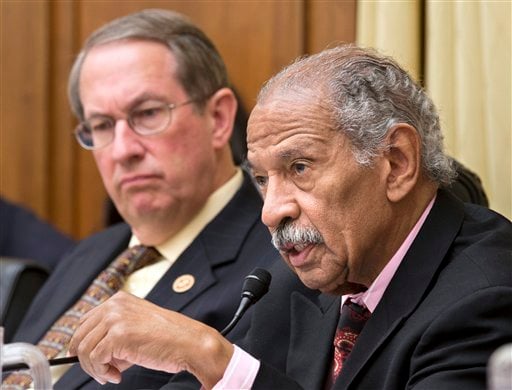
Washington, D.C. – House Judiciary Committee Ranking Member John Conyers (D-Mich.) and Chairman Bob Goodlatte (R-Va.) today requested that the Office of the Director of National Intelligence provide a public estimate of the number of communications involving U.S. persons incidentally swept up under FISA Section 702.

FISA Section 702, which targets the communications of non-U.S. persons outside of the United States in order to protect national security, reportedly contributes to more than a quarter of all National Security Agency surveillance and has been used on multiple occasions to detect and prevent horrific terrorist plots against our country. Although Congress designed this authority to target non-U.S. persons located outside of the United States, it is clear that Section 702 surveillance programs can and do incidentally collect information about U.S. persons when U.S. persons communicate with the foreign targets of Section 702 surveillance.

In their letter to Director of National Intelligence Dan Coats, Goodlatte and Conyers state it is crucial that members of the House Judiciary Committee understand the impact of Section 702 on U.S. persons as the Committee proceeds with the debate regarding the reauthorization of this surveillance authority. They request that Director Coats provide a public estimate of the number of communications involving U.S. persons subject to Section 702 surveillance as soon as possible in order to inform public debate on the law.

Voting is beautiful, be beautiful ~ vote.©

Friday, December 16, 2016

BIPARTISAN HOUSE COALITION PRESSES CLAPPER FOR INFORMATION ON PHONE & EMAIL SURVEILLANCE


Washington, DC – Today, a bipartisan group of ten members of the U.S. House Judiciary Committee—including Ranking Member John Conyers, Jr. (D-MI), and former Chairman Jim Sensenbrenner (R-WI), wrote to the Director of National Intelligence James Clapper to memorialize the Director’s commitment to provide a detailed look at how the government’s phone and email surveillance affects United States citizens.  The intelligence community has promised to provide a public estimate of that impact “early enough to inform the debate” on surveillance reform in the next Congress, with a target date of January 2017.

The letter was signed by Representatives John Conyers, Jr. (D-MI), F. James Sensenbrenner (R-WI), Jerrold Nadler (D-NY), Darrell E. Issa (R-CA), Zoe Lofgren (D-CA), Ted Poe (R-TX), Henry C. “Hank” Johnson, Jr. (D-GA), Jason Chaffetz (R-UT), Ted Deutch (D-FL), Suzan K. DelBene (D-WA) and David N. Cicilline (D-RI).
Voting is beautiful, be beautiful ~ vote.©

Thursday, November 17, 2016

Bipartisan, bicameral bill would delay changes to government hacking powers

File:Seal of the United States Congress.svg

Proposed Amendments to Rule 41 of the Federal Rules of Criminal Procedure would expand the government’s ability to search Americans’ computers and other digital devices
WASHINGTON – U.S. Senators Chris Coons (D-Del.), Steve Daines (R-Mont.), Mike Lee (R-Utah), Ron Wyden (D-Ore.), and Al Franken (D-Minn.), together with Reps. John Conyers, Jr. (D-Mich.) and Ted Poe (R-Texas), introduced legislation to provide Congress the time necessary to seriously consider and debate the proposed changes to Rule 41 that would expand the government's ability to search computers and other digital devices. The Review the Rule Actwould delay the proposed changes to Federal Rule of Criminal Procedure 41 from going into force until July 1, 2017. Without congressional action, the proposed changes will go into effect on December 1, 2016.

Federal Rule of Criminal Procedure 41 governs the procedures and parameters for issuing search warrants.  Under current law, a federal judge may issue a warrant to search property located within a specific judicial district.  At the urging of the Department of Justice, the Supreme Court ultimately approved two sweeping amendments to Rule 41:

1.       A judge may issue a warrant to remotely search, copy, and seize information from a device that does not have a known location (and may not be in the district) because the location has been concealed through technological means; and
2.       A single judge may issue a warrant to remotely search and copy information from suspected devices across five or more districts.
Dean of the U.S. House
of Representatives
John Conyers, Jr.
“I remain deeply concerned about the intended and unintended consequences of the expanded authorities contemplated in the proposed changes to Rule 41,” said John Conyers, Jr. (D-MI), House Judiciary Committee Ranking Member. “The bill we offer today will delay implementation until Congress has had a meaningful opportunity to examine the proposal in detail.  Until we have adequately addressed the privacy concerns raised by my colleagues, this rule change should not take effect.”     

“The proposed changes are serious, and present significant privacy concerns that warrant careful consideration and debate,” said Senator Coons, a member of the Senate Judiciary Committee. “Our bicameral, bipartisan legislation will give Congress time to do our job and carefully consider and evaluate the merits of these proposed changes to the government’s ability to search personal computers and other digital devices. It is essential that these rules strike a careful balance: giving law enforcement the tools it needs to keep us safe, while also protecting Americans’ constitutional rights to privacy and freedom from unreasonable searches.”

“We cannot give the federal government a blank check to infringe on Americans’ civil liberties,” said Senator Daines.“Congress needs the appropriate time to investigate the implications of this rule on Americans’ Fourth Amendment rights.”

“A single prosecutor should not have the power to hack into the phone or computer of virtually anyone in the United States,” said Senator Lee, a member of the Senate Judiciary Committee. “Yes, federal law enforcement does need new tools to stop and prosecute botnets, but the proposed Rule 41 rule change goes too far. The sensible thing to do is delay the implementation of this rule and allow Congress to investigate further."

“This rule change would give the government unprecedented power to hack into Americans’ personal devices,”Senator Wyden said. “This was an alarming proposition before the election. Today, Congress needs to think long and hard about whether to hand this power to James Comey and the administration of someone who openly said he wants the power to hack his political opponents the same way Russia does.”      

“Government does not have the authority to unilaterally legalize widespread abusive hacking,” said Rep. Poe.  “It is Congress’ responsibility to safeguard the constitutional rights of the people they represent from a power hungry Executive Branch. A delay in the proposed changes to Rule 41 is necessary to ensure that the newly elected Congress, and Administration, have the ability to carefully evaluate this rule change before it goes into effect to ensure that it is constitutional and in the best interests of the American people. Rushing to put the changes in place in the middle of the lame duck session is irresponsible. Too much is at stake to not get this right.”

Voting is beautiful, be beautiful ~ vote.©
Thursday, October 27, 2016

Bipartisan Coalition Presses DOJ About Government Hacking


The United States Congress
File:Seal of the United States House of Representatives.svg
File:Alternative Senate seal.svg


Lawmakers Seek Answers About How Government Would Use New Hacking Authority, One Month Before Rule 41 Amendments Would Take Effect

Washington, D.C. –A bipartisan coalition of Senate and House lawmakers today asked Attorney General Loretta Lynch to provide Congress with more information about a proposed expansion of government hacking and surveillance powers.

Sen. Ron Wyden, D-Ore., Judiciary Committee member Sen. Mike Lee, R-Utah, and Ranking Member Patrick Leahy, D-Vt., with House Judiciary Committee Ranking Member Rep. John Conyers, Jr., D-Mich., and senior Judiciary Committee member Rep. Ted Poe, R-Texas, led a bipartisan group of 23 lawmakers asking for more information about the proposal, formally known as amendments to Rule 41 of the Federal Rules of Criminal ProcedureUnless Congress acts, these new amendments are scheduled to go into effect on December 1.

“We are concerned about the full scope of the new authority that would be provided to the Department of Justice,” the lawmakers wrote. “We believe that Congress -- and the American public -- must better understand the Department’s need for the proposed amendments, how the Department intends to use its proposed new powers, and the potential consequences to our digital security before these rules go into effect.”

 The lawmakers ask DOJ a number of questions about how Rule 41 will be used, including:
  • How the government intends to prevent forum shopping by prosecutors seeking court approval to hack into Americans' devices;
  • How the government will prevent collateral damage to innocent Americans' devices and electronic data when it remotely search devices such as smartphones or medical devices;
  • Whether the government intends to use this new authority to search and “clean” Americans' computers ;
  • How the government will maintain a chain of custody when searching or removing evidence from a device;
  • How the government will notify Americans who are the subjects of remote government searches.
The letter was also signed by: Sen. Tammy Baldwin, D-Wisc., Sen. Chris Coons, D-Del., Sen. Steve Daines, R-Mont., Sen. Al Franken, D-Minn., Sen. Mazie Hirono, D-Hawaii, Sen. Jon Tester, D-Mont, Sen. Elizabeth Warren, D-Mass., Sen. Martin Heinrich, D-N.M. and Rep. Justin Amash, R-Mich., Jason Chaffetz, R-Utah., Rep. Judy Chu, D-Calif., Rep. Steve Cohen, D-Tenn., Rep. Suzan DelBene, D-Wash., Rep. Louie Gohmert, R-Texas, Rep. Hank Johnson, D-Ga., Rep. Ted Lieu, D-Calif., Rep. Zoe Lofgren, D-Calif., and Rep. Jerrold Nadler, D-N.Y.
Voting is beautiful, be beautiful ~ vote.©