
Showing posts with label FISA. Show all posts

Wednesday, July 11, 2018

Cocktails & Popcorn: Arnold Reed, Attorney For John Conyers, Enters The Stage


Image result for happy girl eating popcorn
I have popcorn. Want some?
I wonder if the DOJ OIG Report is about to be declassified.

Oh, and I forgot to mention that Perkins Coie Sucks.

#perkinscoiesucks

Marc Elias Of Perkins Coie Sucks & So Does The FEC

Learn more: BEVERLY TRAN: Marc Elias Of Perkins Coie Sucks & So Does The FEC http://beverlytran.blogspot.com/2017/10/marc-elias-of-perkins-coie-sucks-so.html#ixzz5Kiw2nDU6
Stop Medicaid Fraud in Child Welfare 

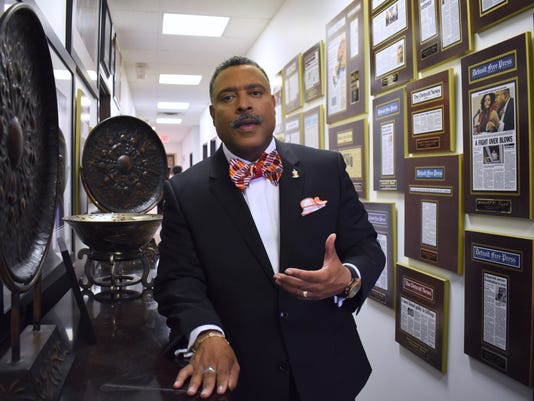
Arnold Reed, 'lawyer on the side of the people'

When his beloved father fell ill, Arnold E. Reed didn't hesitate. He swapped the cloistered halls of law school for Chicago's south side, where his dad owned a barbershop. To keep the business going, Reed, who'd learned the craft from his father, spent the next few months cutting hair.
636664856462526737-2018-0509-bb-ArnoldReed3.jpg

Meanwhile, a classmate would mail Reed homework, and he studied when he could.
In the end, not only did the University of Iowa College of Law student graduate, he did so on time.

"I read the books and taught it to myself," said Reed, 54, whose Dad lived to see him graduate.

"Really, there was never a question that I would finish. Some things ought to be a given."

That kind of decisiveness, devotion and determination would mark his career as one of the state's pre-eminent trial lawyers, specializing in criminal, personal injury, civil litigation, medical malpractice and entertainment law, plus damage control for high-profile clients, such as now-retired Congressman John Conyers and Aretha Franklin. This year, he was cited by Michigan's Lawyers Weekly as one of 30 Leaders in the Law Class of 2018.

While the widely respected trade newspaper is mum on how it culls from a pool of nominees, its website says winners are honored for significant accomplishments in law practice; outstanding contributions to the practice of law in Michigan; seeking improvements to the legal community and their communities at large; and setting an example for other lawyers. In its current form, the award has existed for the last decade.

In many ways, it's an improbable achievement for the Southfield-based legal firebrand, known for dogged representation and an outsize courtroom presence.


Reed was the first in his family to graduate college, let alone law school. While his father operated the barbershop, his mother took two trains and a bus each way to a factory job to help support the family, which included Reed and his older brother.

At age 9, Reed saw someone gunned down on the street. While fleeing, the killer had looked right at Reed, too petrified to move. That’s when Reed decided he needed to be fearless, a mindset that defines his approach to law.

Wayne County Circuit Judge Deborah Thomas described Reed's courtroom manner as a cross between a bulldog and a chihuahua.

"I've watched him since he was a baby lawyer," Thomas said. "He is always prepared, and he will not let go. He is always focused, and he will work that case. He's also a good family man, and what you would like to see in the community and in the profession."

While his childhood community had its share of scofflaws, most of his neighbors were honest blue-collar types. Time and again, he’d see them falsely accused by police, or unable to retain proper representation. Reed decided that knowledge was power and he needed to get it.

In the sixth grade, he ran for class president — and lost. “That made me angry, so I started learning about the Constitution and how to impeach somebody,” said Reed, who is married to a lawyer, has a son in law school and a daughter pursuing graduate studies.

Reed received his undergraduate degree in journalism and political science from Indiana University in Bloomington. After law school at Iowa, he worked as chief law clerk for former Michigan Supreme Court Justice Conrad Mallet Jr., who remembers him as being the strongest member of his team.

"He would consistently present their work in a way that allowed for uncomplicated digestion of whatever argument they helped craft," said Mallet, now chief administrative officer for the Detroit Medical Center. "He's a very, very, very good lawyer."
Attorney Arnold Reed speaks about Congressman John Conyers' health and the latest accusations of sexual harassment in front of the congressman's home in Detroit. Daniel Mears, The Detroit News

That stint as a law clerk was followed by corporate work and a job in Detroit with the public defender's office. Because the fledgling lawyer couldn't convince his boss to give him a capital case, Reed, with no money to speak of, went out on his own, setting up a law practice in Detroit and winning his first multimillion-dollar verdict, in a police misconduct case, at just 29 years old.

Since then, the member of Kappa Alpha Psi Fraternity Inc. has represented former Detroit Mayor Kwame Kilpatrick, Conyers, Franklin and an upstart vocalist named R. Kelly in the mid-'90s.
Reed recalled meetings early on with the Queen of Soul, who he successfully represented about five years ago in a case involving misappropriation of her name and likeness.

"She's a woman who tends to be formal with people she doesn't know or have a relationship with, so it was always, 'Ms. Franklin' and 'Attorney Reed.' After I won the case for her I said, 'Now can I call you Aretha?' She didn't say anything, so I took that to mean she was still 'Ms. Franklin,'" he said, chuckling.

As for Conyers, Reed represented him last year after the congressman became embroiled in allegations of sexual harassment. Conyers ultimately retired.

Reed remembers encountering Conyers years earlier after a particularly long community event. Reed had asked him why he devoted so much time and effort to so many causes when he could find more lucrative work elsewhere.

"He looked at me, smiled and said, 'Arnold, money has never been my motivating factor. I have the best job in the world. I can help people.' So when he needed my help, I answered the call."
Reed's legal battles often extend into the court of public opinion. For instance, he took a lot of heat for representing Kilpatrick in a case stemming from the former mayor's conviction for lying under oath about an affair with his chief of staff.

 "It took me aback a bit," he said of the criticism. "Everyone deserves a right to representation no matter the allegation. Also, I've been in this game over 25 years, and I'd be lying if I said I weren't ever discriminated against based on my color, because I have been.

"When I put my suit and tie on every day and I go out, there are some people who look at me like I'm Kilpatrick simply because I'm African-American. I have to explain to people that when I represent Kwame Kilpatrick, I represent you, I represent your son.

 "In any case, I have a social responsibility not to shy away from cases merely because of allegations."

Reed's brazen style, however, leaves some cold, said Solon Phillips, in-house counsel for Southfield Public Schools.

"I have a great deal of respect for his zeal and tenacity in terms of what he does for his clients, but he is aggressive, so I can see how he could rub people the wrong way," said Phillips, who has known Reed for about 15 years.

"In his younger years, for example, he would press opposing counsel when he saw them by asking them why they weren't working, asking them whether they were working as hard as he was.

 "If you're on the receiving end, I can see where he might make some folks uncomfortable."

 His high-profile client roster notwithstanding, Reed is a self-described "lawyer on the side of the people." Everyone, he says, deserves representation under the law.

"I'm always around rich and powerful individuals, but I know my upbringing," said Reed, who often rides to work on his motorcycle, the back of his leather jacket emblazoned with "Not Guilty."

The voracious reader prides himself on going all out for his clients, often spending days and nights with them. He leans on his journalism background to do his own investigative work and visualizes courtroom plans.

“The major thing is having belief in your cause,” Reed said. “If you don’t believe, you’re not going to convince 12 others.”

He has a fan in Donna Pope, for whom Reed won a $4.2 million judgment in an unlawful termination whistleblower case in 2009.

“He’s very thorough and very patient, very poised and convincing,” said Pope, who lives in western Michigan. “This was one of the hardest things I had to go through in life, and he made it manageable to survive it.”

Mary Chapman is a Detroit-based freelance writer.


Arnold E. Reed
Age: 54
Occupation: Owner, Arnold E. Reed and Associates, Southfield
Education: Bachelor's degree, Indiana University; Juris Doctorate, University of Iowa College of Law

Voting is beautiful, be beautiful ~ vote.©

Friday, December 8, 2017

Day 49.1 Melissa Hodgman, Peter Strzok, and Andy McCabe


Voting is beautiful, be beautiful ~ vote.©

Day 48.6. Jordan Highlight of the Day


Voting is beautiful, be beautiful ~ vote.©

Day 48.4. Five EB5s, Four FISA Warrants, Three Wiretaps


Judge presiding over Michael Flynn criminal case is recused

(Reuters) - The U.S. District Court for the District of Columbia judge presiding over the criminal case for President Donald Trump’s former National Security Adviser Michael Flynn has been recused from handling the case, a court spokeswoman said on Thursday.

According to a court filing, U.S. District Court Judge Rudolph Contreras, who presided over a Dec. 1 hearing where Flynn pleaded guilty to lying to the Federal Bureau of Investigation about his contacts with Russia, will no longer handle the case.

Court spokeswoman Lisa Klem did not say why Contreras was recused, and added that the case was randomly reassigned.

Reuters could not immediately learn the reason for the recusal, or reach Contreras.
An attorney for Flynn declined to comment.

Now, Flynn’s sentencing will be overseen by U.S. District Court Judge Emmet Sullivan. Sullivan was appointed by former Democratic President Bill Clinton.

Flynn was the first member of Trump’s administration to plead guilty to a crime uncovered by Special Counsel Robert Mueller’s wide-ranging probe into Russian attempts to influence the 2016 U.S. presidential election and potential collusion by Trump aides. Russia has denied meddling in the election and Trump has dismissed any suggestion of collusion.

Flynn has agreed to cooperate with Mueller’s ongoing investigation.

A sentencing date has not yet been set, but the parties are due to return to court on February 1 for a status report hearing.

Contreras was appointed to the bench in 2012 by former Democratic President Barack Obama.
He was also appointed to the Foreign Intelligence Surveillance Court in May 2016 for a term lasting through 2023.

That court issues warrants that allow Justice Department officials to wiretap individuals, a process that has been thrown into the spotlight amid the investigation into alleged Russian interference in the U.S. election.

The most recent controversy related to FISA warrants involves Peter Strzok, a senior FBI agent who was removed from the Russia investigation for exchanging text messages with a colleague that expressed anti-Trump views.

At a hearing on Thursday at the House Judiciary Committee, Republican lawmaker Jim Jordan pressed FBI Director Christopher Wray on whether a former British spy’s dossier of allegations of Russian financial and personal links to Trump’s campaign and associates was used by Strzok to obtain a FISA warrant to surveil Trump’s transition team.


Judge Sullivan previously served on the Superior Court of the District of Columbia and the District of Columbia Court of Appeals under appointments by Republican Presidents Ronald Reagan and George H.W. Bush, respectively.

Voting is beautiful, be beautiful ~ vote.©

Day 48.3 Evasion, Evasion,Evasion Wray Lays an Goose Egg


Voting is beautiful, be beautiful ~ vote.©

Wednesday, November 8, 2017

CONYERS: House Judiciary Committee Approves Bipartisan Bill to Reform and Reauthorize Surveillance Program


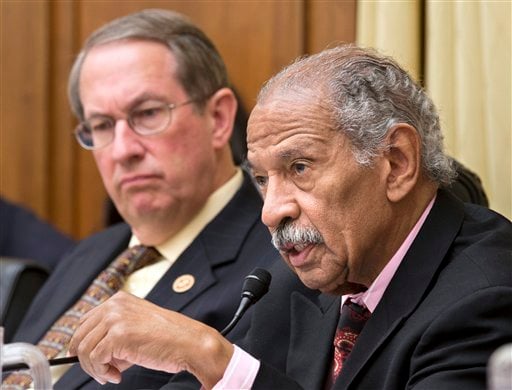
Washington, D.C. – The House Judiciary Committee today approved by a vote of 27-8 the USA Liberty Act (H.R. 3989), a bipartisan bill that reforms and reauthorizes Section 702 of the Foreign Intelligence Surveillance Act (FISA) to protect both national security and Americans’ civil liberties. The bill was introduced last month by House Judiciary Committee Chairman Bob Goodlatte (R-Va.), Ranking Member John Conyers, Jr. (D-Mich.), Crime, Terrorism, Homeland Security, and Investigations Subcommittee Chairman Jim Sensenbrenner (R-Wis.), Crime, Terrorism, Homeland Security, and Investigations Subcommittee Ranking Member Sheila Jackson Lee (D-Texas), Representative John Rutherford (R-Fla.), and Courts, Intellectual Property and the Internet Subcommittee Ranking Member Jerrold Nadler (D-N.Y.).

The USA Liberty Act preserves the core purpose of Section 702: the collection of communications by targeting non-U.S. persons located outside the U.S. in order to identify and thwart terrorist plots against our nation and our citizens. The bill also creates a new framework of protections and transparency requirements to ensure that the government’s use of Section 702 accords with principles enshrined in our Constitution that protect individual liberty. It provides new accountability measures to address the unmasking of U.S. persons’ identities and new reporting requirements on the number of U.S. persons who have been swept up in Section 702 collection. The bill also enhances national security by increasing penalties for those who leak classified information and calling on the intelligence agencies to share information with each other and with our allies to combat terrorism. A summary of the bill can be found, below.

Below are statements from Judiciary Committee leaders on today’s Committee passage of the USA Liberty Act.

Dean of the U.S. House
of Representatives
John Conyers, Jr.
Ranking Member Conyers: “For months, we have examined Section 702 and have reached consensus that Section 702 should be reauthorized if it can be brought better in line with values like privacy, transparency, and due process. The USA Liberty Act does just that. I’m proud of our bipartisan work to move this bill forward. The USA Liberty Actprovides both security and privacy, and gives the government the tools it needs while bringing these programs back in line with our core values.  I look forward to continuing to work in a bipartisan fashion to ensure that this bill passes the House of Representatives.”

Chairman Goodlatte: “The USA Liberty Act is a carefully drafted, bipartisan bill that protects Americans’ lives and their civil liberties. This bill reauthorizes a critical national security tool that keeps Americans safe, FISA Section 702, but also reforms it to protect Americans’ constitutional rights. It contains more accountability, transparency, and oversight so that the American people have confidence that our cherished liberties continue to be protected as the intelligence community keeps us safe from foreign enemies wishing to harm our nation and citizens. The bill also contains a number of measures to further enhance national security so that our country remains free and safe.

“As FISA Section 702 is set to expire at the end of the year, the USA Liberty Act is the best legislative solution to preserve this important national security tool while also providing for much needed reforms. I urge the House to vote on the USA Liberty Act soon so that the intelligence community is able to identify and thwart terrorist plots while Americans’ constitutional rights are better protected.”

Crime Subcommittee Chairman Sensenbrenner: “Finding the right balance between privacy rights and national security will be an ongoing challenge, especially because of the constant development of new and innovative technologies. It will require sustained attention from Congress and our intelligence communities, which is why the USA Liberty Act is critical. This bipartisan legislation balances privacy and security by requiring greater oversight, transparency, and accountability of the government’s surveillance powers while enabling our intelligence community to continue to utilize tools to keep Americans safe. It’s a measured balance between competing interests, and I look forward to it moving quickly through the legislative process.”

Crime Subcommittee Ranking Member Jackson Lee: “The USA Liberty Act protects our national security while enhancing congressional oversight and transparency of the information gathering process. Nothing in this bill will undermine the intelligence community’s ability to gather foreign intelligence information or detect threats to the homeland. Instead, this bill will create a new framework of protections and transparency requirements to ensure that the government’s use of Section 702 accords with principles of privacy and due process.”

Representative Rutherford: “FISA is essential to our national security, but we must ensure that we also safeguard Americans’ civil liberties. The USA Liberty Act improves privacy protections for our citizens, while also maintaining national security. This important legislation appropriately balances privacy and security by requiring greater oversight and accountability. I thank my colleagues on both sides of the aisle for supporting this important piece of legislation and look forward to it being voted on by the entire House.”

IP Subcommittee Ranking Member Nadler: “The USA Liberty Act represents a real, bipartisan effort at instituting needed reforms to the 702 program, striking the appropriate balance of giving our intelligence agencies the tools they need to keep us safe while making sure individual liberty and privacy rights are better protected. It is critical that we are careful not to permit national security needs to outweigh and overrun the individual’s constitutional rights, which is why these reforms are so necessary and important. For the first time, the bill introduces a requirement for a warrant—based on probable cause—for criminal investigators to query 702-obtained information. In addition, the USA Liberty Act significantly curbs the amount of incidental information that can be searched, and, most importantly, institutes critical operational norms for the 702 program that make it more accountable, more transparent, and ultimately more effective. This legislation makes substantial progress in reforming government surveillance under Section 702, and I want to thank Chairman Goodlatte and Ranking Member Conyers for working in good faith on the USA Liberty Act. Congress will continue to play an important role in ensuring sufficient protections are in place for Americans’ individual privacy, and I look forward to being a part of that process going forward.”

Background: FISA Section 702, which will expire on December 31, 2017, authorizes surveillance of the communications of non-U.S. persons located outside of the United States in order to protect national security. It reportedly contributes to a quarter of all National Security Agency surveillance and has been used on multiple occasions to detect and prevent horrific terrorist plots against our country. Although Congress designed this authority to target non-U.S. persons located outside of the United States, it is clear that Section 702 surveillance programs can and do incidentally collect information about U.S. persons when U.S. persons communicate with the foreign targets of Section 702 surveillance.

Voting is beautiful, be beautiful ~ vote.©

CONYERS: Judiciary Statement On Markup Of H.R. 3989, The USA Liberty Act

Dean of the U.S. House
of Representatives
John Conyers, Jr.
Thank you, Mr. Chairman.  I want to begin by acknowledging the opposition to this bill.

There are many in the civil liberties community who fear that H.R. 3989, the USA Liberty Act, does not accomplish every reform we had hoped to see. 

They are rightly concerned that the government has used the Foreign Intelligence Surveillance Act in ways that Congress had never contemplated, and that the public would never tolerate. 

Others fear the bill goes too far.  For the most part, these critics are patriots charged with keeping us safe, and whose greatest fear is somehow falling short in that responsibility.
           
To those in the civil liberties community, I would point to all of the good work done in this bill.

For years, our members have expressed concern that information collected under Section 702 is repurposed for criminal investigations and other projects that have nothing whatsoever to do with national security. 

This bill will end that practice.  If a law enforcement agency wants  access to this information, they must first obtain a warrant based on individualized suspicion and probable cause.

We have also, for years, opposed so-called “about” collection—the gathering of communications that simply mention foreign targets—both because Congress never intended for Section 702 to be used that way, and because it swept in so much unrelated content. 

Twice, the FISA court has taken a hard look at “about” collection.  Twice, the court found it deficient on Fourth Amendment grounds, taking the government to task for an institutional “lack of candor” that allowed the deficiencies to persist for years without correction. 
           
In March, faced with the prospect of losing Section 702 altogether, the NSA voluntarily ended the practice.  Our bill would prohibit that type of surveillance by law.

The bill also creates a new regime of transparency and accountability. 

It encourages the court to appoint an amicus to its annual hearings on Section 702—someone to push back against the government’s more creative legal arguments. 

Any agency that has access to Section 702 information must publish their minimization procedures. 

The government will owe both Congress and the public a never-before-seen level of detail about how they use this statute. 

Have we accomplished every reform I had hoped to see?  We have not. 

But this legislation represents real, achievable, substantive reform. 

I am proud of this work, and Chairman Goodlatte and I will fight to protect this package of reforms as it makes its way to the floor.

To the men and women of the intelligence community, I would point to the extraordinary lengths we have taken to ensure that you have the tools you need to analyze foreign intelligence information.

I know that many are uncomfortable with the prospect of reform—any reform—not because they want to spy on Americans, but because they want to protect us from real and present threats to our country.

But there is a reason that it falls to this Committee—and not to the intelligence committees, or to the agencies themselves—to build the legal framework for these powerful surveillance authorities. 

In this room, a step or two removed from the urgency of every threat that comes across the screen, we can have an honest conversation about how these authorities accord with our values. 

That is precisely what has happened here.  For months, we have examined Section 702 in a sober and serious light.  We have heard from government agents, legal experts, technology and communication companies, and the best of civil society.

At the end of our discussion, we have reached consensus that Section 702 should be reauthorized—but if, and only if, it can be brought better in line with values like privacy, transparency, and due process.

Which brings me to my concluding thought: 

When we discuss powers and programs like these, it can be tempting to frame the discussion as balancing act between security and privacy.

I find that framing a false choice.

The central thesis of the USA Liberty Act is that we can have both security and privacy.  We can give the government the tools it needs and do so in a way that better respects our core values.

We proved that we could do so in the last Congress, when we worked together to pass the USA Freedom Act.

We will do so again today.

I want to thank the Chairman for his leadership on this issue. 

I also want to thank each of the original cosponsors of this bill—Democrats and Republicans alike—for lending their support to this important project. I urge my colleagues to support this legislation, and I yield the balance of my time.

Voting is beautiful, be beautiful ~ vote.©
Monday, October 30, 2017

CONYERS: In Wake Of Trump Campaign Indictments & Russia Investigation Guilty Plea, Conyers Urges Goodlatte To Move In More Bipartisan Manner, Protect Special Counsel From Partisan Attacks


Conyers Expresses Concern about Efforts to Divert Attention from ongoing Russian Threat to our Elections

Washington, D.C. – House Judiciary Committee Ranking Member John Conyers, Jr. (D-MI) today sent a letter, below, to Judiciary Chairman Bob Goodlatte (R-VA), calling for him to widen the scope of the investigation he launched last week with Oversight and Government Reform Chairman Trey Gowdy into decisions made by the Federal Bureau of Investigation (FBI) and Department of Justice (DOJ) in 2016, to include the firing of former FBI Director James Comey, foreign interference in American elections, and related issues. 

The letter comes after Special Counsel Mueller reached a plea agreement with George Papadopoulos for making false statements to the FBI regarding Russian efforts to meet and coordinate directly with the Trump campaign, and issued a twelve count indictment against Paul Manafort and Richard Gates for false statements, money laundering, failure to register as a foreign agent, and conspiring against the United States.

Dean of the U.S. House
of Representatives
John Conyers, Jr.
In his letter to Chairman Goodlatte, Conyers wrote, “The circumstances call for extraordinary bipartisan cooperation.  Working together is the only way to reassure the American public of the credibility and fairness of our political, legal, and electoral processes…Based on our years of bipartisan, first-hand experience working directly with Mr. Mueller, we are uniquely positioned to ensure he is given the space and independence he needs to complete his important work on behalf of the American people.”

The House Judiciary Committee has jurisdiction over the Department of Justice and the Federal Bureau of Investigation. It also has jurisdiction over the Foreign Agents Registration Act and the Foreign Intelligence Surveillance Act.
Voting is beautiful, be beautiful ~ vote.©

Saturday, October 7, 2017

CONYERS, GOODLATTE and Judiciary Committee Members Introduce the USA Liberty Act


Washington, D.C. – House Judiciary Committee Ranking Member John Conyers, Jr. (D-Mich.)Ranking Member John Conyers, Jr. (D-Mich.),  Chairman Bob Goodlatte (R-Va.), Crime, Terrorism, Homeland Security, and Investigations Subcommittee Chairman Jim Sensenbrenner (R-Wis.), Crime, Terrorism, Homeland Security, and Investigations Subcommittee Ranking Member Sheila Jackson Lee (D-Texas), and Courts, Intellectual Property and the Internet Subcommittee Ranking Member Jerrold Nadler (D-N.Y.) today introduced the USA Liberty Act (H.R. 3989). This bipartisan bill reforms and reauthorizes Section 702 of the Foreign Intelligence Surveillance Act (FISA), which is set to expire at the end of this year, to protect both national security and Americans’ civil liberties.

The USA Liberty Act preserves the core purpose of Section 702: the collection of communications by targeting non-U.S. persons located outside the U.S. in order to identify and thwart terrorist plots against our nation and our citizens. The bill also creates a new framework of protections and transparency requirements to ensure that the government’s use of Section 702 accords with principles enshrined in our Constitution that protect individual liberty. It provides new accountability measures to address the unmasking of U.S. persons’ identities and new reporting requirements on the number of U.S. persons who have been swept up in Section 702 collection. The bill also enhances national security by increasing penalties for those who leak classified information and calling on the intelligence agencies to share information with each other and with our allies to combat terrorism.
Below are statements from Judiciary Committee leaders on the introduction of the USA Liberty Act.

Ranking Member Conyers: “Section 702 of the Foreign Intelligence Surveillance Act is essential to the intelligence community’s gathering of foreign intelligence and detecting threats to the homeland.  Its reauthorization should include reforms that bring this authority better in line with our sense of privacy and due process.  Indeed, we believe that it will only be possible to reauthorize Section 702 with such reforms in place. The bipartisan USA Liberty Act is designed to accomplish this goal.”

Chairman Goodlatte: “The USA Liberty Act protects Americans’ lives and their civil liberties. This bipartisan bill reauthorizes a critical national security tool that keeps Americans safe but also reforms it to protect Americans’ constitutional rights. It contains more accountability, transparency, and oversight so that the American people have confidence that our cherished liberties continue to be protected as the intelligence community keeps us safe from foreign enemies wishing to harm our nation and citizens. The bill also contains a number of measures to further enhance national security so that our country remains free and safe. I thank the many members who have worked on this bill for months and look forward to bringing it up in the House Judiciary Committee soon.”

Crime Subcommittee Chairman Sensenbrenner: “The USA Liberty Act is carefully crafted, bipartisan legislation that represents the type of common sense compromise that we desperately need in this country. It balances privacy and security concerns by requiring greater oversight, transparency, and accountability of the government’s surveillance powers while limiting the incidental collection of Americans’ communications and requiring a court order to query data. It also puts in place a critical six-year sunset provision, allowing Congress to respond appropriately to the ever-changing threats facing our nation. This is smart, forward-leaning legislation that I urge my colleagues to get behind.”

Crime Subcommittee Ranking Member Jackson Lee: “Collectively, what Democrats and Republicans have agreed on is a strategy that secures the homeland, while preserving cherished liberties that still make America the envy of the world.”

IP Subcommittee Ranking Member Nadler: “The USA Liberty Act is an attempt to strike the appropriate balance, as we did in the USA Freedom Act, of giving our intelligence agencies the tools they need to keep us safe while making sure individual liberty and privacy rights are better protected. For the first time, the bill institutes a requirement for a warrant—based on probable cause—for criminal investigators to query the information obtained by the 702 program. In addition, this legislation significantly curbs the amount of incidental information that can be searched, and, most importantly, institutes critical operational norms for the 702 program that make it more accountable, more transparent, and ultimately more effective in striking the critical balance between national security needs and the individual’s constitutional rights. I want to thank Chairman Goodlatte and Ranking Member Conyers for working in good faith on the USA Liberty Act, which goes a long way in reforming government surveillance under Section 702.”

Additional original cosponsors of the bill include Representatives Lamar Smith (R-Texas), Steve Chabot (R-Ohio), Doug Collins (R-Ga.), Mike Johnson (R-La.), John Rutherford (R-Fla.) Hank Johnson (D-Ga.), Ted Deutch (D-Fla.), and Jamie Raskin (D-Md.).

Background: FISA Section 702, which will expire on December 31, 2017, authorizes surveillance of the communications of non-U.S. persons located outside of the United States in order to protect national security. It reportedly contributes to a quarter of all National Security Agency surveillance and has been used on multiple occasions to detect and prevent horrific terrorist plots against our country. Although Congress designed this authority to target non-U.S. persons located outside of the United States, it is clear that Section 702 surveillance programs can and do incidentally collect information about U.S. persons when U.S. persons communicate with the foreign targets of Section 702 surveillance.


Voting is beautiful, be beautiful ~ vote.©

Saturday, July 22, 2017

CONYERS: After Trump Attacks DOJ, All 17 Judiciary Democrats Demand Immediate Hearings


Judiciary Dems: Failing to Act Now Will Allow Others to Inflict Lasting Damage to the Department of Justice

Washington, D.C. – Yesterday, in an interview with the New York Times, President Donald Trump indicated his contempt for the leadership of the Department of Justice.  The President directly attacked the credibility and fairness of Attorney General Jeff Sessions, Deputy Attorney General Rod Rosenstein, acting FBI Director Andrew McCabe, and Special Counsel Robert Mueller.  President Trump also warned Special Counsel Mueller that there would be “a violation” if his investigators attempt to scrutinize his family’s finances.

Dean of the U.S. House
of Representatives
John Conyers, Jr.
Led by Ranking Member John Conyers, Jr., all seventeen Democrats on the House Committee on the Judiciary wrote to Chairman Bob Goodlatte to demand oversight hearings as soon as practicable, below. 

Although the House Permanent Select Committee on Intelligence, the Senate Select Committee on Intelligence, and the Senate Committee on the Judiciary all continue to do work in this space, the House Committee on the Judiciary has not held a single oversight hearing related to the Russia investigation, allegations of obstruction of justice, or the President’s treatment of Department of Justice personnel.

The House Judiciary Committee has jurisdiction over the Department of Justice and the Federal Bureau of Investigation. It also has jurisdiction over the Foreign Agents Registration Act and the Foreign Intelligence Surveillance Act.

Voting is beautiful, be beautiful ~ vote.©

Tuesday, June 27, 2017

CONYERS & GOODLATTE Renew Call For Surveillance Data And Information On Methodology


Washington, D.C. – House Judiciary Ranking Member John Conyers, Jr. (D-Mich.) and Committee Chairman Bob Goodlatte (R-Va.)  today sent a letter to Director of National Intelligence Dan Coats to renew their call for the number of U.S. persons included in Section 702 collections. The members also called for statistics on the methodologies used in developing the project as well as information on the resources that would need to be diverted in order to complete the project.

On April 7, 2017Ranking Member Conyers and Chairman Goodlatte wrote to Director Coats to request a public estimate of the number of communications involving U.S. persons incidentally swept up under FISA Section 702.  On June 7, 2017, in testimony before the Senate, Director Coats stated that the production of that estimate would be “infeasible.” 

FISA Section 702, which targets the communications of non-U.S. persons outside of the United States in order to protect national security, reportedly contributes to more than a quarter of all National Security Agency surveillance and has been used on multiple occasions to detect and prevent horrific terrorist plots against our country. Although Congress designed this authority to target non-U.S. persons located outside of the United States, it is clear that Section 702 surveillance programs can and do incidentally collect information about U.S. persons when U.S. persons communicate with the foreign targets of Section 702 surveillance.
Voting is beautiful, be beautiful ~ vote.©

Thursday, May 25, 2017

CONYERS: After New Sessions Russia Report, Conyers Calls For Committee Investigation Into Sessions Misstatments


Washington, D.C. - After CNN reported that the Justice Department revealed Attorney General Sessions failed to disclose his contacts with Russian officials as part of his security clearance,  Rep. John Conyers, Jr. (D-MI), the Ranking Member on the House Judiciary Committee, issued the following statement:

Dean of the U.S. House
of Representatives
John Conyers, Jr.
“The latest report detailing how Attorney General Jeff Sessions once again concealed his contacts with Russian officials points to a troubling pattern of behavior by the nation’s chief law enforcement officer.

“In the face of an ongoing investigation into the Trump campaign's contact with the Russian government--an investigation from which Mr. Sessions is recused because of his failure to disclose similar contacts--the Attorney General’s decision to omit this information from his security clearance application demands the House Judiciary Committee’s careful review. 

“Chairman Goodlatte should immediately convene a hearing on this matter. We can no longer delay conducting oversight of the Office of the Attorney General.”

Democrats on the House Judiciary Committee have long called on Chairman Bob Goodlatte to join them in their oversight efforts.

On March 2nd, all House Judiciary Committee Democrats sent a letter to former Federal Bureau of Investigations Director James Comey and former U.S. Attorney for Washington, D.C., Channing D. Phillips, calling for an immediate criminal investigation into U.S. Attorney General Jeff Sessions’ statements before Congress in regards to his communications with Russian officials.

On March 10th, every Democrat on the Committee called on Chairman Goodlatte to “get moving on Trump oversight” by holding formal committee hearings on Russia’s interference with the election and related matters. 

On March 31st, Reps. John Conyers, Jr., Hakeem Jeffries and Ted Lieu, called for Sessions to clarify his involvement with the Russia investigation, after his statements on leaks of classified information.

On May 11th, all seventeen Democrats on the House Committee on the Judiciary sent a letter to Chairman Bob Goodlatte, urging him to conduct immediate hearings into the firing of James Comey. 

On May 12th, Rep. John Conyers, Jr., and Rep. Elijah E. Cummings, sent a letter to Deputy Attorney General Rod Rosenstein raising “grave concerns” about Attorney General Jeff Sessions’ direct participation in President Trump’s decision to fire FBI Director James Comey despite the fact that he previously recused himself from any actions involving the investigations of the Trump and Clinton presidential campaigns.

On May 16th, all 33 Democratic Members of the House Committee on Oversight and Government Reform and the House Committee on the Judiciary, sent a detailed letter to their respective Republican Chairmen outlining their demand for an immediate investigation into the actions of President Donald Trump, Attorney General Jeff Sessions, and top White House aides.


The House Judiciary Committee has jurisdiction over the Department of Justice and the Federal Bureau of Investigation. It also has jurisdiction over the Foreign Agents Registration Act and the Foreign Intelligence Surveillance Act.

Voting is beautiful, be beautiful ~ vote.©

Friday, April 7, 2017

CONYERS & GOODLATTE Seek Answers On Americans Swept Up Under Foreign Intelligence Programs

Washington, D.C. – House Judiciary Committee Ranking Member John Conyers (D-Mich.) and Chairman Bob Goodlatte (R-Va.) today requested that the Office of the Director of National Intelligence provide a public estimate of the number of communications involving U.S. persons incidentally swept up under FISA Section 702.

FISA Section 702, which targets the communications of non-U.S. persons outside of the United States in order to protect national security, reportedly contributes to more than a quarter of all National Security Agency surveillance and has been used on multiple occasions to detect and prevent horrific terrorist plots against our country. Although Congress designed this authority to target non-U.S. persons located outside of the United States, it is clear that Section 702 surveillance programs can and do incidentally collect information about U.S. persons when U.S. persons communicate with the foreign targets of Section 702 surveillance.

In their letter to Director of National Intelligence Dan Coats, Goodlatte and Conyers state it is crucial that members of the House Judiciary Committee understand the impact of Section 702 on U.S. persons as the Committee proceeds with the debate regarding the reauthorization of this surveillance authority. They request that Director Coats provide a public estimate of the number of communications involving U.S. persons subject to Section 702 surveillance as soon as possible in order to inform public debate on the law.

Voting is beautiful, be beautiful ~ vote.©

Tuesday, January 31, 2017

CONYERS Condemns Monday Night Massacre


Conyers: Trump Has Commenced a Course of Conduct that is Nixonian in its Design

Washington, DC – Rep. John Conyers, Jr. (D-MI), Ranking Member of the House Committee on the Judiciary, issued the following statement in response to Trump firing Acting Attorney General Sally Yates:

Dean of the U.S. House
of Representatives
John Conyers, Jr.
“President Trump has commenced a course of conduct that is Nixonian in its design and execution and threatens the long-vaunted independence of the Justice Department.  If dedicated government officials deem his directives to be unlawful and unconstitutional, he will simply fire them as if government is a reality show.  I call on my colleagues, regardless of party, to condemn this executive order and the reckless firing of our chief law enforcement officer.

“I am also concerned that this decision to force Acting Attorney General Yates from her post before her successor is confirmed leaves an unacceptable gap in our law enforcement and national security capabilities. Ms. Yates was the only official of the Department of Justice currently authorized to make an application of any kind to the FISA court.  It is unacceptable to fire her and leave law enforcement and national security in the lurch.”

Shortly before Trump’s announcement to fire Yates, Ranking Member Conyers issued a statement praising Yates for her courageous act.

Conyers Praises Yates for Courageous Stand Against Immigration Order

Jan 30, 2017
Conyers: A Vote to Confirm Senator Sessions as Attorney General is a Vote for the Refugee Ban
Washington, DC – Tonight, in a letter to her senior leadership, Acting Attorney General Sally Yates ordered attorneys at the Department of Justice not to defend legal challenges to President Trump’s immigration order—which bans entry into the United States to travelers from seven Muslim-majority countries and to refugees from around the world.  Rep. John Conyers, Jr. (D-MI), Ranking Member of the House Committee on the Judiciary, issued the following statement in response:
“After reviewing the facts and the law, Acting Attorney General Yates reached a conclusion shared by Americans from coast to coast—President Trump’s refugee order is neither lawful nor defensible.  It is likely unconstitutional.  It is beneath the character of the United States. 
“I am deeply proud of this act of courage and patriotism.  I hope her stand serves as an example for the men and women who continue to serve in government under President Trump.
“Before the President makes any rash decisions, I would remind him that any decision to force the Acting Attorney General from her post before her successor is confirmed would leave an unacceptable gap in our law enforcement and national security capabilities.
“And to my colleagues in the Senate, I say that you now face a clear choice.  Unless the President reverses his order, a vote to confirm Senator Sessions as Attorney General is a vote for the refugee ban. 
“The American people are watching.  They have just seen an act of integrity from our Acting Attorney General.  They expect the same from you.”
115th Congress

Voting is beautiful, be beautiful ~ vote.©