Thursday, October 31, 2019

House Floor Debate On Impeachment Inquiry Rules & Documents


H. Res. 660 - Directing certain committees to continue their ongoing investigations as part of the existing House of Representatives inquiry into whether sufficient grounds exist for the House of Representatives to exercise its Constitutional power to impeach Donald John Trump, President of the United States of America, and for other purposes.


HEARING INFORMATION

Meeting Information

Wednesday, October 30, 2019 - 3:00pm H-313, the Capitol View Announcement »


VIDEO


BILL TEXT

    Text of H. Res. 660 PDF XML
    (as introduced)
    Impeachment Inquiry Procedures in the Committee on the Judiciary Pursuant to H. Res. 660 PDF
    (as submitted for printing in the Congressional Record by Chairman McGovern)
    Fact Sheet: Key Provisions in the Resolution PDF
    Text of H. Res. 661 PDF XML
    (as introduced)


HEARING DOCUMENTS


COMMITTEE VOTES

Rules Committee Record Vote No. 186
Amendment (no. 1) offered by Mr. Woodall to strike all except Section 4. Defeated: 4–9
Majority Member
Vote
Mr. Hastings
Nay
Mrs. Torres
Nay
Mr. Perlmutter
Nay
Mr. Raskin
Nay
Ms. Scanlon
Nay
Mr. Morelle
Nay
Ms. Shalala
Nay
Mr. DeSaulnier
Nay
Mr. McGovern, Chairman
Nay
Minority Member
Vote
Mr. Cole
Yea
Mr. Woodall
Yea
Mr. Burgess
Yea
Mrs. Lesko
Yea


Rules Committee Record Vote No. 187
Amendment (no. 2) offered by Mr. Burgess to strike the Committees on Financial Services and Ways and Means from Section 1. Defeated: 4–9
Majority Member
Vote
Mr. Hastings
Nay
Mrs. Torres
Nay
Mr. Perlmutter
Nay
Mr. Raskin
Nay
Ms. Scanlon
Nay
Mr. Morelle
Nay
Ms. Shalala
Nay
Mr. DeSaulnier
Nay
Mr. McGovern, Chairman
Nay
Minority Member
Vote
Mr. Cole
Yea
Mr. Woodall
Yea
Mr. Burgess
Yea
Mrs. Lesko
Yea


Rules Committee Record Vote No. 188
Amendment (no. 3) offered by Mr. Burgess to add language requiring the Committees on Financial Services and Ways and Means to produce and make available to all members documents detailing the nature and scope of their investigations. Defeated: 4–9
Majority Member
Vote
Mr. Hastings
Nay
Mrs. Torres
Nay
Mr. Perlmutter
Nay
Mr. Raskin
Nay
Ms. Scanlon
Nay
Mr. Morelle
Nay
Ms. Shalala
Nay
Mr. DeSaulnier
Nay
Mr. McGovern, Chairman
Nay
Minority Member
Vote
Mr. Cole
Yea
Mr. Woodall
Yea
Mr. Burgess
Yea
Mrs. Lesko
Yea


Rules Committee Record Vote No. 189
Amendment (no. 4) offered by Mr. Woodall to apply language requiring the chair of the Committee on Rules to promulgate additional procedures to allow for the participation of the President and his counsel in proceedings in the House Permanent Select Committee on Intelligence, the Committee on Oversight and Reform, and the Committee on Foreign Affairs.  Defeated: 4–9
Majority Member
Vote
Mr. Hastings
Nay
Mrs. Torres
Nay
Mr. Perlmutter
Nay
Mr. Raskin
Nay
Ms. Scanlon
Nay
Mr. Morelle
Nay
Ms. Shalala
Nay
Mr. DeSaulnier
Nay
Mr. McGovern, Chairman
Nay
Minority Member
Vote
Mr. Cole
Yea
Mr. Woodall
Yea
Mr. Burgess
Yea
Mrs. Lesko
Yea


Rules Committee Record Vote No. 190
Amendment (no. 5) offered by Mr. Cole to add language permitting the chair and ranking minority member to yield their time to other members on the House Permanent Select Committee on Intelligence during the extended questioning time. Defeated: 4–9
Majority Member
Vote
Mr. Hastings
Nay
Mrs. Torres
Nay
Mr. Perlmutter
Nay
Mr. Raskin
Nay
Ms. Scanlon
Nay
Mr. Morelle
Nay
Ms. Shalala
Nay
Mr. DeSaulnier
Nay
Mr. McGovern, Chairman
Nay
Minority Member
Vote
Mr. Cole
Yea
Mr. Woodall
Yea
Mr. Burgess
Yea
Mrs. Lesko
Yea


Rules Committee Record Vote No. 191
Amendment (no. 6) offered by Mrs. Lesko to allow the minority to call at least an equal number of witnesses and to authorize the ranking minority member to require as deemed necessary, by subpoena or otherwise, the attendance and testimony of any person and the production of records and other materials. Defeated: 4–9
Majority Member
Vote
Mr. Hastings
Nay
Mrs. Torres
Nay
Mr. Perlmutter
Nay
Mr. Raskin
Nay
Ms. Scanlon
Nay
Mr. Morelle
Nay
Ms. Shalala
Nay
Mr. DeSaulnier
Nay
Mr. McGovern, Chairman
Nay
Minority Member
Vote
Mr. Cole
Yea
Mr. Woodall
Yea
Mr. Burgess
Yea
Mrs. Lesko
Yea


Rules Committee Record Vote No. 192
Amendment (no. 7) offered by Mr. Cole to strike the section requiring written justification from the ranking minority member of the relevance of the testimony of each requested witness to the investigation. Defeated: 4–9
Majority Member
Vote
Mr. Hastings
Nay
Mrs. Torres
Nay
Mr. Perlmutter
Nay
Mr. Raskin
Nay
Ms. Scanlon
Nay
Mr. Morelle
Nay
Ms. Shalala
Nay
Mr. DeSaulnier
Nay
Mr. McGovern, Chairman
Nay
Minority Member
Vote
Mr. Cole
Yea
Mr. Woodall
Yea
Mr. Burgess
Yea
Mrs. Lesko
Yea


Rules Committee Record Vote No. 193
Amendment (no. 8) offered by Mr. Cole to require the chair to provide the ranking minority member written justification of the relevance of the testimony of each witness whose testimony is requested or required. Defeated: 4–9
Majority Member
Vote
Mr. Hastings
Nay
Mrs. Torres
Nay
Mr. Perlmutter
Nay
Mr. Raskin
Nay
Ms. Scanlon
Nay
Mr. Morelle
Nay
Ms. Shalala
Nay
Mr. DeSaulnier
Nay
Mr. McGovern, Chairman
Nay
Minority Member
Vote
Mr. Cole
Yea
Mr. Woodall
Yea
Mr. Burgess
Yea
Mrs. Lesko
Yea


Rules Committee Record Vote No. 194
Amendment (no. 9) offered by Mr. Woodall to add language that provides the ranking minority members of the House Permanent Select Committee on Intelligence and the Committee on the Judiciary with the authority to issue the same number of subpoenas as their respective chairs.  Defeated: 4–9
Majority Member
Vote
Mr. Hastings
Nay
Mrs. Torres
Nay
Mr. Perlmutter
Nay
Mr. Raskin
Nay
Ms. Scanlon
Nay
Mr. Morelle
Nay
Ms. Shalala
Nay
Mr. DeSaulnier
Nay
Mr. McGovern, Chairman
Nay
Minority Member
Vote
Mr. Cole
Yea
Mr. Woodall
Yea
Mr. Burgess
Yea
Mrs. Lesko
Yea


Rules Committee Record Vote No. 195
Amendment (no. 10) offered by Mr. Cole to allow the ranking minority member of the House Permanent Select Committee on Intelligence the ability to issue subpoenas without the concurrence of the chair. Defeated: 4–9
Majority Member
Vote
Mr. Hastings
Nay
Mrs. Torres
Nay
Mr. Perlmutter
Nay
Mr. Raskin
Nay
Ms. Scanlon
Nay
Mr. Morelle
Nay
Ms. Shalala
Nay
Mr. DeSaulnier
Nay
Mr. McGovern, Chairman
Nay
Minority Member
Vote
Mr. Cole
Yea
Mr. Woodall
Yea
Mr. Burgess
Yea
Mrs. Lesko
Yea


Rules Committee Record Vote No. 196
Amendment (no. 11) offered by Mr. Cole to require the chair to have the concurrence of the ranking minority member to issue subpoenas and, if the ranking minority member does not concur, the chair may put the question before the full committee. Defeated: 4–9
Majority Member
Vote
Mr. Hastings
Nay
Mrs. Torres
Nay
Mr. Perlmutter
Nay
Mr. Raskin
Nay
Ms. Scanlon
Nay
Mr. Morelle
Nay
Ms. Shalala
Nay
Mr. DeSaulnier
Nay
Mr. McGovern, Chairman
Nay
Minority Member
Vote
Mr. Cole
Yea
Mr. Woodall
Yea
Mr. Burgess
Yea
Mrs. Lesko
Yea


Rules Committee Record Vote No. 197
Amendment (no. 12) offered by Mrs. Lesko to require the House Permanent Select Committee on Intelligence and any other committee having custody of records or other materials relating to the inquiry to transfer all such records or materials including exculpatory materials to the Committee on the Judiciary.  Defeated: 4–9
Majority Member
Vote
Mr. Hastings
Nay
Mrs. Torres
Nay
Mr. Perlmutter
Nay
Mr. Raskin
Nay
Ms. Scanlon
Nay
Mr. Morelle
Nay
Ms. Shalala
Nay
Mr. DeSaulnier
Nay
Mr. McGovern, Chairman
Nay
Minority Member
Vote
Mr. Cole
Yea
Mr. Woodall
Yea
Mr. Burgess
Yea
Mrs. Lesko
Yea


Rules Committee Record Vote No. 198
Amendment (no. 13) offered by Mrs. Lesko to allow the ranking members of the House Permanent Select Committee on Intelligence and any other committees having custody of records or other materials relating to the inquiry to also transfer records and materials to the Committee on the Judiciary. Defeated: 4–9
Majority Member
Vote
Mr. Hastings
Nay
Mrs. Torres
Nay
Mr. Perlmutter
Nay
Mr. Raskin
Nay
Ms. Scanlon
Nay
Mr. Morelle
Nay
Ms. Shalala
Nay
Mr. DeSaulnier
Nay
Mr. McGovern, Chairman
Nay
Minority Member
Vote
Mr. Cole
Yea
Mr. Woodall
Yea
Mr. Burgess
Yea
Mrs. Lesko
Yea


Rules Committee Record Vote No. 199
Amendment (no. 14) offered by Mrs. Lesko to require the concurrence of the relevant ranking minority member in order to transfer records and other materials to the Committee on the Judiciary. If the ranking minority member does not concur, the chair shall have the right to refer to the committee for a decision.  Defeated: 4–9
Majority Member
Vote
Mr. Hastings
Nay
Mrs. Torres
Nay
Mr. Perlmutter
Nay
Mr. Raskin
Nay
Ms. Scanlon
Nay
Mr. Morelle
Nay
Ms. Shalala
Nay
Mr. DeSaulnier
Nay
Mr. McGovern, Chairman
Nay
Minority Member
Vote
Mr. Cole
Yea
Mr. Woodall
Yea
Mr. Burgess
Yea
Mrs. Lesko
Yea


Rules Committee Record Vote No. 200
Amendment (no. 16) offered by Mr. Burgess to define “employee” as “other than a consultant whose services are procured in accordance with section 202(i) of the Legislative Reorganization Act of 1946 (2 U.S.C. 4301(i))”. Defeated: 4–9
Majority Member
Vote
Mr. Hastings
Nay
Mrs. Torres
Nay
Mr. Perlmutter
Nay
Mr. Raskin
Nay
Ms. Scanlon
Nay
Mr. Morelle
Nay
Ms. Shalala
Nay
Mr. DeSaulnier
Nay
Mr. McGovern, Chairman
Nay
Minority Member
Vote
Mr. Cole
Yea
Mr. Woodall
Yea
Mr. Burgess
Yea
Mrs. Lesko
Yea


Rules Committee Record Vote No. 201
Amendment (no. 17) offered by Mr. Woodall to ensure the House Permanent Select Committee on Intelligence holds more than one open hearing.  Defeated: 4–9
Majority Member
Vote
Mr. Hastings
Nay
Mrs. Torres
Nay
Mr. Perlmutter
Nay
Mr. Raskin
Nay
Ms. Scanlon
Nay
Mr. Morelle
Nay
Ms. Shalala
Nay
Mr. DeSaulnier
Nay
Mr. McGovern, Chairman
Nay
Minority Member
Vote
Mr. Cole
Yea
Mr. Woodall
Yea
Mr. Burgess
Yea
Mrs. Lesko
Yea


Rules Committee Record Vote No. 202
Amendment (no. 18) offered by Mr. Burgess to state that nothing in this resolution may be construed to limit the right of each Member, Delegate, or Resident Commissioner to have access to committee records pursuant to clause 2(e)(2) of rule XI. Defeated: 4–9
Majority Member
Vote
Mr. Hastings
Nay
Mrs. Torres
Nay
Mr. Perlmutter
Nay
Mr. Raskin
Nay
Ms. Scanlon
Nay
Mr. Morelle
Nay
Ms. Shalala
Nay
Mr. DeSaulnier
Nay
Mr. McGovern, Chairman
Nay
Minority Member
Vote
Mr. Cole
Yea
Mr. Woodall
Yea
Mr. Burgess
Yea
Mrs. Lesko
Yea


Rules Committee Record Vote No. 203
Motion to order H. Res. 660 reported favorably to the House.  Agreed to: 9–4
Majority Member
Vote
Mr. Hastings
Yea
Mrs. Torres
Yea
Mr. Perlmutter
Yea
Mr. Raskin
Yea
Ms. Scanlon
Yea
Mr. Morelle
Yea
Ms. Shalala
Yea
Mr. DeSaulnier
Yea
Mr. McGovern, Chairman
Yea
Minority Member
Vote
Mr. Cole
Nay
Mr. Woodall
Nay
Mr. Burgess
Nay
Mrs. Lesko
Nay


Voting is beautiful, be beautiful ~ vote.©

Sunday, October 27, 2019

CONYERS: The Report Of His Death

I have no comment.

I am watching the heavens fall.

U.S. Rep. John Conyers, former dean of Congress, dies at the age of 90

Kathleen Gray and Todd Spangler, Detroit Free Press

Published 4:34 p.m. ET Oct. 27, 2019 | Updated 5:09 p.m. ET Oct. 27, 2019

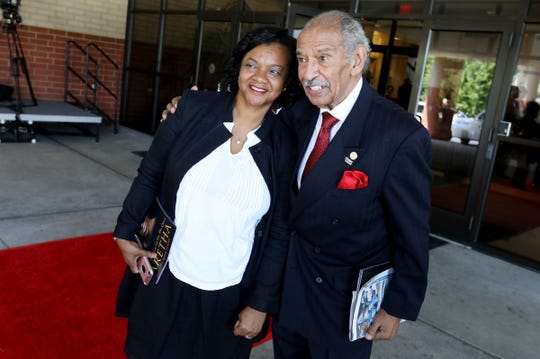
Monica and John Conyers pose for a photograph outside of Aretha Franklin's funeral at Greater Grace Temple in Detroit on Friday, August 31, 2018.
The Conyers - Post-vows
U.S. Rep. John Conyers, a civil rights icon who during five decades in Congress co-founded the National Black Caucus and pushed to establish a national holiday to honor the Rev. Martin Luther King Jr., died Sunday of natural causes at the age of 90.

His death comes after a long and illustrious career that spanned more than 50 years and 27 terms in office, but ended in 2018 with a sudden resignation amidst claims of sexual harassment and verbal abuse of employees and misuse of taxpayer funds to cover-up those claims.

Conyers' tenure was a remarkable 53-year-run during which the lawmaker, the son of a well-known labor lawyer in Detroit, compiled a near-record legacy of civil rights activism, longevity and advocacy for the poor and underprivileged.

He died with the sixth-longest tenure in congressional history.

"For a long time he was black America's congressman," said Sam Riddle, a longtime family friend and consultant to the Conyers family, who confirmed the death Sunday. "On the streets of Detroit, he'll be mourned."

Detroit Mayor Mike Duggan in a statement said he "was deeply saddened" by Conyers' death.

"One of my most special memories was spending time with him at Gordon Park on 12th Street and Clairmount on the 50th anniversary of the violence of 1967 as he recounted the story of his courageous efforts to calm the angry crowds," Duggan said.  "He has fought for a better Detroit for more than half a century.


"From co-founding the Congressional Black Caucus to leading the fight in Congress to enshrine Martin Luther King’s birthday as a national holiday, John Conyers’ impact on our city and nation will never be forgotten," Duggan said.

Michigan Gov. Gretchen Whitmer called Conyers a "lifelong Detroiter who was deeply committed to the city and to those he represented."

"His impact on our state, whether by spearheading reforms in criminal justice and voting rights in Congress or through his lifetime of civil rights activism, will not be forgotten," Whitmer said in a statement.

Conyers was born in Detroit and graduated from Northwestern High School. After a tour of duty with the U.S. Army during the Korean War, Conyers returned home to earn bachelor's and law degrees from Wayne State University.

His law practice and work in the auto plants in Detroit led him to the office of former U.S. Rep. John Dingell, D-Dearborn, where he worked as a legislative assistant for three years. But by 1964, at the age of 35, Conyers went after a seat of his own in Congress, winning the first of 27 general elections and serving portions of Detroit and some surrounding Wayne County suburbs for the next five decades.

He may not have had many bills that carried his name — only 26 of the 712 bills he introduced became law, according to the Library of Congress — but he fought for issues of civil rights and social justice, including seeking reparations for the descendants of African-American slaves, modifying the mandatory sentences for those convicted of non-violent drug crimes, defending assaults on the Voting Rights Act, reforming laws that put juvenile offenders in prison for life and calling for investigations into police brutality of African-American men.

And he was the key sponsor of the bill, introduced each session for 20 years, that designated the third Monday of January as a federal holiday in honor of Martin Luther King Jr. Conyers introduced the bill four days after King was assassinated in 1968, but it wasn’t signed into law until 1989.

In the thick of the civil rights battles, Conyers walked alongside King and other leaders of the movement in Selma, Ala., to bring equal voting rights to blacks.

In 2015, during his 50th year in Congress, Conyers told the Washington Post that King was one of the most important historical figures in history.

"I felt the civil rights movement was a powerful chapter in American history, King to me is the outstanding international leader of the 20th century without every holding office," he said. "He advanced us forward even though there was a terrible loss of life and violence and injustice. But Martin Luther King Jr. moved us in a way that changed history."

He moved among those involved in the disturbance in Detroit in August 1967, urging calm. And he burnished his civil rights record even more by hiring icon Rosa Parks after she moved from Alabama to Detroit. The secretary and receptionist job in Conyers' Detroit office was a job she held until her retirement in 1988.

U.S. Rep. Rashida Tlaib, who won election to Conyers' seat after his resignation, on Twitter called Conyers "our Congressman forever."

"He never once wavered in fighting for jobs, justice and peace," Tlaib tweeted. "We always knew where he stood on issues of equality and civil rights in the fight for the people. Thank you Congressman Conyers for fighting for us for over 50 years."

Career ends amidst a sex scandal
Despite facing a rising chorus of voices demanding he step down because of the sexual harassment claims, Conyers, D-Detroit, refused to do so for several months in 2017. The scandal was a swift and crushing fall from grace for the longest-serving active member of Congress.

Conyers, 90, resigned  after an article on BuzzFeed.com detailed a secret settlement of more than $27,000 with a former staffer who accused him of making sexual advances toward her and paying her out of funds from his taxpayer-supported office.

Within days, several other women had come forward with accusations against Conyers, who, despite his express denials that he harassed anyone, saw House leaders and members of his own party abandon him, with three of the four Democrats in the Michigan delegation calling for him to resign.

In addition to Marion Brown, the staffer who received the settlement, six other women claimed they either experienced or saw him touching and rubbing women in his office, making sexual advances toward them or making inappropriate remarks. One of them filed a lawsuit against him early this year and then withdrew it, saying she didn't want to hurt Conyers' reputation.

Another woman, Washington lawyer Melanie Sloan, also told the Free Press that Conyers had verbally mistreated her, forced her to babysit his children and, on one occasion, showed up at a meeting with her at his office in his underwear —though she didn't consider it sexual harassment.

From accusation to resignation, Conyers' colleagues went from being warily supportive, urging caution while an investigation by the House Ethics Committee was completed to issuing outright calls for his resignation, even from at least one fellow member of the Congressional Black Caucus, which he helped to create in 1971.

U.S. Rep. Jim Clyburn of South Carolina, who is the third-ranking Democrat in the House and had been a colleague of Conyers' on the Congressional Black Caucus since 1993, called for him to resign  shortly after similar calls by House Speaker Paul Ryan and Democratic Leader Nancy Pelosi.

Conyers' lawyer, Arnold Reed, of Southfield, had reiterated on several occasions that the congressman was not ready to resign and wanted to see the ethics investigation completed.


But with allegations swirling not only over the harassment claims but his use of taxpayer funds to pay at least one settlement, he abruptly stepped down as the ranking Democrat on the House Judiciary Committee, a position he had held for more than two decades.

Then  — with media reports that some members of the caucus were privately urging him to resign — he suddenly quit Washington, missing several votes, including one mandating sexual harassment training for members, as he headed back to Detroit and his family.

Conyers record in Congess
During his time in office, which he won with huge margins ever two years like clockwork, Conyers was considered one of the most liberal members of Congress, with a 100% rating from the American Civil Liberties Union, Planned Parenthood and the Human Rights Campaign.

The conservative Freedom Works gave him a 15% rating, while the Club for Growth and Americans for Prosperity give him ratings of 8% and 6% respectively.

Conyers, however, had already come under scrutiny twice from the House Ethics Committee in Congress for possible transgressions in his office.

In 2017, the committee confirmed it was continuing to look at whether he had wrongly paid his former chief of staff more than $50,000 for time she didn't work. Conyers said he was only paying her for accrued leave time and severance as part of a separation agreement reached after she pleaded guilty to a misdemeanor charge of receiving stolen property unrelated to her job.

In 2003, the Free Press reported on complaints from six unnamed Conyers aides who said they were forced to work on various campaigns, including a failed legislative campaign for Conyers' wife, Monica, on government time. A follow-up Ethics Committee report, however, focused on allegations that the congressman used staff to babysit his sons, help his wife with her law studies and chauffeur him to private events.

Conyers' office denied the accusations and eventually reached a deal to ensure staff knew where their responsibilities began and ended.

In 2014, Conyers nearly didn’t get the chance to run for reelection because of irregularities in the petitions he filed to run for office. Wayne County Clerk Cathy Garrett said he had used ineligible people to gather signatures, but a federal court disagreed and the state Legislature passed a law that people who collected signatures didn’t need to be registered voters.

Voting is beautiful, be beautiful ~ vote.©
Tuesday, September 10, 2019

CONYERS Portrait In The U.S. House Judiciary Committee 2017

The portrait was placed, stage left, on the wall of the U.S. House of Representative Judiciary Committee.


Portrait by Simmie Knox


C-SPAN has locked the video on embedding, obstructing use in the public record.

Voting is beautiful, be beautiful ~ vote.©

Friday, August 30, 2019

John Conyers, Sr. - Forefather of the UAW - Detroit & GM

I remember when he told me of how his father was beaten and bloodied trying to form the union by GM in Detroit.

Since this his legacy has been omitted from the history books, I believe we shall have a few fun projects coming up.

John Conyers, Sr.

Published: January 4, 1986

Image may contain: 1 person, smiling, closeup
John Conyers, Sr.
Forefather of the UAW
DETROIT, Jan. 3— John Conyers Sr., a retired union official who was the father of Representative John Conyers Jr., Democrat of Michigan, died Wednesday at his Detroit home. He was 80 years old. Mr. Conyers had been an international representative for the United Automobile Workers.

In addition to his son John, Mr. Conyers is survived by his wife, Lucille, and another son, Nathan.

Black history, labor history intertwined in Detroit

March 1, 2010 11:58 AM CDT  BY JOHN RUMMEL

DETROIT – Between the two World Wars, the groundwork was laid in this city’s Black community that culminated in the 1941 organizing of the world’s most powerful corporation: the Ford Motor Company.

That piece of  Detroit’s rich labor and civil rights history was brought to life by professors Beth Bates and Quill Pettway in a Department of Africana Studies Black History Month celebration at Wayne State University here.

Bates’ research has focused on political, social, and economic developments within the 20th century African American community. Pettway is both a student and maker of history. He was helped organize the huge Ford Rouge plant and continued working there for 27 years before becoming a professor. Now almost 90, he continues to teach math at Wayne County Community College.

The two traced the origins of Detroit’s Black population. Escaping what for many was life as a Southern sharecropper, Black migration north took place at record levels in the early part of the last century. From 1916 to1917, Black migration to Detroit averaged 1,000 a month. “Simply put, they came looking for a better life, better education, security and to escape lynching” said Pettway.

By the early 1920s, 45 percent of Black men in Detroit worked at Ford.

Bates said those jobs at Ford gave hope to Blacks, but Henry Ford “extracted more than his pound of flesh in speed-ups.”  She quoted the late autoworker Dave Moore who said “there was nothing liberal in the bastard – Ford’s strategy was simply different than GM or Chrysler,” where cleaning rest rooms and mopping floors was the best Blacks could expect.

Interwoven in Ford’s strategy was a paternalistic philosophy. Bates said Ford imagined Blacks might be “the perfect workers for his open shop movement, what he called his American Plan.” However, Bates said, Blacks also had their own American Plan, one that grew more incompatible with Henry Ford as time went by. Contrary to what many scholars have written, it was Black workers who paved the way for unionization at Ford, she said.

Throughout the 1930s the old AFL autoworkers union missed opportunities to support the Black community in their fight for civil rights and against police brutality, and did not work to develop a broader-based union organizing drive.  “Black workers not initially signing union cards had less to do with allegiance to Ford than wanting to be treated as equals” by the union, said Bates.

She credited the role played by the Communist Party and other radicals in organizations like the unemployed councils and the International Labor Defense (which led the fight to save the Scottsboro Boys) because they facilitated a “cross-fertilization” and politicalization within the Black community, between workers at Ford and community members, on issues like racism, civil rights and jobs.

“By 1935, Black Detroiters considered Communists friends you could count on,” said Bates.

Unlike the old AFL union, the CIO’s United Auto Workers had a policy of racial equality that gave it an advantage, Pettway said.

He noted the role played by white Ford worker and lead union organizer Bill McKie. McKie’s job in Ford’s maintenance department allowed him to circulate amongst different workers. The fact that McKie was a known Communist did not hurt his ability to organize.  He was “second to none, highly respected by everyone. Elected as a trustee his first year,” said Pettway.

The CIO saw to it that a broad base of union support was built within the Black community and on three occasion organized rallies with Paul Robeson.

Pettway said the last rally, in Detroit’s downtown Cadillac Square, drew 60,000 people. “Regardless of race, creed or color, they came to hear Robeson, Walter Reuther, former City Council President Erma Henderson,” among others.

On May 21, 1941, Ford workers overwhelmingly voted for the union.

The vote shook the automotive industry and shaped it for decades to come.

During discussion, retired UAW activist General Baker pointed to the “high level of solidarity” still seen within UAW Ford Local 600. At its peak there were 17,000 Black workers and even today, most top UAW national leaders come out of Local 600 he said.

Pettway said “the unity needed to organize Ford was the same unity that elected Barack Obama.  This is what is necessary to move forward.”

Voting is beautiful, be beautiful ~ vote.©

Friday, August 9, 2019

Rufus Cormier Discusses the House Committee on the Judiciary Impeachment Inquiry

How come Rufus has no Wikipedia page?


Lawyer Rufus Cormier was born on March 2, 1948, in Beaumont, Texas to Rufus Cormier and Katie Cormier. Cormier attended Hebert High School, where he played football with Jerry LeVias. Both Cormier and LeVias received full athletic scholarships to play football at Southern Methodist University in Dallas, Texas, where Cormier was named outstanding lineman in the 1968 Bluebonnet Bowl. Cormier graduated with honors, earning his B.A. degree in anthropology in 1970. Cormier then received his J.D. degree from Yale University Law School in 1973.

Cormier began his legal career at the law firm of Paul Weiss, Rifkind, Wharton, & Garrison in New York. During his time there, Cormier was hired as a special assistant to John Doar, the lead counsel to the House Judiciary Committee for the Nixon Impeachment Inquiry. In 1974, he joined the law firm of Baker Botts LLP, becoming not only the first African American lawyer to be hired as a partner at a major Houston law firm, but also the first African American partner at a major corporate law firm in the State of Texas. After thirty-nine years with Baker Botts LLP, Cormier retired in 2013.

In addition to his law practice, Cormier served on numerous boards. He was appointed to Texas Southern University's Board of Regents in 1991. He also served on the board of directors for the Memorial Hermann Healthcare System, the board of visitors for the M.D. Anderson Cancer Center, the board of directors of the Center For Houston’s Future, the executive board of SMU School of Law, and the board of directors for the Gulf Coast Legal Foundation, among others. Cormier was also honored for his professional and volunteer work. He received the Leon Jaworski award from the Houston Bar Association Auxiliary, the Anti-Defamation League’s Karen H. Susman Jurisprudence Award, and the Silver Anniversary Mustang Award from Southern Methodist University. He was also named one of The Best Lawyers in America, and a Super Lawyer by both Texas Monthly and Law and Politics magazines.

Cormier and his wife, Yvonne Clement Cormier, have three children: Michelle, Geoffrey, and Claire.

Rufus Cormier was interviewed by The HistoryMakers on November 30, 2016.

Voting is beautiful, be beautiful ~ vote.©