Showing posts with label foster care. Show all posts

Friday, September 22, 2017

CONYERS: CBC Foundation Judiciary Braintrust: Criminal Justice Reform

Making America Accountable for Black Lives Recent events demonstrate that racial profiling remains a divisive issue that strikes at the very foundation of our democracy. 

The issues of race and reasonable suspicion of criminal conduct are so closely linked in law enforcement practices that profiling has an impact on virtually every area of criminal justice policy. 

From the prison pipeline to clemency and over-criminalization, race has a continuing impact on policy development in the criminal justice system. 

This panel features experts from the judiciary, law enforcement, and the advocacy community to provide an overview of the continuing challenges in juvenile justice, drug and sentencing policy reform efforts.


Voting is beautiful, be beautiful ~ vote.©

Saturday, September 16, 2017

CONYERS: Pass DREAM Act Now

The six-month delay in initiating this process does no justice for these DREAMers and the families who will be torn apart.

And the Trump Administration’s pretext for this action—DACA’s supposed unconstitutionality—simply doesn’t carry water. I stand with DREAMers & call on House Republicans' Leaders to pass the DREAMAct now.


#ProtectDREAMers

Voting is beautiful, be beautiful ~ vote.©

Sunday, September 10, 2017

CONYERS, CUMMINGS, GOMEZ & LOFGREN Seek Immediate Hearings On President's Decision To End DACA


Washington, D.C. (Sept. 7, 2017)—Democratic leaders on the Committee on Oversight and Government Reform and the Committee on the Judiciary sent a letter, below, to their respective Chairmen, Reps. Trey Gowdy and Bob Goodlatte, requesting immediate congressional hearings on the impact of President Trump’s decision to end the Deferred Action for Childhood Arrivals (DACA) program.

“This action is cruel and heartless, and it is now up to Congress to reverse it,” the Members wrote.  “We believe it is critical for the American people to hear public testimony regarding the President’s decision, including the resulting economic costs and social harm to the nation.”  

Last Congress, the Oversight Committee held 11 hearings on issues related to immigration, and the Judiciary Committee regularly holds hearings on immigration issues.  Yet no full Committee hearings on the President’s termination of DACA have been scheduled to date.

The letter was signed by Oversight Committee Ranking Member Elijah E. Cummings, Oversight Committee Member Jimmy Gomez, Judiciary Committee Ranking Member John Conyers, Jr., and Subcommittee on Immigration and Border Security Ranking Member Zoe Lofgren.


Voting is beautiful, be beautiful ~ vote.©

Thursday, March 16, 2017

CONYERS Statement for the Hearing, “Combating Crimes against Children: Assessing the Legal Landscape,” by the Subcommittee on Crime, Terrorism, Homeland Security, and Investigations

Dean of the U.S. House
of Representatives
John Conyers. Jr.
Today’s hearing by this subcommittee will discuss the serious and disturbing issue of the criminal victimization of children.  With all of our efforts to fight the various forms of child exploitation, it continues to be a threat to our young people. 

However, we have developed strategies to both prevent and respond to these crimes, and to assist the many children who are victims.  I trust we will learn about the strategies that are working and how we can do better. 

In April of last year, the Department of Justice reported to us that the main threats in this area in the next five years will be:  child pornography, sextortion, child sex trafficking, sex offender registry violations, and child sex tourism.

The response to these crimes involves an intricate network of federal, state, and local law enforcement and prosecutorial agencies, and private, nonprofit organizations and advocates, supported by direct federal funding authorizations and grant programs, all working together to keep our youngest constituents safe from harm.

Today we will hear from individuals, representing some of the entities involved in this very necessary mission.  Their roles illustrate the ways we can do more and do better. 

First, we in Congress must recognize that, while we can enact federal legislation, state and local law enforcement are on the front lines and we must support their partnerships with federal agencies.  The Internet Crimes against Children Task Force program, funded through the Justice Department’s Office of Juvenile Justice and Delinquency Prevention, provides training and technical assistance and regularly conducts undercover online investigative operations.

Since Congress mandated creation of this program, 3,500 federal, state, and local law enforcement and prosecutorial agencies have joined to form 61 coordinated regional task forces.  These task forces are especially important now, because we are seeing a tremendous increase in crimes perpetrated against children on the Internet.

Detective Patrick Beaver, from the Loudon County Virginia Sheriff’s Office, will speak with us today about the successes his office has had working with the Northern Virginia Internet Crimes Against Children Task Force to conduct an operation targeting internet predators last year.

Next, we must provide specialized assistance to families, victims, and law enforcement to help prevent child abductions, recover missing children, identify and assist victims of child pornography and child sex trafficking.  That is the mission of the National Center for Missing and Exploited Children, and we will hear from their representative today about what they are experiencing in providing this assistance. 

As a former local and federal prosecutor, Ms. Francey Hakes will also help tell us about the challenges at the state and federal levels in fighting these crimes and enforcing our laws. 

All of this will help us as we consider legislation to amend and reauthorize important statutes such as the Adam Walsh Act and the Trafficking Victims Protection Act.  

Clearly, we must do more to prevent and investigate these crimes – and especially assist their many victims.  When we do apprehend and convict offenders, we must recognize that most of them will be released back into society at some point.  

The Sex Offender Registration and Notification Act is intended to establish a nationwide system of monitoring and tracking sex offenders, particularly after they are released from prison.  Currently, there are over 850,000 registered sex offenders in this country.

If we are going to have such a system, we must ensure that it is used in appropriate circumstances and in the most effective manner.  However, only 17 states are in substantial compliance with its requirements.

States, policy makers, researchers, and advocates continue to object to the requirements established by SORNA for many reasons.

One of the most pervasive criticisms of SORNA is the inclusion of juveniles on registries. Ms. Nicole Pittman is here with us today to discuss the real impact of juvenile registration – on the juveniles, their families, and the overall effectiveness of SORNA.

Thank you, Mr. Chairman, for holding this hearing on this important topic.  We all wish that child exploitation could be eradicated, but the problem persists.  With what we learn today, I hope we can work together to come closer to achieving our goal.

Voting is beautiful, be beautiful ~ vote.©

Thursday, February 16, 2017

CONYERS Speaks On The Need To Study Impact Of Slavery

As part of #BlackHistoryMonth, I spoke at briefing regarding my bill, H.R. 40, A Commission to Study and Develop Reparation Proposals for African-Americans Act. H.R. 40 is a crucial piece of legislation because it goes beyond exploring the economic implications of slavery and segregation. It is a holistic bill in the sense that it seeks to establish a commission to also examine the moral and social implications of #slavery. — at United States Capitol.

#FosterCare #Adoption #ChildWelfare 

Image may contain: one or more people, people sitting and indoor

115th CONGRESS
1st Session
H. R. 40

To address the fundamental injustice, cruelty, brutality, and inhumanity of slavery in the United States and the 13 American colonies between 1619 and 1865 and to establish a commission to study and consider a national apology and proposal for reparations for the institution of slavery, its subsequent de jure and de facto racial and economic discrimination against African-Americans, and the impact of these forces on living African-Americans, to make recommendations to the Congress on appropriate remedies, and for other purposes.

IN THE HOUSE OF REPRESENTATIVES
January 3, 2017
Mr. Conyers (for himself, Mr. Serrano, Mr. Al Green of Texas, Ms. Norton, Mr. Hastings, Mr. Ellison, Mrs. Beatty, Mr. Lewis of Georgia, Mr. Nadler, Mr. Danny K. Davis of Illinois, Mr. Clay, Mr. Gutiérrez, Mr. Cohen, Mr. Cummings, Mr. Meeks, Ms. Schakowsky, Ms. Jackson Lee, and Ms. Lee) introduced the following bill; which was referred to the Committee on the Judiciary

A BILL
To address the fundamental injustice, cruelty, brutality, and inhumanity of slavery in the United States and the 13 American colonies between 1619 and 1865 and to establish a commission to study and consider a national apology and proposal for reparations for the institution of slavery, its subsequent de jure and de facto racial and economic discrimination against African-Americans, and the impact of these forces on living African-Americans, to make recommendations to the Congress on appropriate remedies, and for other purposes.
Be it enacted by the Senate and House of Representatives of the United States of America in Congress assembled,
SECTION 1. SHORT TITLE.
This Act may be cited as the “Commission to Study and Develop Reparation Proposals for African-Americans Act”.
SEC. 2. FINDINGS AND PURPOSE.
(a) Findings.—The Congress finds that—
(1) approximately 4,000,000 Africans and their descendants were enslaved in the United States and colonies that became the United States from 1619 to 1865;
(2) the institution of slavery was constitutionally and statutorily sanctioned by the Government of the United States from 1789 through 1865;
(3) the slavery that flourished in the United States constituted an immoral and inhumane deprivation of Africans’ life, liberty, African citizenship rights, and cultural heritage, and denied them the fruits of their own labor;
(4) a preponderance of scholarly, legal, community evidentiary documentation and popular culture markers constitute the basis for inquiry into the on-going effects of the institution of slavery and its legacy of persistent systemic structures of discrimination on living African-Americans and society in the United States; and
(5) following the abolition of slavery the United States Government, at the Federal, State, and local level, continued to perpetuate, condone and often profit from practices that continued to brutalize and disadvantage African-Americans, including share cropping, convict leasing, Jim Crow, redlining, unequal education, and disproportionate treatment at the hands of the criminal justice system; and
(6) as a result of the historic and continued discrimination, African-Americans continue to suffer debilitating economic, educational, and health hardships including but not limited to; having nearly 1,000,000 Black people incarcerated; an unemployment rate more than twice the current White unemployment rate; and an average of less than 116 of the wealth of White families, a disparity which has worsened, not improved over time.
(b) Purpose.—The purpose of this Act is to establish a commission to study and develop Reparation proposals for African-Americans as a result of—
(1) the institution of slavery, including both the Trans-Atlantic and the domestic “trade” which existed from 1565 in colonial Florida and from 1619 through 1865 within the other colonies that became the United States, and which included the Federal and State governments which constitutionally and statutorily supported the institution of slavery;
(2) the de jure and de facto discrimination against freed slaves and their descendants from the end of the Civil War to the present, including economic, political, educational, and social discrimination;
(3) the lingering negative effects of the institution of slavery and the discrimination described in paragraphs (1) and (2) on living African-Americans and on society in the United States;
(4) the manner in which textual and digital instructional resources and technologies are being used to deny the inhumanity of slavery and the crime against humanity of people of African descent in the United States;
(5) the role of Northern complicity in the Southern based institution of slavery;
(6) the direct benefits to societal institutions, public and private, including higher education, corporations, religious and associational;
(7) and thus, recommend appropriate ways to educate the American public of the Commission’s findings;
(8) and thus, recommend appropriate remedies in consideration of the Commission’s findings on the matters described in paragraphs (1), (2), (3), (4), (5), and (6); and
(9) submit to the Congress the results of such examination, together with such recommendations.
SEC. 3. ESTABLISHMENT AND DUTIES.
(a) Establishment.—There is established the Commission to Study and Develop Reparation Proposals for African-Americans (hereinafter in this Act referred to as the “Commission”).
(b) Duties.—The Commission shall perform the following duties:
(1) Identify, compile and synthesize the relevant corpus of evidentiary documentation of the institution of slavery which existed within the United States and the colonies that became the United States from 1619 through 1865. The Commission’s documentation and examination shall include but not be limited to the facts related to—
(A) the capture and procurement of Africans;
(B) the transport of Africans to the United States and the colonies that became the United States for the purpose of enslavement, including their treatment during transport;
(C) the sale and acquisition of Africans as chattel property in interstate and intrastate commerce;
(D) the treatment of African slaves in the colonies and the United States, including the deprivation of their freedom, exploitation of their labor, and destruction of their culture, language, religion, and families; and
(E) the extensive denial of humanity, sexual abuse and the chatellization of persons.
(2) The role which the Federal and State governments of the United States supported the institution of slavery in constitutional and statutory provisions, including the extent to which such governments prevented, opposed, or restricted efforts of formerly enslaved Africans and their descendents to repatriate to their homeland.
(3) The Federal and State laws that discriminated against formerly enslaved Africans and their descendents who were deemed United States citizens from 1868 to the present.
(4) The other forms of discrimination in the public and private sectors against freed African slaves and their descendents who were deemed United States citizens from 1868 to the present, including redlining, educational funding discrepancies, and predatory financial practices.
(5) The lingering negative effects of the institution of slavery and the matters described in paragraphs (1), (2), (3), (4), (5), and (6) on living African-Americans and on society in the United States.
(6) Recommend appropriate ways to educate the American public of the Commission’s findings.
(7) Recommend appropriate remedies in consideration of the Commission’s findings on the matters described in paragraphs (1), (2), (3), (4), (5), and (6). In making such recommendations, the Commission shall address among other issues, the following questions:
(A) How such recommendations comport with international standards of remedy for wrongs and injuries caused by the State, that include full reparations and special measures, as understood by various relevant international protocols, laws, and findings.
(B) How the Government of the United States will offer a formal apology on behalf of the people of the United States for the perpetration of gross human rights violations and crimes against humanity on African slaves and their descendants.
(C) How Federal laws and policies that continue to disproportionately and negatively affect African-Americans as a group, and those that purpetuate the lingering effects, materially and psycho-social, can be eliminated.
(D) How the injuries resulting from matters described in paragraphs (1), (2), (3), (4), (5), and (6) can be reversed and provide appropriate policies, programs, projects and recommendations for the purpose of reversing the injuries.
(E) How, in consideration of the Commission’s findings, any form of compensation to the descendants of enslaved African is calculated.
(F) What form of compensation should be awarded, through what instrumentalities and who should be eligible for such compensation.
(G) How, in consideration of the Commission’s findings, any other forms of rehabilitation or restitution to African descendants is warranted and what the form and scope of those measures should take.
(c) Report To Congress.—The Commission shall submit a written report of its findings and recommendations to the Congress not later than the date which is one year after the date of the first meeting of the Commission held pursuant to section 4(c).
SEC. 4. MEMBERSHIP.
(a) Number And Appointment.—(1) The Commission shall be composed of 13 members, who shall be appointed, within 90 days after the date of enactment of this Act, as follows:
(A) Three members shall be appointed by the President.
(B) Three members shall be appointed by the Speaker of the House of Representatives.
(C) One member shall be appointed by the President pro tempore of the Senate.
(D) Six members shall be selected from the major civil society and reparations organizations that have historically championed the cause of reparatory justice.
(2) All members of the Commission shall be persons who are especially qualified to serve on the Commission by virtue of their education, training, activism or experience, particularly in the field of African-American studies and reparatory justice.
(b) Terms.—The term of office for members shall be for the life of the Commission. A vacancy in the Commission shall not affect the powers of the Commission and shall be filled in the same manner in which the original appointment was made.
(c) First Meeting.—The President shall call the first meeting of the Commission within 120 days after the date of the enactment of this Act or within 30 days after the date on which legislation is enacted making appropriations to carry out this Act, whichever date is later.
(d) Quorum.—Seven members of the Commission shall constitute a quorum, but a lesser number may hold hearings.
(e) Chair And Vice Chair.—The Commission shall elect a Chair and Vice Chair from among its members. The term of office of each shall be for the life of the Commission.
(f) Compensation.—(1) Except as provided in paragraph (2), each member of the Commission shall receive compensation at the daily equivalent of the annual rate of basic pay payable for GS–18 of the General Schedule under section 5332 of title 5, United States Code, for each day, including travel time, during which he or she is engaged in the actual performance of duties vested in the Commission.
(2) A member of the Commission who is a full-time officer or employee of the United States or a Member of Congress shall receive no additional pay, allowances, or benefits by reason of his or her service to the Commission.
(3) All members of the Commission shall be reimbursed for travel, subsistence, and other necessary expenses incurred by them in the performance of their duties to the extent authorized by chapter 57 of title 5, United States Code.
SEC. 5. POWERS OF THE COMMISSION.
(a) Hearings And Sessions.—The Commission may, for the purpose of carrying out the provisions of this Act, hold such hearings and sit and act at such times and at such places in the United States, and request the attendance and testimony of such witnesses and the production of such books, records, correspondence, memoranda, papers, and documents, as the Commission considers appropriate. The Commission may invoke the aid of an appropriate United States district court to require, by subpoena or otherwise, such attendance, testimony, or production.
(b) Powers Of Subcommittees And Members.—Any subcommittee or member of the Commission may, if authorized by the Commission, take any action which the Commission is authorized to take by this section.
(c) Obtaining Official Data.—The Commission may acquire directly from the head of any department, agency, or instrumentality of the executive branch of the Government, available information which the Commission considers useful in the discharge of its duties. All departments, agencies, and instrumentalities of the executive branch of the Government shall cooperate with the Commission with respect to such information and shall furnish all information requested by the Commission to the extent permitted by law.
SEC. 6. ADMINISTRATIVE PROVISIONS.
(a) Staff.—The Commission may, without regard to section 5311(b) of title 5, United States Code, appoint and fix the compensation of such personnel as the Commission considers appropriate.
(b) Applicability Of Certain Civil Service Laws.—The staff of the Commission may be appointed without regard to the provisions of title 5, United States Code, governing appointments in the competitive service, and without regard to the provisions of chapter 51 and subchapter III of chapter 53 of such title relating to classification and General Schedule pay rates, except that the compensation of any employee of the Commission may not exceed a rate equal to the annual rate of basic pay payable for GS–18 of the General Schedule under section 5332 of title 5, United States Code.
(c) Experts And Consultants.—The Commission may procure the services of experts and consultants in accordance with the provisions of section 3109(b) of title 5, United States Code, but at rates for individuals not to exceed the daily equivalent of the highest rate payable under section 5332 of such title.
(d) Administrative Support Services.—The Commission may enter into agreements with the Administrator of General Services for procurement of financial and administrative services necessary for the discharge of the duties of the Commission. Payment for such services shall be made by reimbursement from funds of the Commission in such amounts as may be agreed upon by the Chairman of the Commission and the Administrator.
(e) Contracts.—The Commission may—
(1) procure supplies, services, and property by contract in accordance with applicable laws and regulations and to the extent or in such amounts as are provided in appropriations Acts; and
(2) enter into contracts with departments, agencies, and instrumentalities of the Federal Government, State agencies, and private firms, institutions, and agencies, for the conduct of research or surveys, the preparation of reports, and other activities necessary for the discharge of the duties of the Commission, to the extent or in such amounts as are provided in appropriations Acts.
SEC. 7. TERMINATION.
The Commission shall terminate 90 days after the date on which the Commission submits its report to the Congress under section 3(c).
SEC. 8. AUTHORIZATION OF APPROPRIATIONS.
To carry out the provisions of this Act, there are authorized to be appropriated $12,000,000.

Voting is beautiful, be beautiful ~ vote.©

Wednesday, February 8, 2017

Bipartisan Coalition of House Members Introduce Legislation to Ban Juvenile Solitary Confinement

MERCY Act Would Prohibit Solitary Confinement of Juveniles Tried in Federal System 

Washington, D.C. (Feb. 7, 2017)—Today, Reps. John Conyers (D-MI), Elijah E. Cummings (D-MD), Mia Love (R-UT), Raúl Labrador (R-ID), Sheila Jackson Lee (D-TX), Sean Patrick Maloney (D-NY) and Karen Bass (D-CA) introduced the Maintaining dignity and Eliminating unnecessary Restrictive Confinement of Youths Act of 2017 (MERCY Act).  The MERCY Act would prohibit the solitary confinement of juveniles who are tried in the federal system and held in pretrial facilities or juvenile detention facilities, barring some extremely exceptional temporary circumstances.  Sens. Cory Booker (D-NJ), Rand Paul (R-KY), Mike Lee (R-UT), James Lankford (R-OK), Richard Durbin (D-IL), and Bob Casey (D-PA) introduced the bill in the Senate.

Dean of the U.S. House
of Representatives
John Conyers, Jr.
Conyers said, “We must reinforce actions taken by President Obama last year with respect to solitary confinement of juveniles in the federal system  by enacting legislation to address this serious issue.   As he noted, solitary confinement has the potential to lead to devastating, lasting psychological consequences, and this is particularly so with respect to juveniles.  Over time, we have come to recognize these negative impacts and it is time that Congress act.  Pursuing smarter strategies for dealing with challenges posed by individual prisoners, especially juveniles, will lead to more effective prison administration, a reduction in recidivism, and safer communities. ” 

“When our youth are incarcerated, they are often already forced to reckon with the stark reality of the consequences of their actions—such as being separated from their friends and family and grappling with uncertain futures,” Cummings said.  “Compounding incarceration with solitary confinement can break a young person’s spirt beyond repair, and it can have devastating long-term impacts on their mental and physical health.  The MERCY Act will take a strong step toward eliminating this barbaric practice, so that we can ensure our youth have a chance to be rehabilitated and become contributing members of their communities.”

“Our corrections system should not just administer justice but also aim to rehabilitate – not create new or exacerbate existing problems,” Love said.  “Unfortunately, extended solitary confinement is linked to a host of long-term psychological issues. By ending its long-term use, this legislation preserves the dignity of individuals and protects their mental health. I am proud to join with my colleagues in introducing this legislation and look forward to helping move these reforms forward.”

Labrador said, “Reforming our criminal justice system demands a focus on long-term outcomes. Solitary confinement of juveniles presents serious risk to the mental and physical health of young offenders who will return to our communities. We must ensure that incarceration practices don’t hinder their development as we work to set them on a path to become responsible, law-abiding members of society.”

“I am glad to see meaningful criminal justice reform incorporate the valuable insights offered by the MERCY Act in the pursuit of policy change to remedy the inhumane and harsh treatment suffered by juveniles and youth involved in our justice system,” Jackson Lee said. “I am delighted to be an original co-sponsor of this critical legislation and much needed effort to alleviate the cruel, brutal and inhumane conditions of confinement that prevent adolescent rehabilitation and participation in reentry programming.  As I have often stated in the past, ‘meaningful criminal justice reform must look at all the ways the system touches the lives of our young people and communities and recognize that restoring their vulnerable population requires trauma-informed and age appropriate care.  This legislation is step toward catapulting this nation into action on criminal and juvenile justice reform.”
“Our criminal justice system is broken, especially when it comes to how we approach juvenile offenders – focusing on retribution instead of rehabilitation,”Maloney said. “Holding children and adolescents in solitary confinement is barbaric, detrimental to their health and can be extremely harmful to their development both mentally and physically. The MERCY Act takes an important step towards breaking the cycle of incarceration and gives young offenders the opportunity to become contributing members of our schools and community after they have served their time.”

“The MERCY Act rightly calls attention to the need for smart reform and trauma-informed care for all justice-involved youth and is a necessary piece of legislation that aims to eliminate harmful and dangerous confinement practices for this vulnerable population.  It is time we start addressing the underlying issues of trauma and abuse, as well as the emotionally damaging triggers of adolescent behaviors in a humane and medically informed way. The bottom line here is that cruel and inhumane conditions of confinement for youth in America must stop,” Bass said.

The solitary confinement of young people is a serious and widespread problem in the United States. Each day, in jails and prisons across America, youth under the age of 18 are held in solitary confinement often for weeks or months at a time. In 2011 alone, more than 95,000 youth were held in prisons and jails, and a significant number were held in solitary confinement. In 2013, the Department of Justice found that 47 percent of juvenile detention centers locked youth in solitary confinement for more than four hours at a time, and some held youth for up to 23 hours a day with no human interaction.

When subjected to solitary confinement, adolescents are often denied access to treatment and programming that would meet their psychological, developmental, and rehabilitative needs. Because youths are still developing, solitary confinement often seriously harms their mental and physical health, as well as their development.

The Maintaining dignity and Eliminating unnecessary Restrictive Confinement of Youths Act (MERCY Act):

·         Bans Juvenile Solitary Confinement. The MERCY Act bans the use of “room confinement” in juvenile facilities, except as a temporary response to a behavioral issue that poses serious and immediate risk to any individual.
·         Requires Use of Less Restrictive Techniques. The bill ensures that before a juvenile is placed in room confinement, the staff member must use less restrictive techniques, including de-escalation techniques or discussions with a qualified mental health professional.
·         Encourages Transparency. The bill mandates that the juvenile be informed of why the room confinement placement occurred and that release will occur upon regaining self-control or after a certain period of time in solitary confinement.  It also requires that the juvenile’s attorney and parents be notified when certain actions are taken.
·         Places Time Limits on Usage of Confinement. The MERCY Act limits solitary confinement on juveniles that pose a risk of harming others to no more than 3 hours and to juveniles who pose a risk of harm to themselves to no more than half an hour. It requires that juveniles be removed from room confinement once the risk of harm subsides.
·         Sets Minimum Conditions of Confinement. The bill ensures that the room used for room confinement in exceptional circumstances have adequate space, lighting, heating, cooling, ventilation, and access to water, toilet facilities, and hygiene supplies.
·         Requires Post-Confinement Services. After the maximum period of confinement, the bill mandates that juveniles be transferred to a facility where services can be provided.
·        Requires an Analysis. The MERCY Act requires that the Attorney General submit a detailed report to Congress on uses of force, restraints, and room confinement for juveniles.

Voting is beautiful, be beautiful ~ vote.©

Wednesday, November 16, 2016

Statement of the Honorable John Conyers, Jr., Ranking Member, for the Markup of HR 5422, A Bill “To Ensure Funding for the National Human Trafficking Hotline,” by the Committee on the Judiciary


Dean of the U.S. House
of Representatives
John Conyers, Jr.
H.R. 5422 is a bipartisan measure intended to ensure funding for the National Human Trafficking Hotline. 

This commonsense bill would direct funding to the Department of Health and Human Services to administer the grant money for this Hotline.

The crime of human trafficking is a terrible scourge that deprives people of their dignity, humanity, and freedom.

Men, women, and children are held against their will. They are often repeatedly beaten, starved, drugged, and forced to perform unspeakable acts under the threat of more brutality against themselves or their loved ones.

Unfortunately, this awful crime continues to grow and spread because many victims are unable or afraid to leave those who hold them captive. Those who are able to escape their captors often fear retribution if they cooperate with law enforcement.

One mechanism Congress established to help the victims of trafficking is the 24-hour, national Hotline operated by the National Human Trafficking Resource Center.
           
The Hotline provides critical care and attends to the needs of victims and survivors of human trafficking in the United States, its territories, and in more than 200 languages. 

The Resource Center connects victims to services they need immediately -- such as legal advice and safe havens – and to services that can help them recover, including counselors and medical providers. 

The Center not only handles calls from potential trafficking victims, but also from law enforcement officers and officials, medical and legal professionals, legislators, and community members seeking to combat human trafficking.

In 2015, the Center responded to more than 5,500 cases of human trafficking and received approximately 1,500 online reports of suspected human trafficking.

H.R. 5422 simply corrects an error created by an inadvertent change in the funding source for the Hotline made by the Justice for Victims Act of 2015, which mistakenly directed funding for the Hotline to the Justice Department instead of the Department of Health and Human Services, which is the agency actually responsible for funding the Hotline.  

I fully support H.R. 5422 and commend my colleagues – the gentlemen from the State of Texas, Mr. Poe, and the gentlelady also from the State of Texas, Ms. Jackson Lee -- for their diligent work on this bill and other efforts to combat human trafficking.

As we look forward to the next Congress, I hope we will continue to find common ground on issues of mutual concern and work together to enact bipartisan bills such as this one.  

Therefore, I urge adoption of this bill today and yield back the balance of my time.

Voting is beautiful, be beautiful ~ vote.©

Wednesday, June 8, 2016

CONYERS, Scott Statement on New Civil Rights Data from Department of Education


WASHINGTON – Today, the U.S. Department of Education's Office for Civil Rights (OCR) unveiled new data from the 2013-2014 school year showing gaps that remain in educational equity and opportunity for students. Education and the Workforce Committee Ranking Member Rep. Bobby Scott (VA-03) and Judiciary Committee Ranking Member Rep. John Conyers, Jr. (MI-13) released the following statement on the release of the new data by OCR:

Dean of the U.S. House
of Representatives
John Conyers, Jr.
“The report released today from the Department of Education is a disturbing reminder of what too many families already know, and what was confirmed in the report from the General Accountability Office (GAO) we unveiled last month.  Our nation’s increasingly diverse student population is too often hyper-segregated in K-12 public schools and, sadly, educational opportunity is not available to all students of color on equal terms. This new data, and GAO’s study, are a call to action.

“That is why we introduced H.R.5260, the Equity and Inclusion Enforcement Act. The bill would amend Title VI of the Civil Rights Act to allow individuals to bring suits against school districts that implement practices and policies that have disparate impact based on race, color or nationality. We must honor our obligation to fulfil the promise of Brown v. Board of Education and seize the opportunity presented by the Every Student Succeeds Act to take meaningful and deliberate action – supported by the Federal government – to level the playing field in public K-12 schools.”


Voting is beautiful, be beautiful ~ vote.©

Saturday, May 21, 2016

New report is 'huge warning sign' that desegregation has failed in US schools

Report illuminates extent to which US schools are becoming more segregated, with more than 60% of schools with high levels of poor students racially divided

When Terrance Green was a student at Detroit public schools starting in the 1980s, he celebrated his experience in the overwhelmingly black district.
“The teachers were outstanding … there was a very strong ethos around racial identity, around civil rights, around celebrating who we were,” he said.
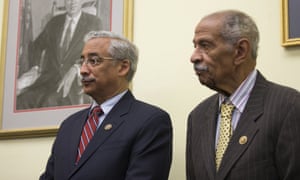
John Conyers and Bobby Scott are pushing legislation that would amend Title VI of the 1964 Civil Rights Act and restore the rights of parents to file lawsuits against segregated school districts under claims of disparate impacts.It wasn’t lost on Green, however, that just north of 8 Mile Road – the demarcation line of Detroit and its suburbs – students had access to a significantly higher amount of resources.
“I do remember … 8 Mile being like the psychological barrier, even in the early 80s it was,” said Green, 33. “I knew there were these suburbs [that] had more amenities, but I don’t think I could articulate that as an elementary school child.”
A fourth-generation Detroiter, Green’s entry into the city’s public school system was only several years removed from a seminal 1974 US supreme court ruling on school desegregation, Milliken v Bradley, which ended a plan to integrate mostly white suburban schools into Detroit’s public school system. The city’s population continued to swiftly decline in the years that followed, eroding the school system’s resources in tandem until the state declared a financial emergency.
Green, a professor of educational policy and planning at the University of Texas at Austin, pointed to the Milliken decision as a “death knell” to implementing the supreme court’s 1954 decision in Brown v Board of Education to desegregate school systems.
“How do you have meaningful desegregation when you have white flight occurring at rapid rates, but we can’t involve suburban school districts where this was occurring?” Green said. “It stopped mandatory desegregation efforts metropolitan-wide.”
A report released this week by the Government Accountability Office illuminated the extent to which school systems across the US are, once again, becoming more segregated. The report found that more than 60% of schools with high levels of poor students were racially segregated, which the report defined as being at least 75% black or Latino.
The study reviewed federal data from 2001 to 2014 and found 16% of all US schools were both racially segregated and poor, increasing from about 7,000 schools in 2001 to 15,089 by 2013 to 2014. Observers and advocates for school desegregation said the report should be a “huge warning sign” that needs to be addressed.
“There are many who believe in this country that we are operating on an even playing field,” said Jadine Johnson, staff attorney at Advancement Project.
“I think what this report revealed … is that the legacies of slavery in this country, the legacies of Jim Crow, are alive and active,” she said. “That did not go away with Brown v Board of Education.”
Compared to other schools, the GAO report found, segregated schools offered fewer college prep, science, and math classes to take, and a disproportionate number of students were either held back in ninth grade, suspended, or expelled.
Michigan congressman John Conyers was among several lawmakers who requested the report, which was released on the 62nd anniversary of Brown v Board of Education. Conyers and Virginia congressman Bobby Scott are pushing legislation that would amend Title VI of the 1964 Civil Rights Act and restore the rights of parents to file lawsuits against segregated school districts under claims of disparate impacts, which are based on ascertaining the discriminatory effect of a policy rather than ascertaining a discriminatory intent.
"This GAO report confirms what has long been feared and proves that current barriers against educational equality are eerily similar to those fought during the civil rights movement,” Conyers said in a statement. “There simply can be no excuse for allowing educational apartheid in the 21st century.”
Johnson said the loss of parents’ ability to file disparate impact cases was a “huge blow to the civil rights community”. Johnson has assisted in filing several Title VI complaints in recent years with the federal department of education – complaints that could have been filed in federal court under Conyers’ proposal.
“Us having that right could have potentially … slowed down the school closures crisis that’s happening today,” she said.
In Conyers’ home state, the largest public school system – Detroit – is currently embroiled in a struggle for survival amid bloated class sizes, paltry resources, and large-scale protests waged by teachers who have faced the prospect of working without pay. Michigan’s governor, Rick Snyder, is pushing a controversial $715m plan to overhaul the district, which needs a significant influx of cash to move forward with much-needed repairs for dozens of dilapidated facilities.
Only one-third of high school students in Detroit public schools are proficient in reading, according to Snyder’s office.
Green said the Milliken decision is one of the “main culprits” in what has happened to his alma mater.
Despite the supreme court’s 1954 landmark decision that US schools must be desegregated, Detroit’s school system remained effectively segregated, stemming in part from an accelerated white flight. When the NAACP legally challenged the state of Michigan in 1970 to end the district’s segregation, at first, the federal courts agreed something needed to be done: A plan was crafted to bus students in from suburban districts and was upheld by an appellate court.
But the plan was quickly stamped out. In 1974, the US supreme court in a 5-4 ruling shot down the efforts in Detroit, saying desegregation measures had to remain inside district boundaries.
In a column he co-wrote for the Detroit Free Press, Green argued that “we need advocacy and policies for all schools to be equitable, and racially and socioeconomically diverse across metro Detroit so that all children can learn to grow up in a diverse nation.”
Compared to suburban districts, he said, citing the GAO report, segregated schools have less access to courses needed to exceed in college – and, in some cases, a lower level of teacher experience. Indeed, a plan approved by the Michigan house to overhaul Detroit schools would allow uncertified teachers to be hired by the district.
“So I think there’s also a resource argument that has to be made [for integration],” he said.
The GAO recommended that the US department of education “more routinely analyze” civil rights data to identify disparities and said the federal justice department could “systematically track key information on open federal school desegregation cases to which it is a party to better inform its monitoring”.
Eve Hill, US deputy assistant attorney general, wrote in a response letter to the report: “The Department carefully monitors each open desegregation case to which the United States is a party on a case-by-case basis, recognizing that each case is unique.” The justice department is involved in 178 open desegregation cases, stemming from court orders that originated in the 1970s and 1980s.
Green said the GAO report underscores the spirit of the Brown v Board of Education decision.
“It’s not just about putting white bodies and black bodies together,” he said. “It’s about understanding what they said in 54, that racially segregated and separate schools are inherently unequal.”
Voting is beautiful, be beautiful ~ vote.©